Visiting Central High School: Home of the Little Rock Nine National Historic Site
Contributor Jackie Sheckler Finch visits the Little Rock Central High School National Historic Site in Arkansas, where brave teens integrated what was later called “America’s Most Beautiful High School.”
Excited for her first day at a new school, Elizabeth Eckford carefully sewed a white cotton dress with a perky collar and a belted waist. When she ran out of white fabric, the 15-year-old trimmed the bottom of her pleated white skirt with navy-blue-and-white gingham.

Too excited to sleep, Elizabeth was up bright and early the next morning to catch a bus to Little Rock Central High School. But what she encountered on Sept. 4, 1957, was probably beyond her worst nightmares.
Elizabeth was part of the Little Rock Nine, nine special Black schoolchildren chosen to integrate the all-white Arkansas school. However, Elizabeth’s family didn’t have a phone, so she didn’t know that the nine students were to meet at the home of Daisy Bates, president of the Arkansas chapter of the National Association for the Advancement of Colored People.
Daisy Bates and organizers had decided that the students would arrive at the school as a group. But Elizabeth didn’t get that message and no one checked to be sure she did.
The Trauma of Entering School Alone

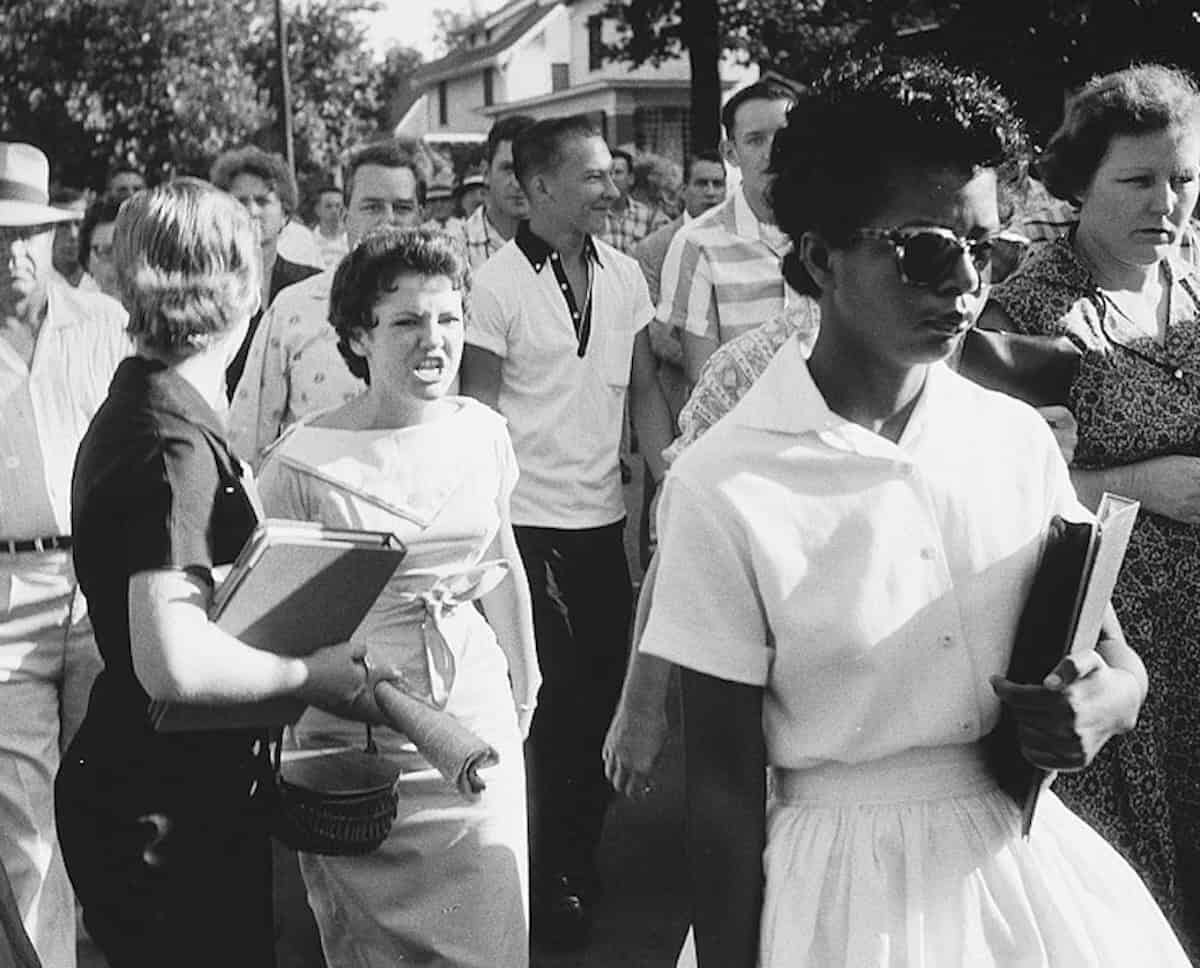
“So Elizabeth Eckford arrives all by herself to enter the school. She is alone and terrified when an angry mob surrounds her,” said Randy Dotson, former park ranger at the Little Rock Central High School National Historic Site.
Thinking the National Guard standing outside the school was for her protection, Elizabeth became even more horrified when the guards raised their rifles to block her from the school and to force her to walk back through the threatening mob.
“She was looking for any friendly face. When she thought she saw one in an older woman, the woman spat right in her face,” Randy said.
Making her way back to the bus stop, Elizabeth had several hundred people on her heels, threatening to “Lynch her! Send her back to the jungle!”
Photos at Little Rock Central High School Captured Horrific Scenes
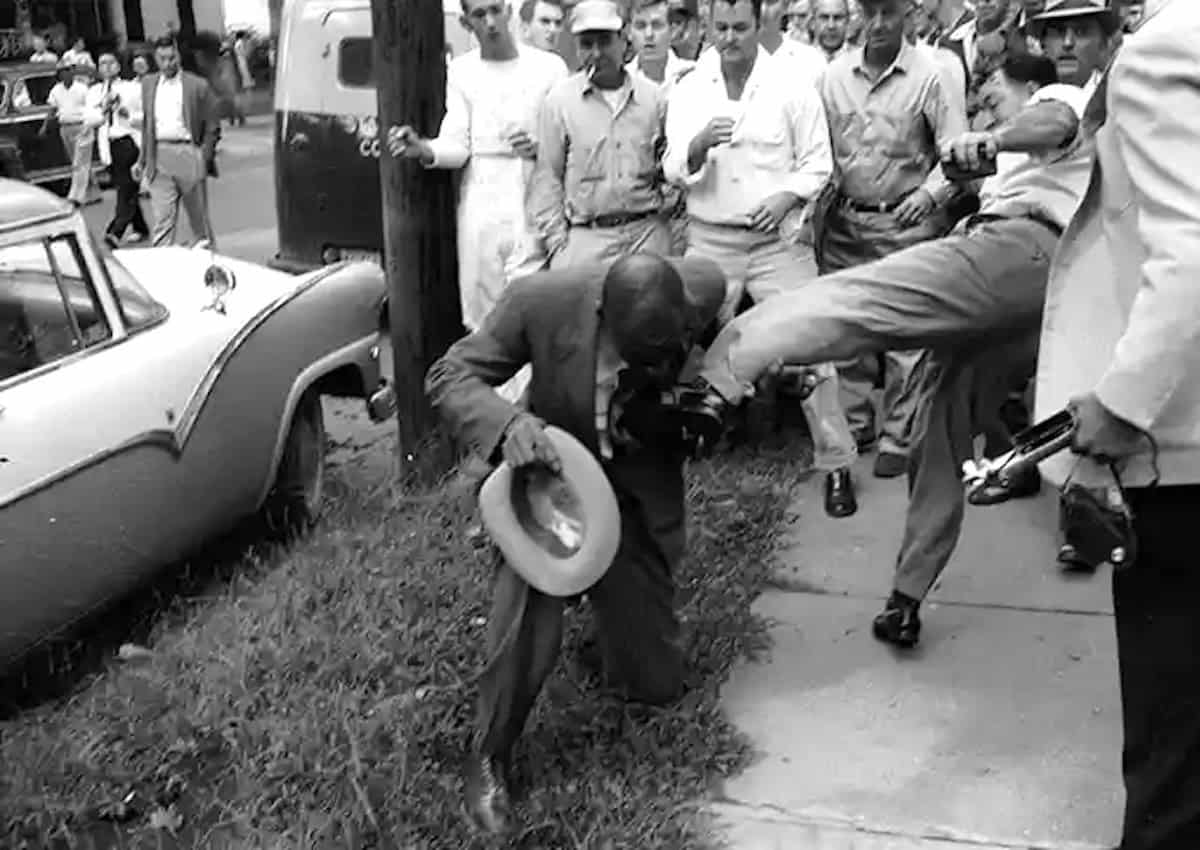
Although she didn’t know it, Elizabeth was walking straight into history. Will Counts, a 26-year-old photographer for the Arkansas Democrat, captured the scene for all the world to see.
“It was pandemonium and Elizabeth Eckford was walking alone through it,” Randy said. “The photo that shook the world showed that young Black girl being surrounded by pure hate, by people who wanted to kill her.”
For two blocks, Elizabeth walked a gauntlet of threats and racial slurs. Will Counts’ photo bore witness to the hostility with the distorted face of 15-year-old student Hazel Bryan hurling hate as Elizabeth continued her solitary walk.
By the end, the nine children accomplished something amazing. They went to school. And their refusal to quit challenged America forever.
Integrating the All-White Arkansas School
In 1954, the Supreme Court’s Brown v. Board of Education decision outlawed segregation in public education. Little Rock School Superintendent Virgil Blossom devised a plan of gradual integration that would begin at Central High School in 1957. The school board called for volunteers from all-Black Dunbar Junior High and Horace Mann High School to attend Central.
The superintendent had strict criteria for the Black youngsters chosen – all were to have top grades, great attendance and not be trouble makers. Originally, 25 were selected.
However, when the names of the 25 were published in the newspaper, most of the volunteer students backed out because their families were harassed and some parents lost jobs. The nine were what was left.
Along with Elizabeth Eckford, the others were Minnijean Brown Trickey, Ernest Green, Thelma Mothershed Wair, Melba Pattillo Beals, Carlotta Walls LaNier, Terrence Roberts, Jefferson Thomas and Gloria Ray Karlmark.
Seeing a Better Education
The reason these nine students chose to leave their friends and the comfort of their own school and community was simple – they wanted a better education and future. Central High was widely touted as the best school in the state.
“What going to Central High School stood for us was access to opportunity,” Melba said at the 50th commemorative event in 2007. “We knew that Central High School was where we would have the opportunity to get a good education.”
The nine knew that whatever benefits Central offered would come at a high cost. Fearing white outrage over racial mixing, the school board had banned the Black students from participating in extracurricular activities – no choir, drama club, sports, prom, or anything. And no retaliation, no matter what other students did to them.
“But we had no idea what it was really going to be like,” Minnijean said at the 2007 commemoration. “If we knew what it was going to be, we would have been too scared to go.”

Violence Erupts at Central High School
The addition of nine Black students to Central might have gone unnoticed. But what Gov. Orval Faubus did put Little Rock in the spotlight. He called out the National Guard to prevent the Black students from entering school. The violence that erupted attracted worldwide attention.
On September 23, 1957, the Black students tried again and successfully entered school. But rioting broke out and the nine were removed for their safety.
On Sept. 24, 1957, President Dwight D. Eisenhower ordered the U.S. Army’s 101st Airborne – the “Screaming Eagles” – into Little Rock. Under federal troop escort, the Little Rock Nine made it inside for their first full day of school on September 25th.
In the days that followed, they endured unrelenting abuse, both physical and mental.
“You’d be walking out to the volleyball court and someone would break a bottle and trip you on the bottle,” Melba said in 2007. “I have scars on my right knee from that.”
In the boys’ gym, the Black students were hit with hot, wet knotted towels. Broken glass littered the shower room floor. The Nine were shoved, tripped, punched, spat upon, threatened and cursed.
“The memory of what happened here to me forever permeates my body,” Gloria said in 2007.
The Little Rock Nine: Like Going to War Every Day

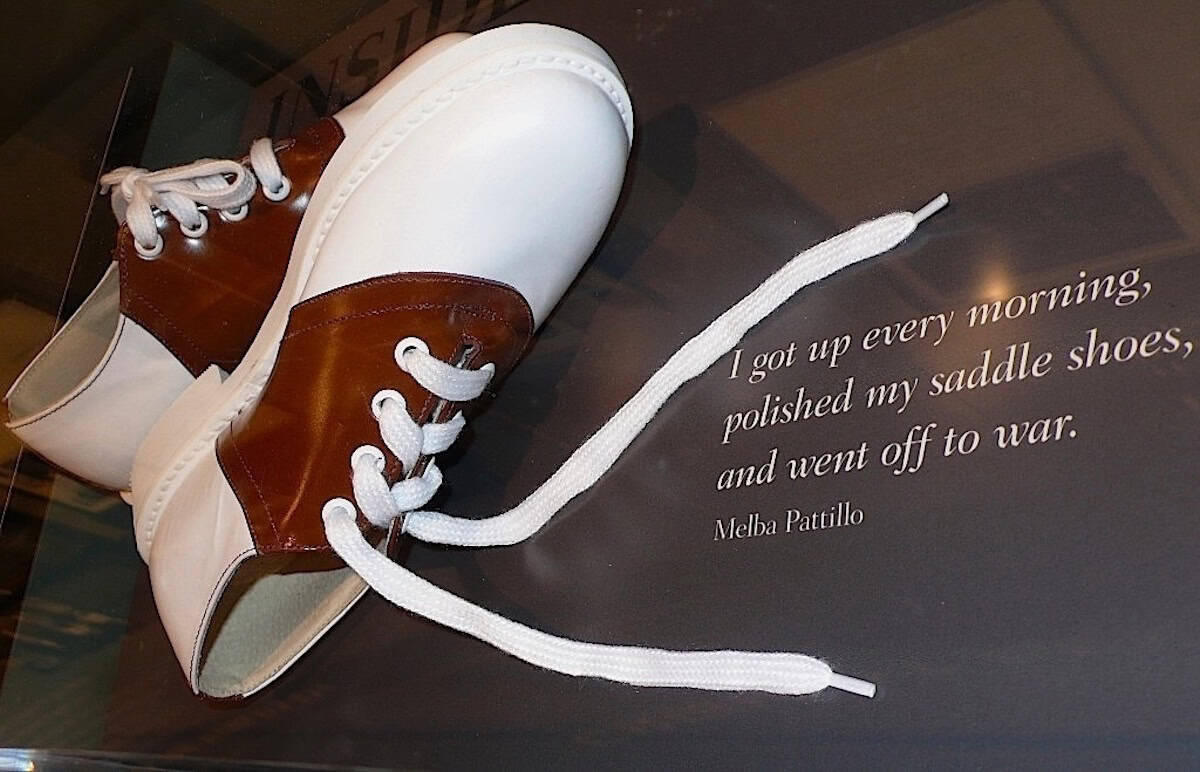
Ernest described the experience “like going to war every day…I learned that the best revenge against my tormenters was to stay there,” he said in 2007. “We supported each other. We covered each other’s backs.”
In separate classes, the nine seldom saw each other during the school day. And they rarely saw a friendly face.
“Among the nine of us,” Elizabeth said, “there are perhaps five people that we remember who were kind to us. The majority of people turned their backs and the message seemed to be that they didn’t care about what was happening to us.”
Ernest became the first Black student to graduate from Central High School. The following year, Little Rock’s high schools were closed to prevent further desegregation. When the school reopened, Carlotta and Jefferson returned to Central and graduated in 1960.
“I needed that diploma from Central to validate what I had gone through,” Carlotta said in 2007. “I was going to continue to do what I was committed to doing or die trying.”
Thelma received her diploma from Central High School by taking correspondence courses to complete her studies. The rest of the Little Rock Nine completed their high school education at different schools.

Seven of the Little Rock Nine are still alive. Jefferson Thomas died from pancreatic cancer at age 67 in 2010. Jefferson had been a former track athlete at his previous high school before he attended Central High School, where he could no longer participate in sports.
Thelma Mothershed Wair died on Oct. 19, 2024, from complications of multiple sclerosis at the age of 83. Thelma had moved back to the Little Rock area in 2003 and resided in her hometown until her death.
Visiting the Central High School National Historic Site Today

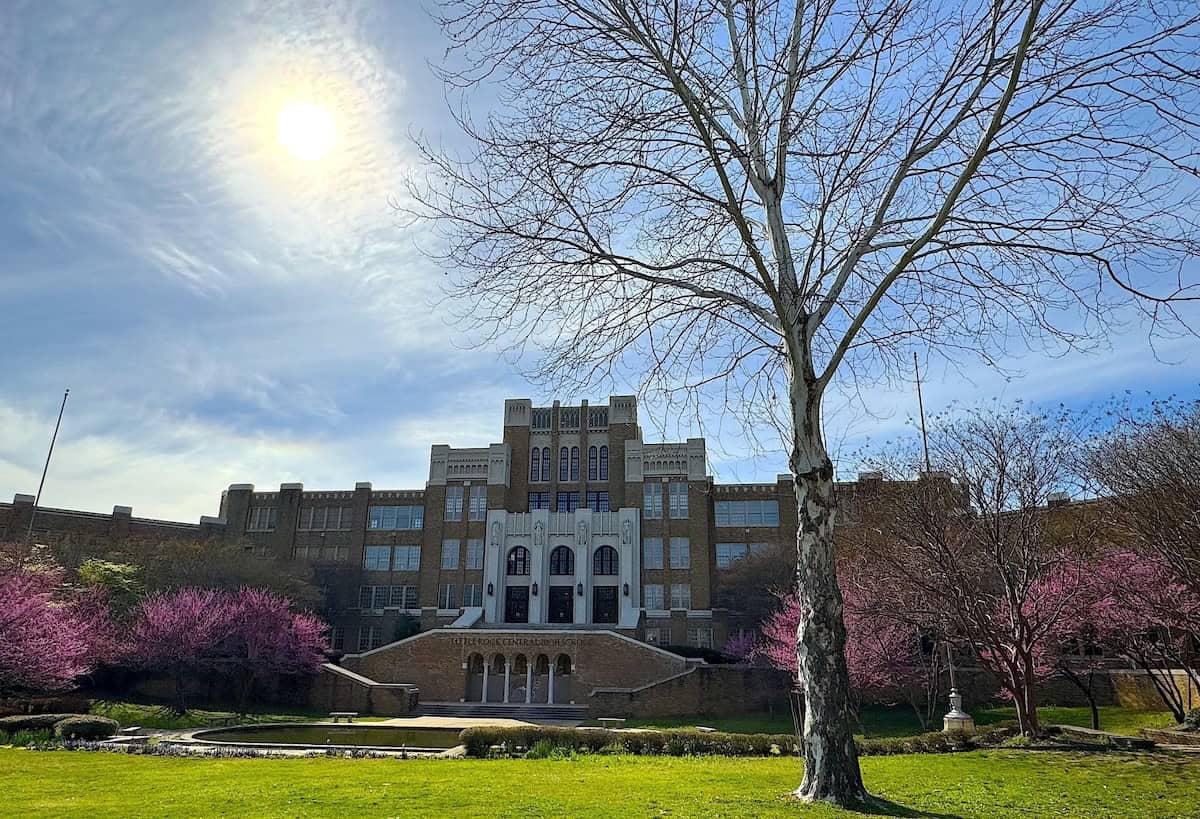
Today, Central High School is still an operating high school attended by more than 2,000 students, nearly split between Black and white students. Built in 1927 for a whopping $1.5 million, the school was reported to be the most beautiful and most expensive school ever built.
The massive structure, a blend of Art Deco and Gothic Revival styles, was named by the American Institute of Architects as “America’s Most Beautiful High School.”
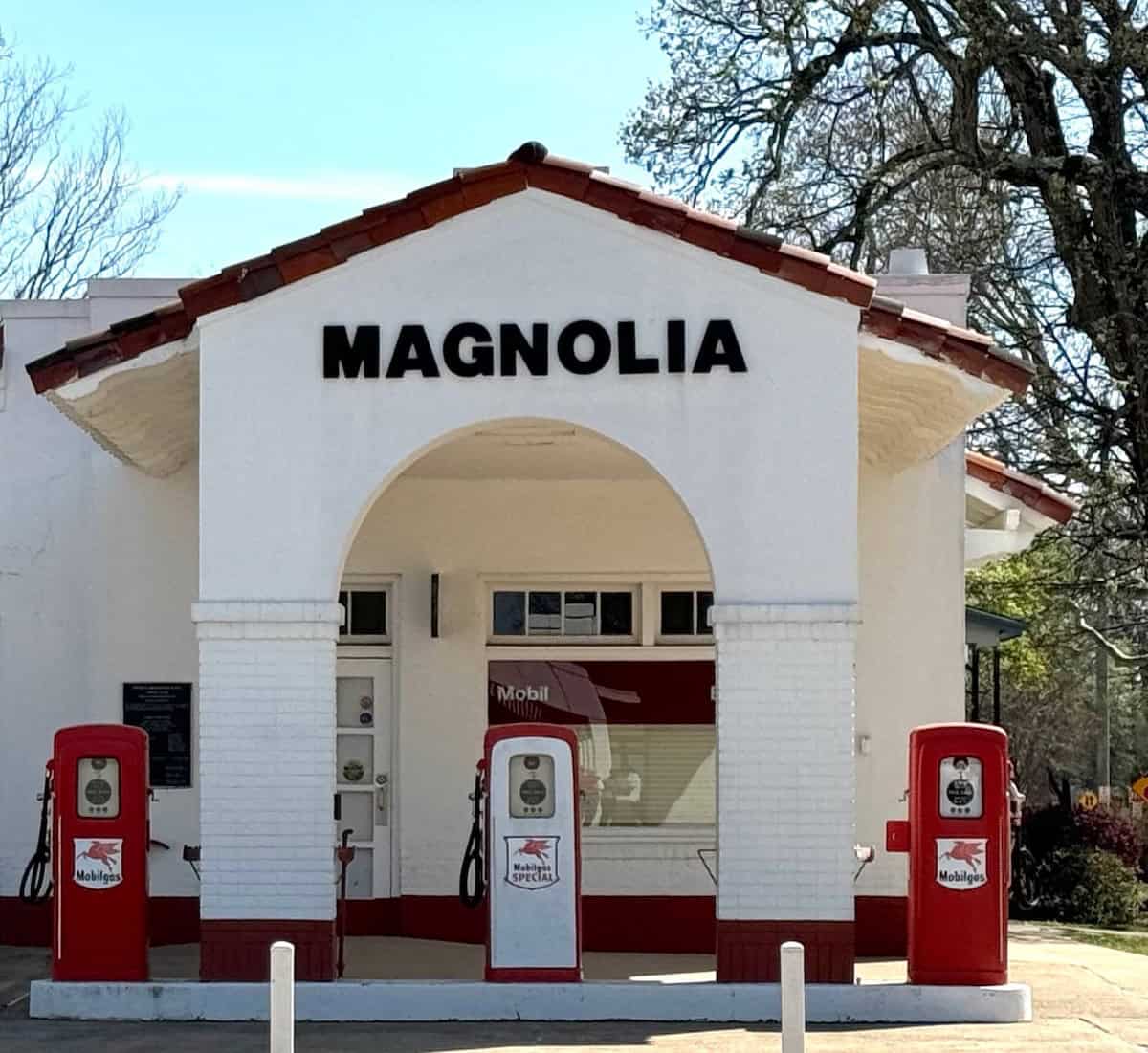
Across from the school is a Visitor Center with exhibits tracing the history of Central High School’s integration and the Little Rock Nine. Across from the school and the Visitor Center is a gas station where, during those historic days before cellphones and laptop computers, media had to stand in line to phone in updates to newspaper editors.
“Telling such a painful story isn’t easy, but it’s a story that needs to be told,” Ranger Randy said. “We should never forget what happened here and how brave the Little Rock Nine were to do what they did.”
Visiting Central High School: Home of the Little Rock Nine National Historic Site
For additional information, please call the Little Rock Convention & Visitors Bureau at (501) 516-7230, www.littlerock.com
Learn More:
Read about Will Counts: The Photographer Who Captured The Little Rock Nine Photo
Disclosure: The author was the guest of the Little Rock Convention & Visitors Bureau, but any opinions expressed in this post are her own.
Also on More Time To Travel
The ESSE Purse Museum: A Hidden Gem in Little Rock, AR





One of your photos is of Carlotta Walls but says it is Elizabeth Eckford.
Also a better number to call to plan a visit to the national historic site would be the site themselves, not the LRCVB.
501-516-7230
Hi Anne, Thanks so much for taking the time to write. The corrections have been made.