The ESSE Purse Museum: A Hidden Gem in Little Rock, AR
Contributor Jackie Sheckler Finch discovers a hidden gem in Little Rock, Arkansas, a one-of-a-kind museum that traces the history of the purses women once carried.
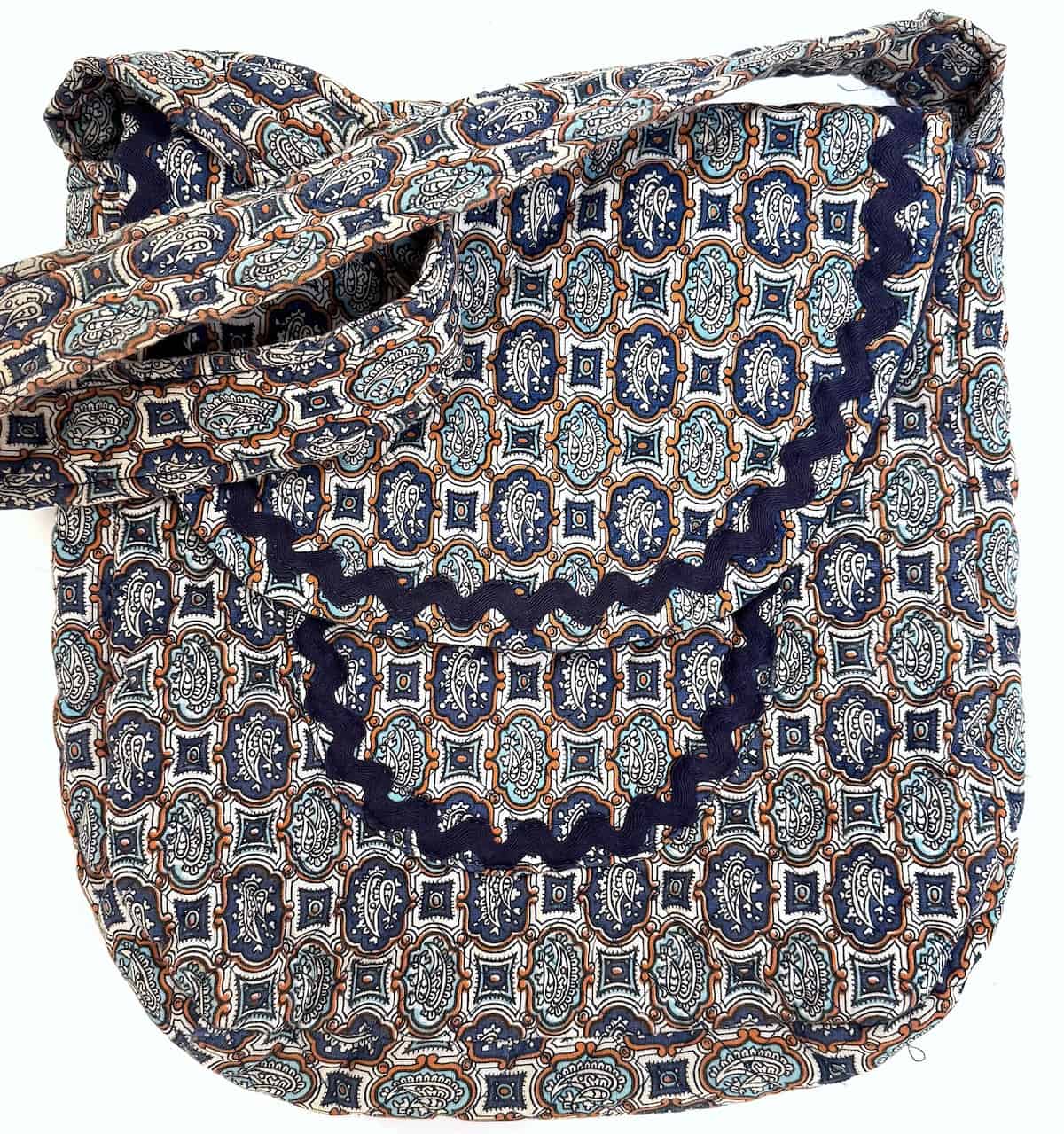
Hanging in my closet is a shoulder bag I carried in college. The monogrammed fabric purse is reversible. Dark blue on the inside with a lovely pattern on the outside.
Why don’t I use it? The 50-year-old purse is no longer useful. It doesn’t have a cross-body strap. It doesn’t have a zipper to close securely, nor does it have zippered compartments for keeping my wallet, passport, cellphone, notebook, and camera.
So why don’t I just throw it away? Because it is a part of my history, a relic from a different time and place.
Visiting the Only Dedicated Handbag Museum in the U.S.
As Anita Davis says, it is part of me. “A handbag or a purse holds a woman’s identity…you can tell a lot about a woman by her purse. It holds her essence.”
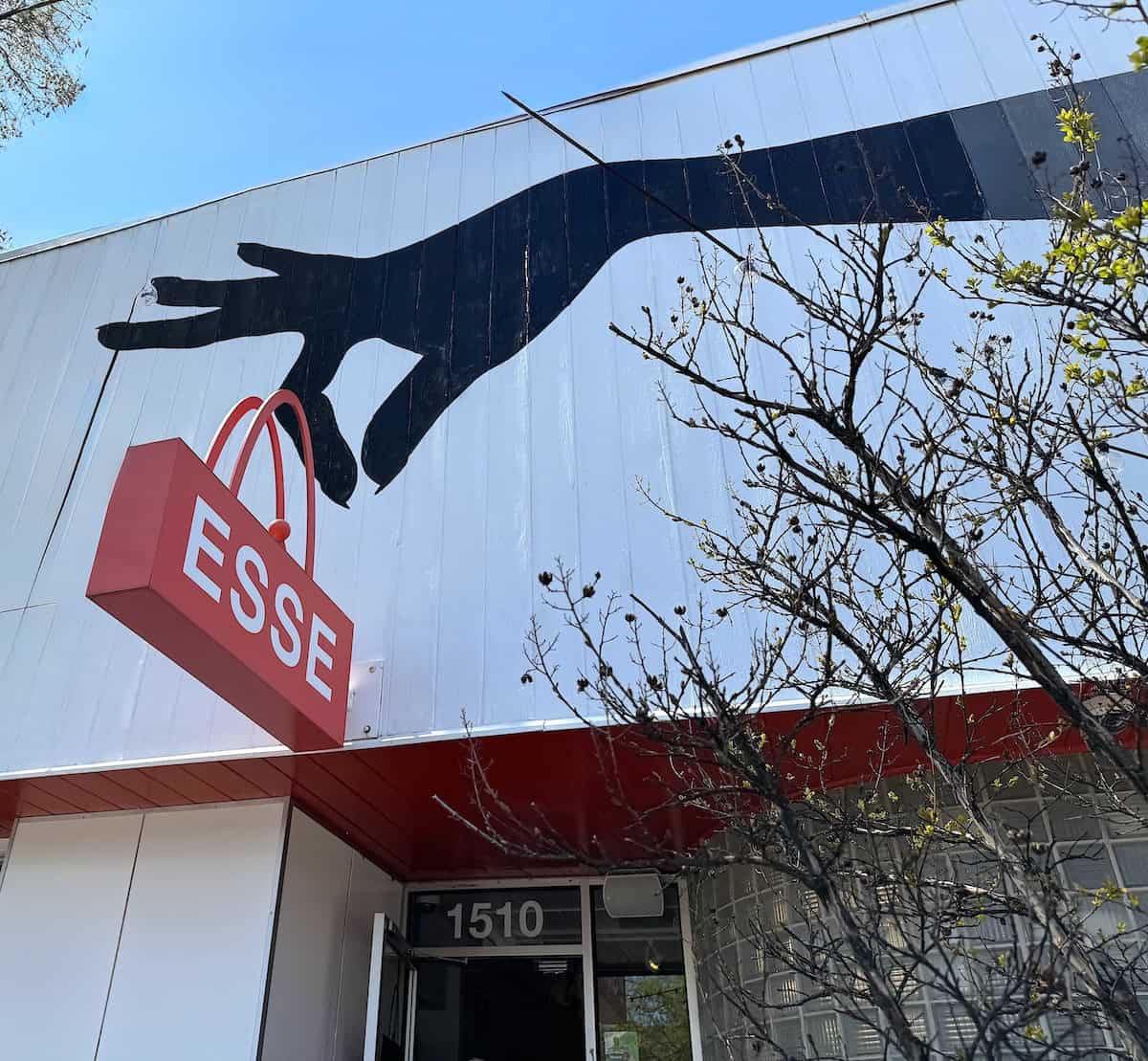
Anita should know. She has collected more than 3,000 purses and handbags and now shares many of them at the ESSE Purse Museum, a privately owned museum in Little Rock, Arkansas.
“The museum honors the women who came before us,” Anita says. “It reminds young women of where we’ve been and the part women played in our country’s history.”
The Genesis of Anita Davis’ Purse Collection

The idea for the museum, Anita says, came to her when she visited Washington, D.C., years ago. Touring the nation’s capital with its many monuments and museums honoring men, Anita says she noticed there was very little about women’s history.
So, Anita decided to tell the story of American women through purses. “As women, we need to celebrate ourselves and honor ourselves.”
To start off, Anita offered her extensive collection for a traveling exhibit. “The Purse and the Person: A Century of Women’s Purses” that toured the country from 2006 to 2011. In June 2013, the exhibit and even more of Anita’s collection found a permanent home in Little Rock.
As the name for the only purse museum in America, Anita chose ESSE. “The word ‘ESSE’ comes from Latin, meaning ‘to be.’ It seemed a good name for a museum that features not only the purses women carried but also the lives women led,” Anita says.
A Journey Through Women’s History
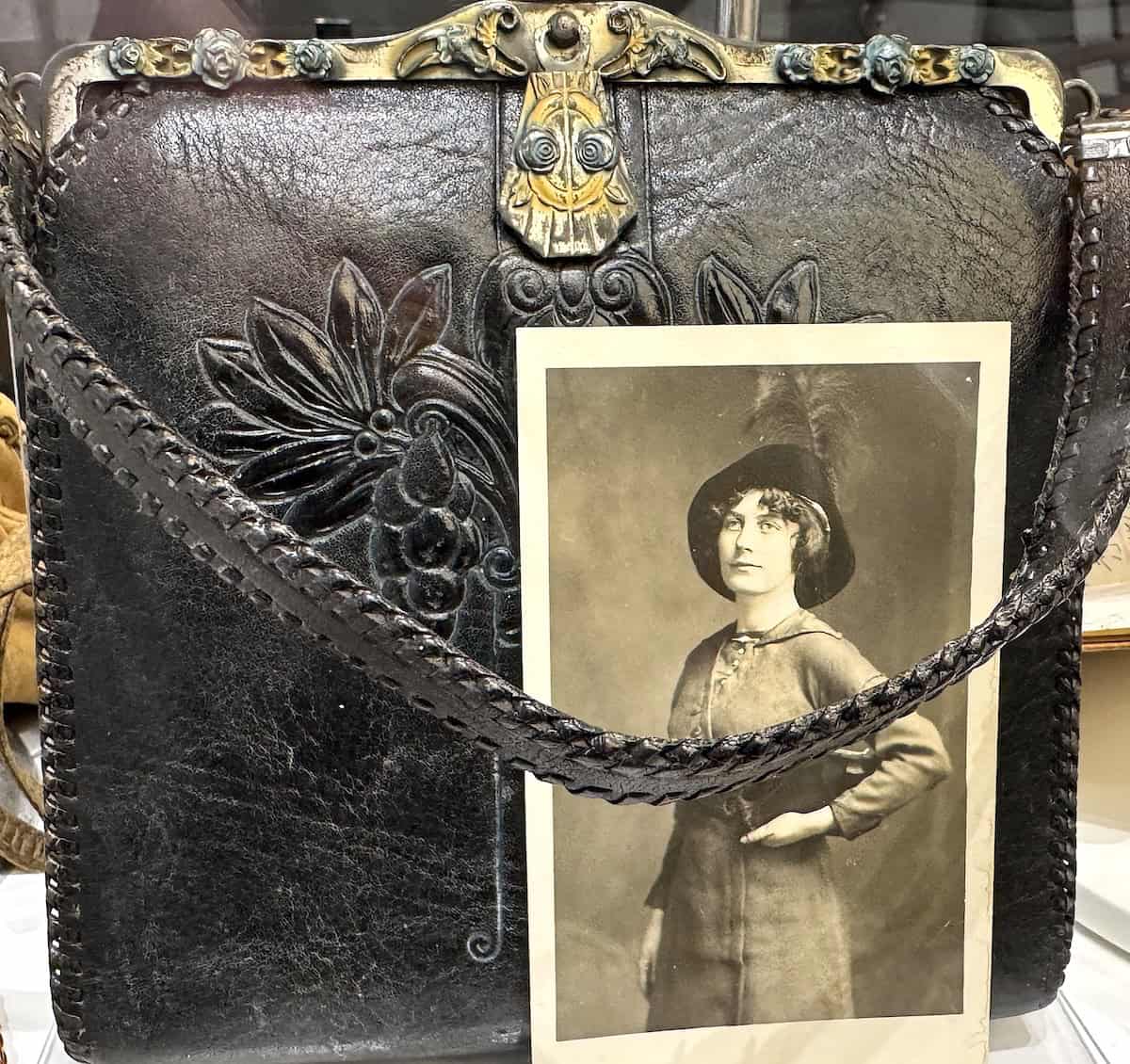
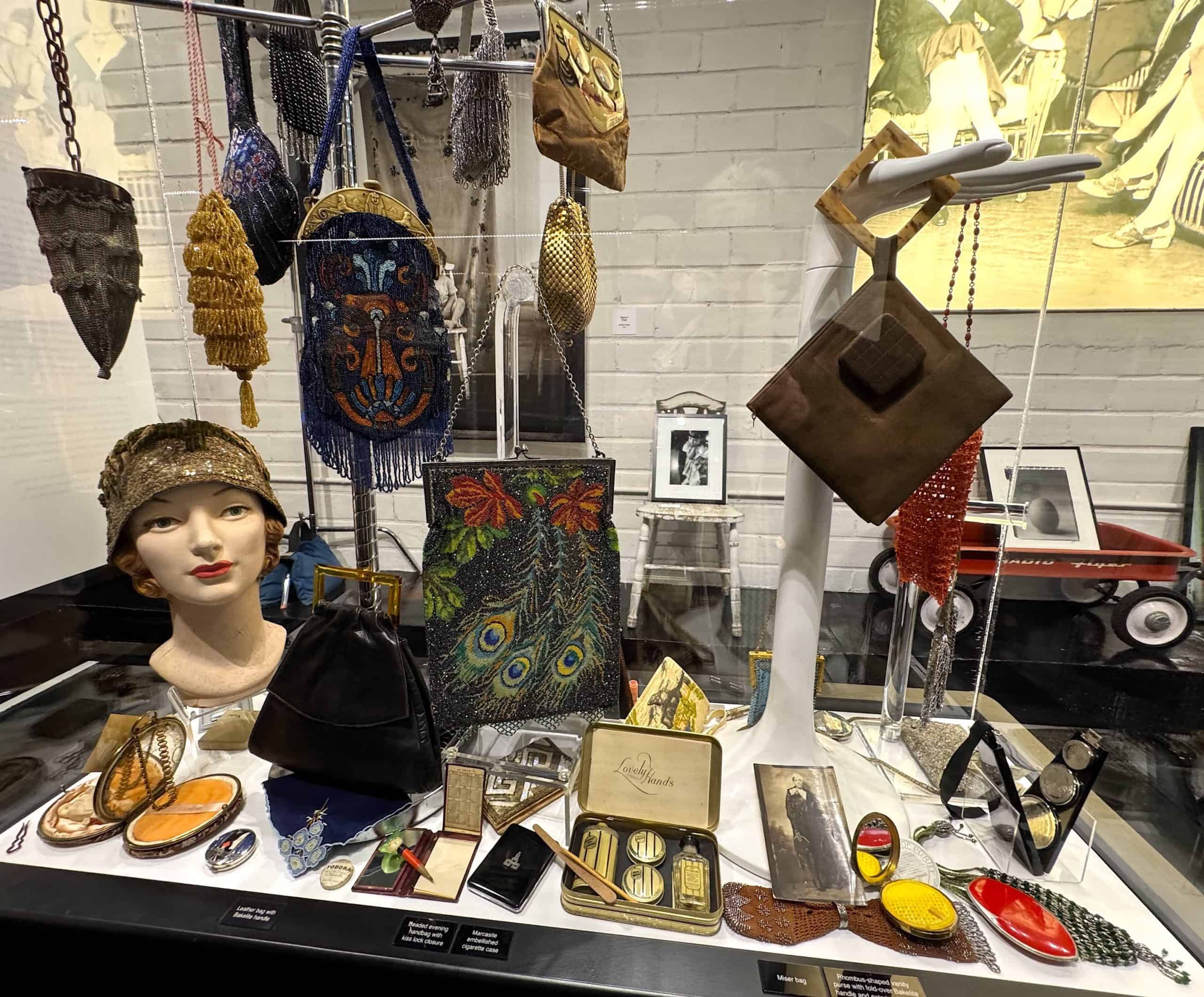
The ESSE permanent exhibit is titled “What’s Inside: A Century of Women and Handbags 1900 to 1999.” Each of the 10 glass display cases features one decade and displays the types, designs, sizes, and contents of women’s purses during that decade.
In the early 1900s, purses were usually small clutch bags meant to be carried in one hand. Tucked inside might be smelling salts in a decorative bottle, in case the woman felt faint. Smelling salts were often considered a status symbol for a delicate lady, so that tiny bottle would be an important fashion accessory.
World War I Brings More Workforce Jobs for Women
As men went to war in World War I in 1917, women entered the workforce. Clothing grew simpler but purses grew more complex. The use of cosmetics became an accepted phenomenon, as women might pause to refresh their lipstick or powder their noses. Bag manufacturers, seeing that women wanted to carry makeup with them, were quick to respond.
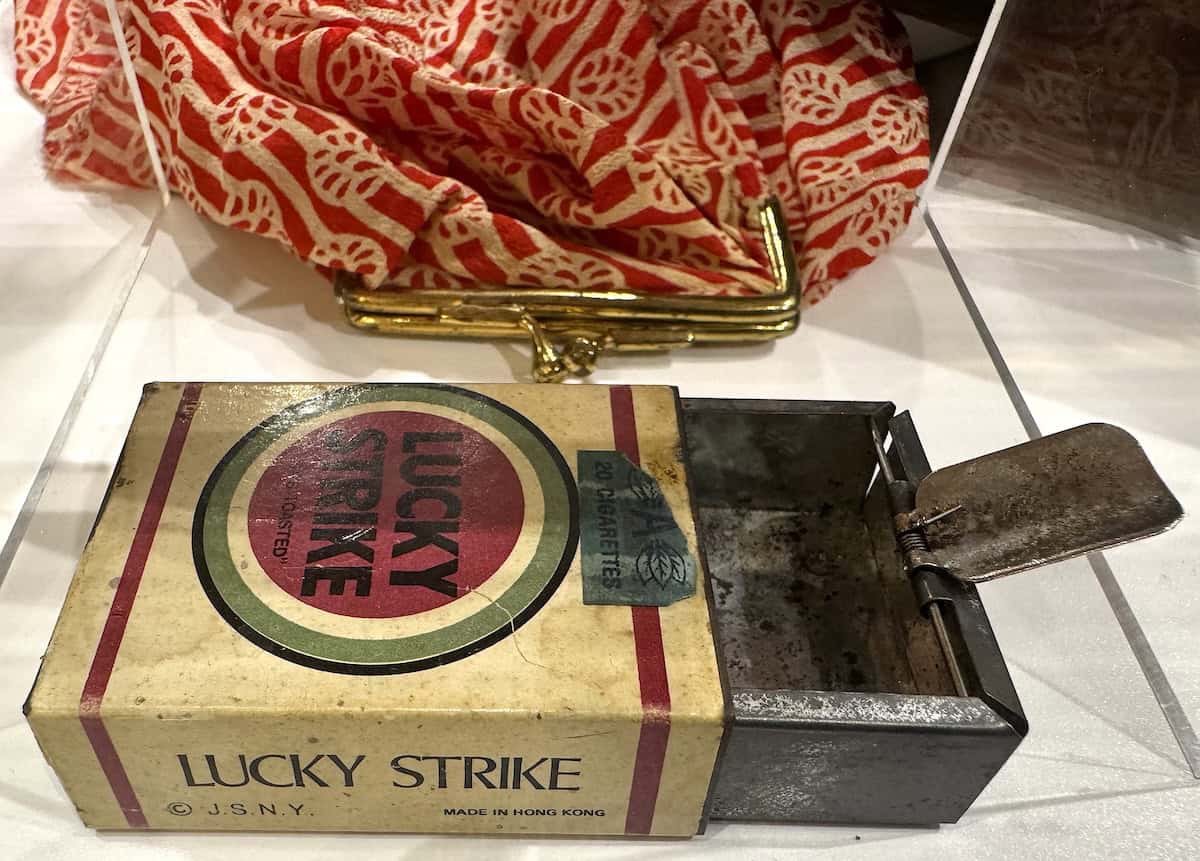
Soon, handbags had compartments to hold cosmetics, cigarette cases, checkbooks, and more. Now the purse was an identifiable part of a woman’s fashion, as important as her shoes, hat, and gloves.
Purses Become More Useful in the 1920s
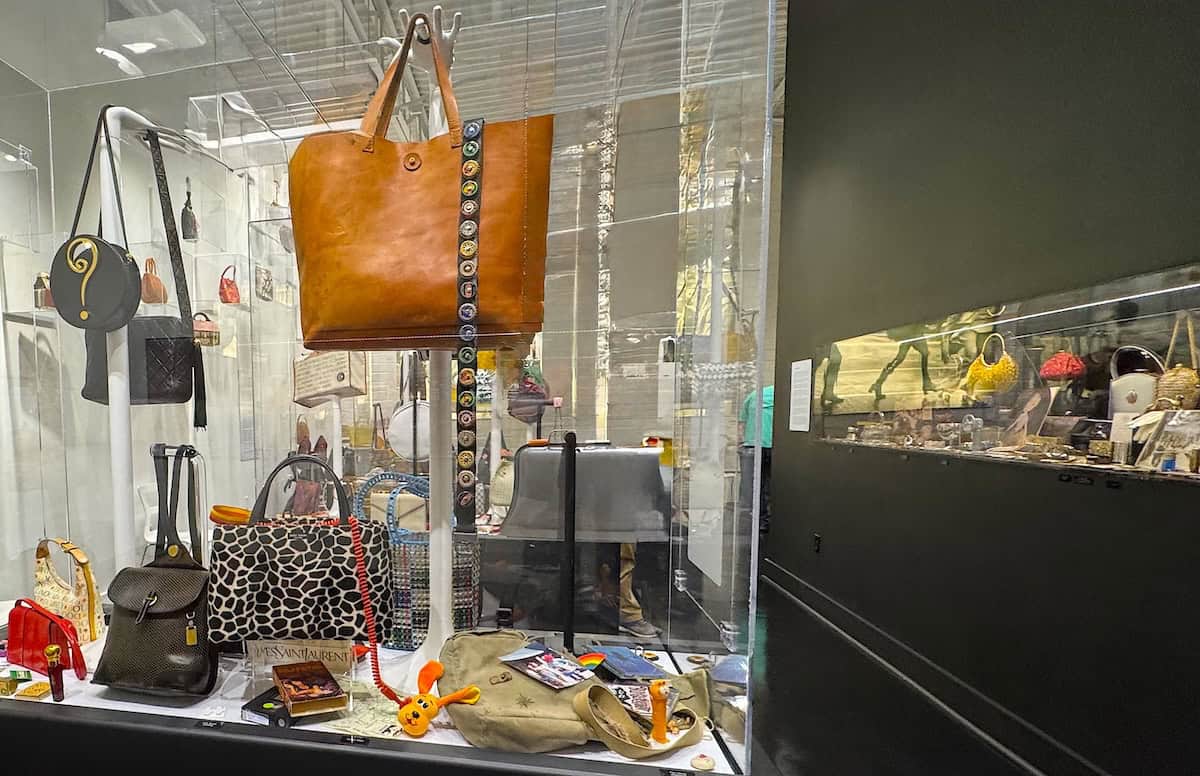
In the roaring 20s, women often carried small beaded purses. But as women gained the right to vote, purses took on a new life as a useful fashion showpiece. They were not “just for pretty” anymore but allowed women to carry important items with them.
As a child, I would jump rope with my sisters to a rhyme about a lady with an alligator purse but I didn’t know what it meant.
“In came the doctor. In came the nurse. In came the lady with the alligator purse,” we would chant. “Out went the doctor. Out went the nurse. ‘Vote,’ said the lady with the alligator purse.”
One day, my Grandma Georgie told me who that lady really was and why she was so important. It was suffragette Susan B. Anthony. In 1878, she wrote the Susan B. Anthony Amendment to the Constitution, which would later become the 19th Amendment. Ratified on Aug.18, 1920, the amendment gave women the right to vote.
In Susan B. Anthony’s day, women didn’t need purses because most women didn’t own anything. Susan B. Anthony used her alligator bag more like a briefcase for her speeches and important documents. That distinctive purse became one of her trademarks and is on display at her home museum in Rochester, New York.
Purses Keep Changing With the Times
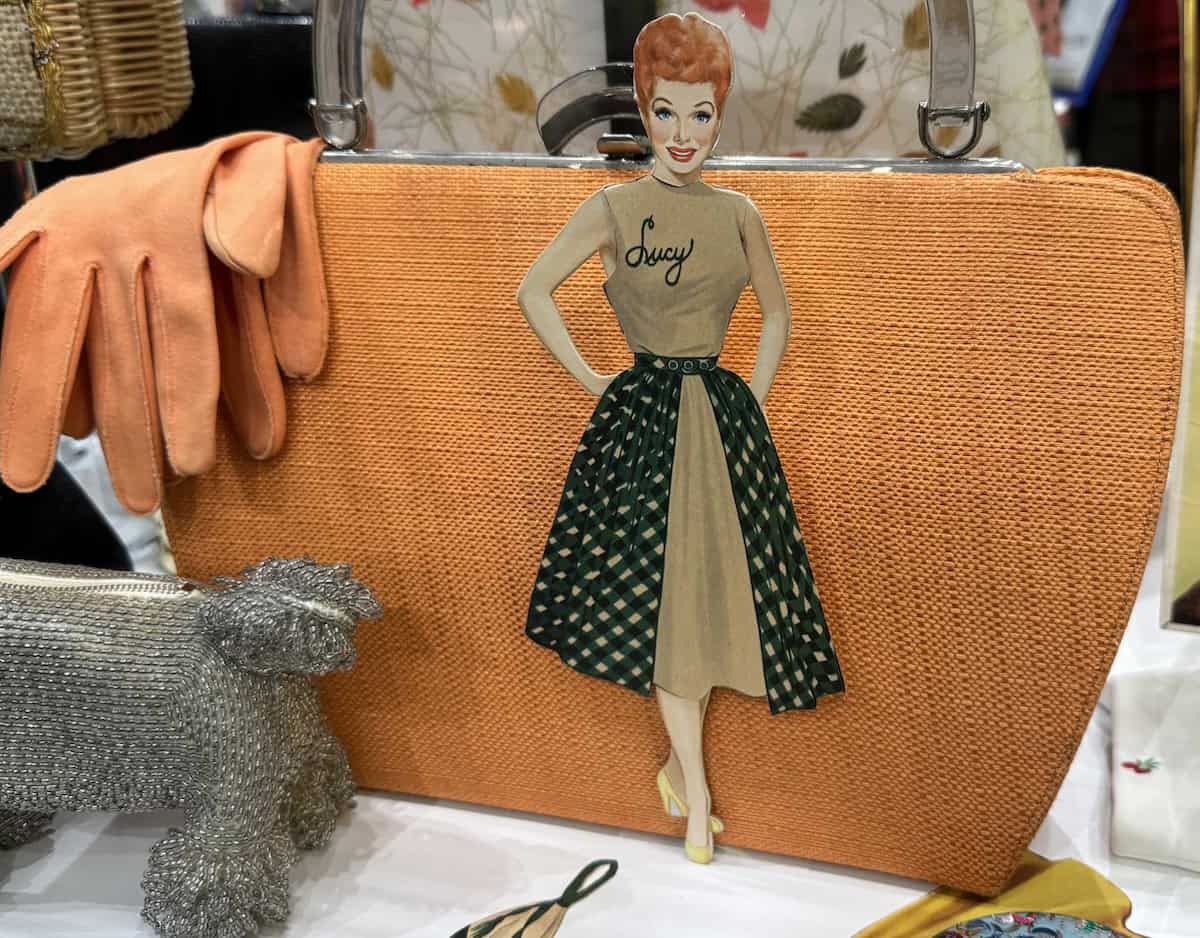
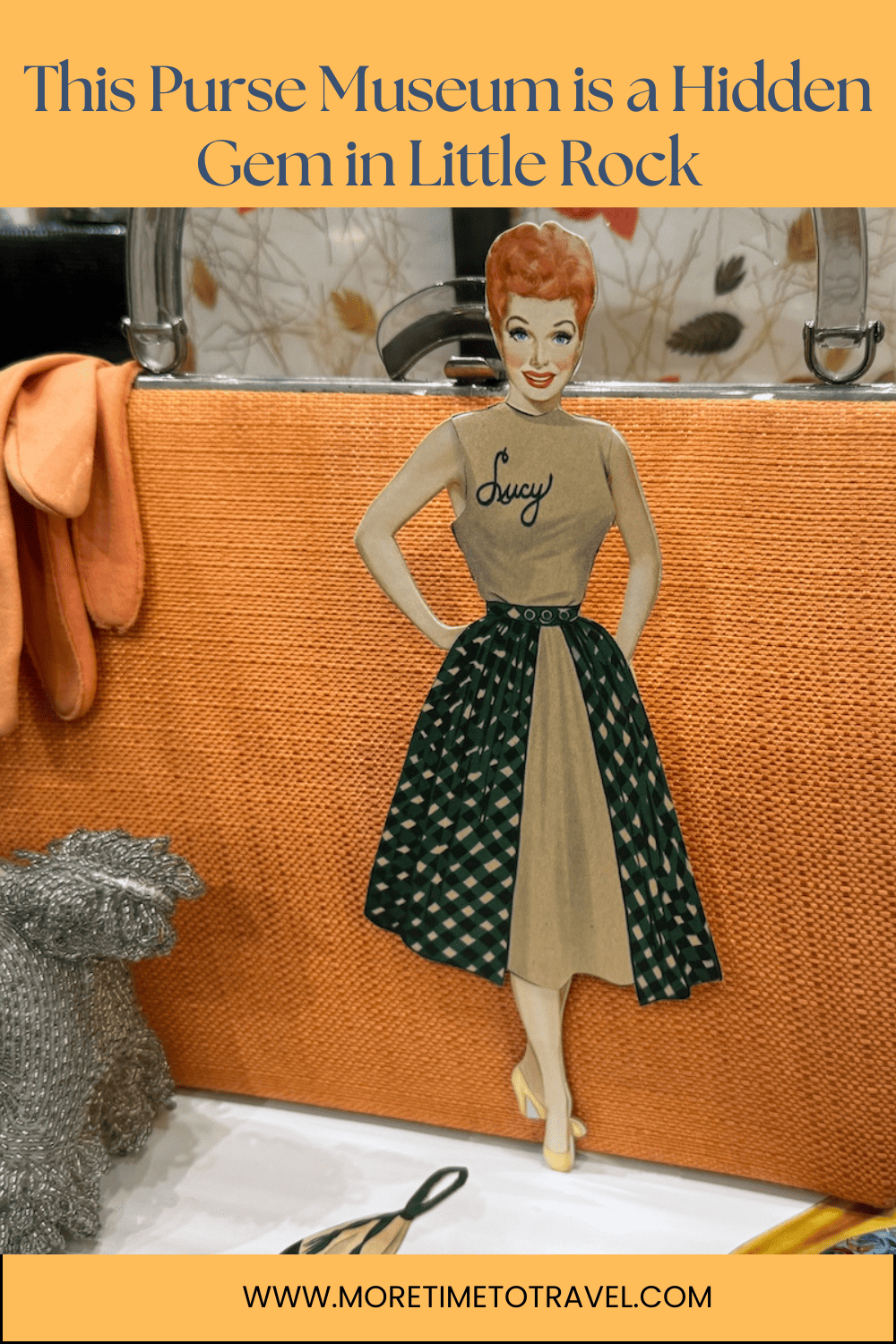
When the ‘50s rolled around, Elvis Presley, the “I Love Lucy” television show, and the new Barbie doll, introduced on March 9, 1959, influenced purse design.
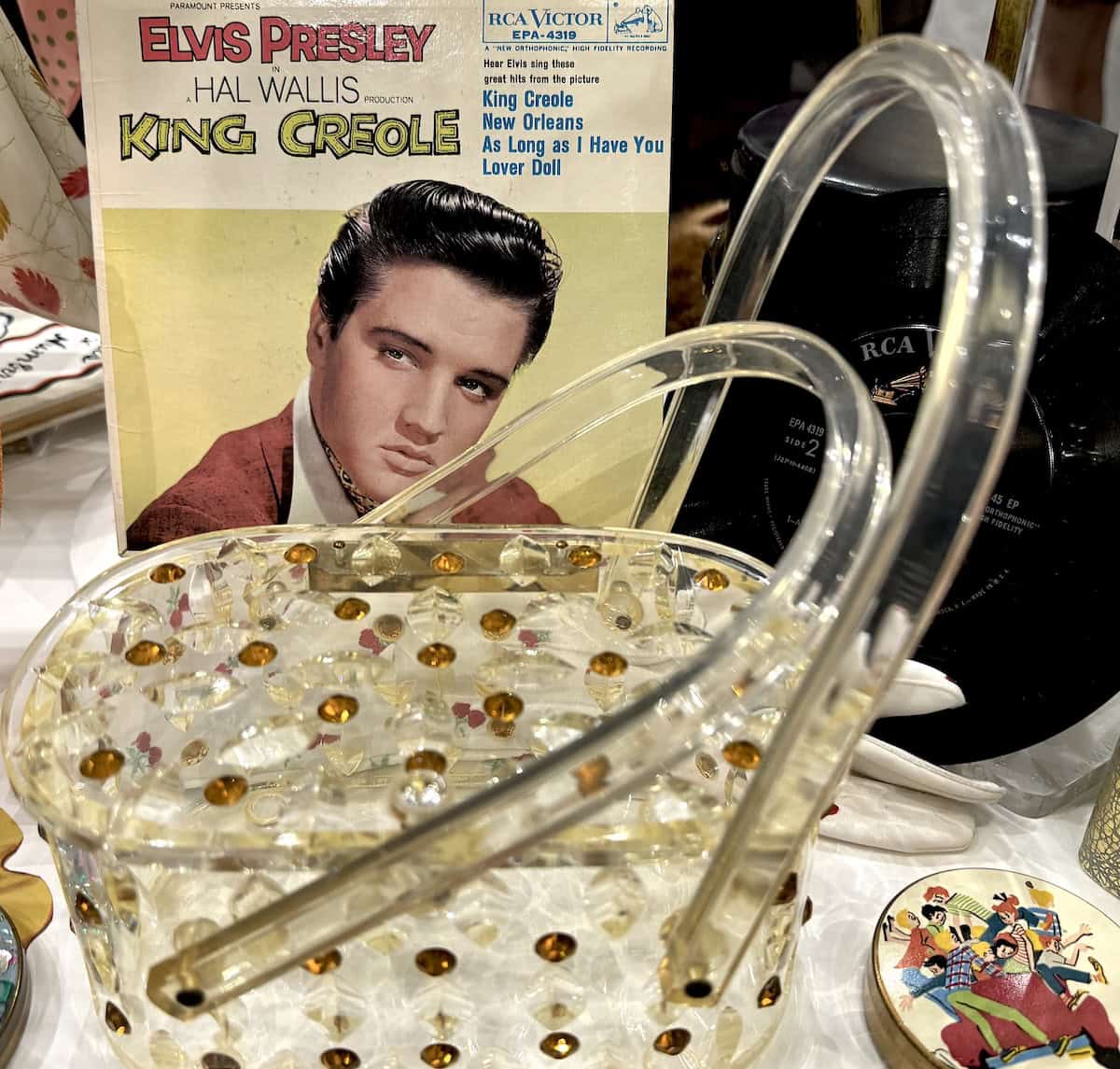
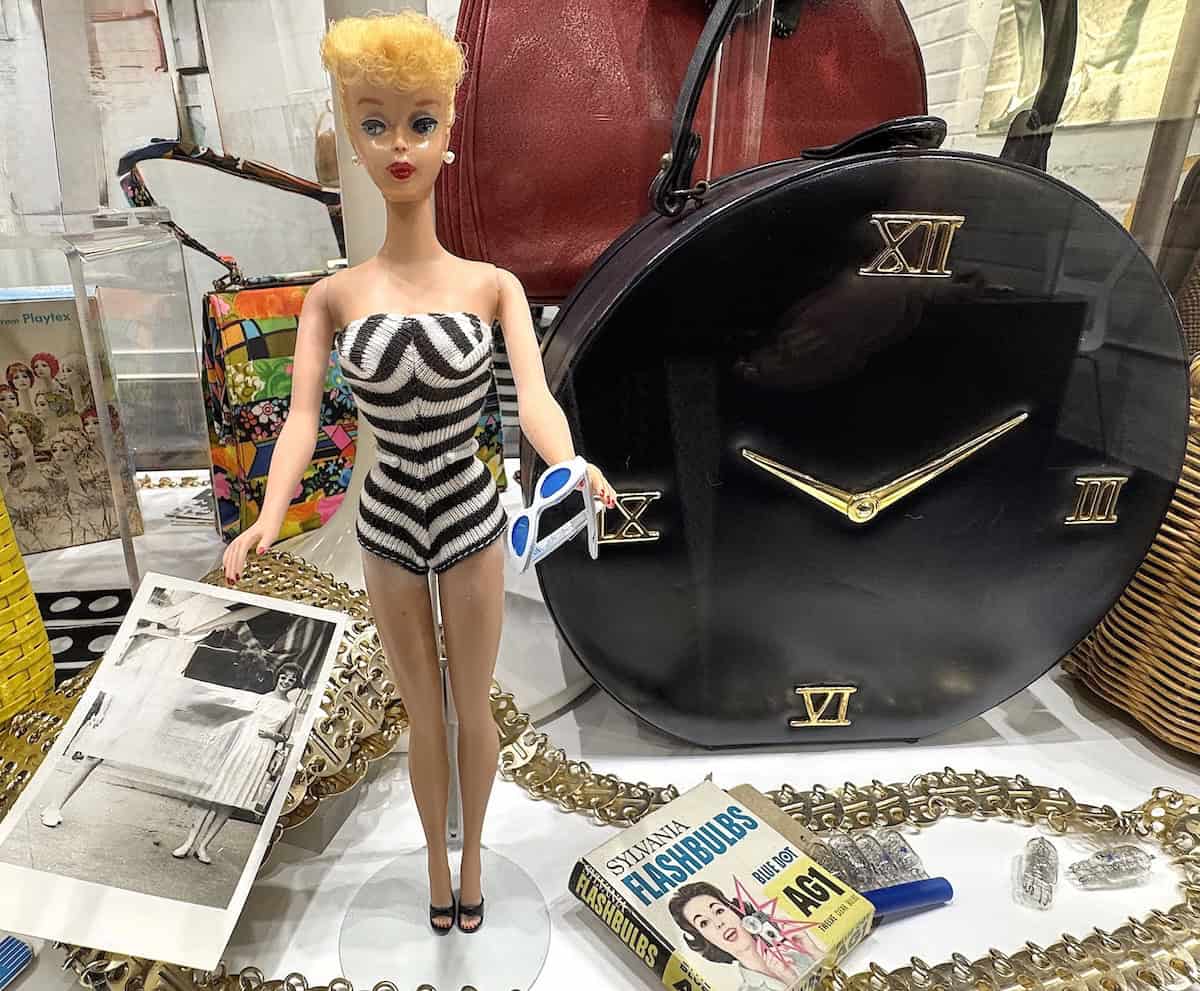
In the ‘60s, the miniskirt was the hot fashion, especially when paired with a long shoulder bag worn diagonally across the body. Inside that bag might be car keys, cigarettes, 45 RPM records, and birth control pills.
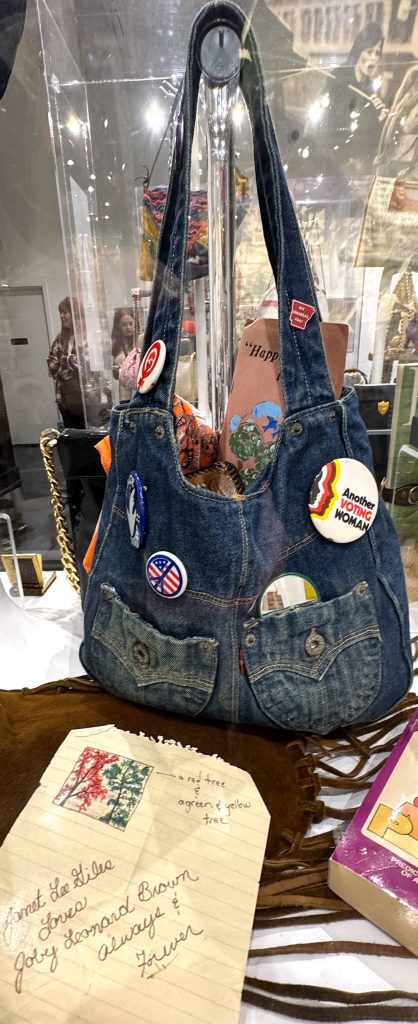
In the ‘70s, Vietnam became a divisive issue so peace signs, denim, and beads became part of purse fashion.
The Etiquette of Ladies’ Purses
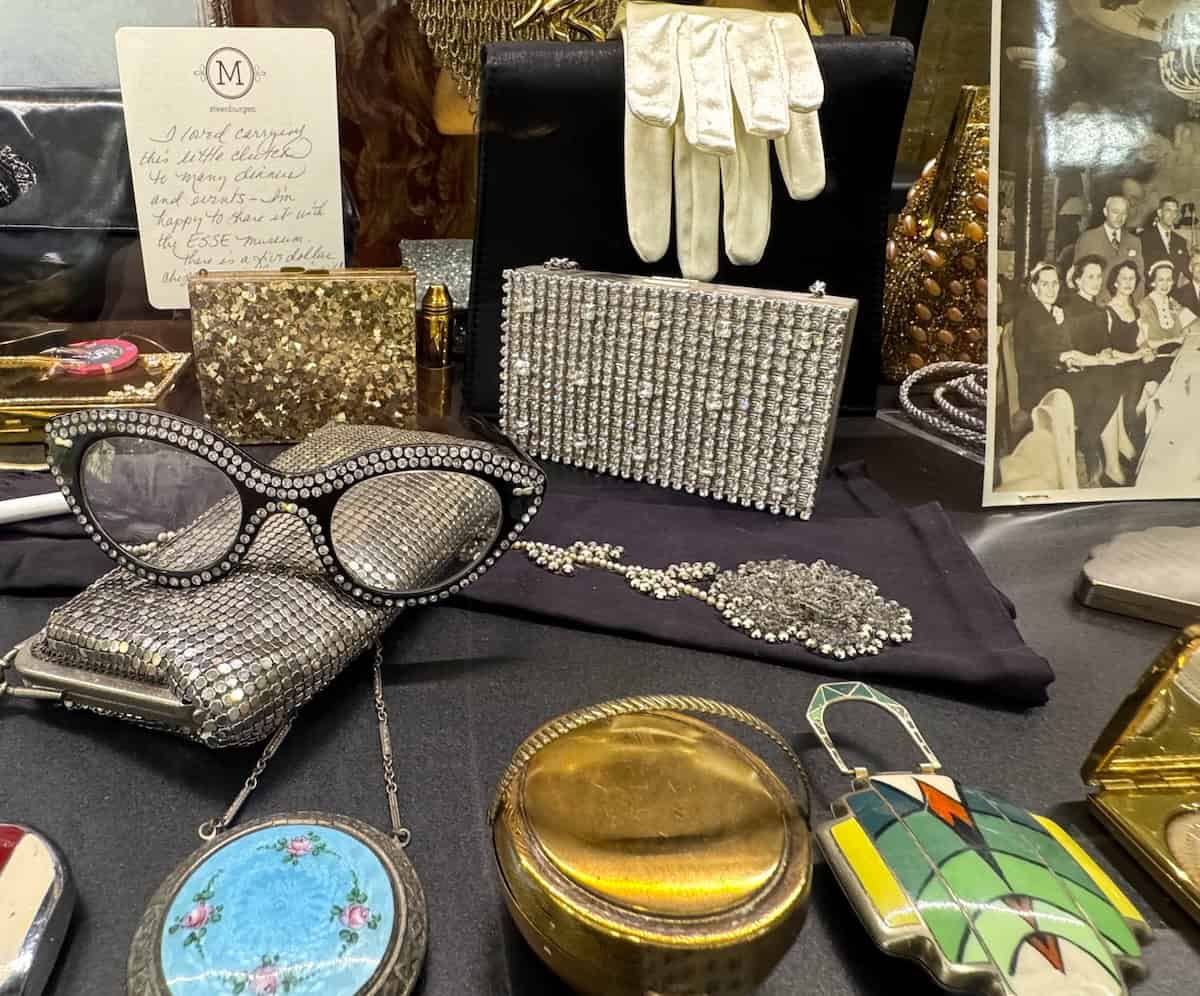
It’s interesting to see how the contents of women’s purses have changed. More makeup, perfume, cigarettes, cigarette lighters, chewing gum, mints, flasks, sunglasses, pens and pencils, snacks, notebooks, compacts, coins for vending machines, and photographs were often tucked inside women’s purses.
I remember sitting by my Grandma Georgie in Sunday church when I was a preschooler. Sometime during the long church service, Grandma would pull out a tiny coloring book or a small notebook along with a few crayons or a pencil. Sooner or later, she would also share some gum or mints, or—once in a while—a whole candy bar. All those items in that wonderful purse were to keep me quiet and busy.
But no way would I, or anyone else, ever think of opening Grandma’s purse to help ourselves to a treat. “Purses are very personal, and there has always been a bit of privacy about what we carry in our purses that has been honored,” Anita says. “No one is supposed to get in your purse unless you ask them to.”
A Museum Scale to Weigh Your Purse
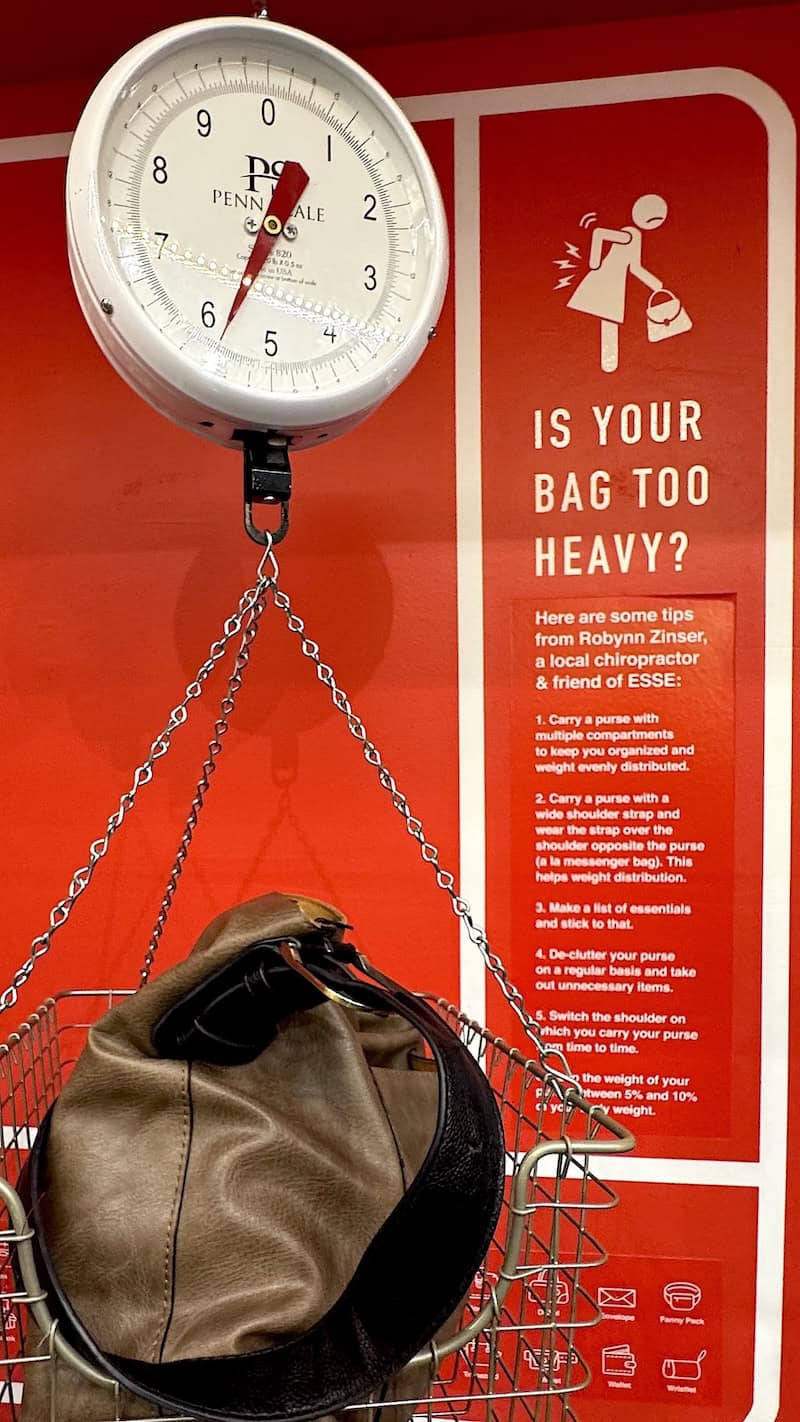
Carrying a heavy purse can cause back pain and other body problems. So, a scale at the ESSE museum lets visitors see how much their purse weighs and how to reduce the risk of carrying dangerous heavy bags.
The tips were shared by Robynn Zinser, a Little Rock chiropractor, and posted near the scales. Two of the clues I liked best:
“De-clutter your purse on a regular basis and take out unnecessary items,” and “Switch the shoulder on which you carry your purse from time to time.”
All in all, the ESSE Purse Museum is a fascinating place, as is its founder and owner. Anita Davis took over an old auto repair shop in a once-rundown area of South Main Street (nicknamed SoMa), which gave a boost to the area’s revitalization.
The museum also has a gift shop with a selection of purses and other souvenirs. The ESSE Purse Museum is a fun educational experience that is also like a trip to the past. A visit might prompt happy memories for visitors, just as it did for me.
Disclosure: The author was the guest of the Little Rock Convention & Visitors Bureau, but any opinions expressed in this post are her own.
IF YOU GO
- The Esse Purse Museum is open Tuesday through Sunday from 11 AM to 4 PM (closed on Mondays). See pricing and additional ticketing information.
- Other things to do when visiting SoMa Little Rock.
- For additional information, visit the Little Rock Convention & Visitors Bureau website.
Save to Pinterest!!






Looks so interesting – love the displays.
If you visit Amsterdam, check out the Tassenmuseum (Museum of Bags and Purses).. I took my husband there – he was probably the only male in the exhibits but he found enough to interest him!
Thanks for the suggestion, Marilyn!