Cinque Terre by Train & Boat: A Slow Travel Food Lover Guide
Summary: Contributor Ali Webb explored Italy’s iconic Cinque Terre a different way. Spending a week in the region offers a slow travel alternative to day trips or hiking, using local trains and coastal ferries to connect the five cliffside villages: Monterosso, Vernazza, Corniglia, Manarola, and Riomaggiore.
This approach helps avoid the rush of day-trippers and opens time to savor regional culinary highlights, including fresh trofie with pesto, local anchovies, and seaside seafood. Memorable experiences include exploring terraced vineyards and tasting local Sciacchetrà wine in Manarola, taking in panoramic views from the water, and enjoying quiet villages in the mornings and evenings.
In the Cinque Terre, on the northwestern coast of Italy, the train disappears into a dark tunnel and, moments later, bursts back into the sunlight with the Mediterranean flashing blue outside the window—just like a movie.
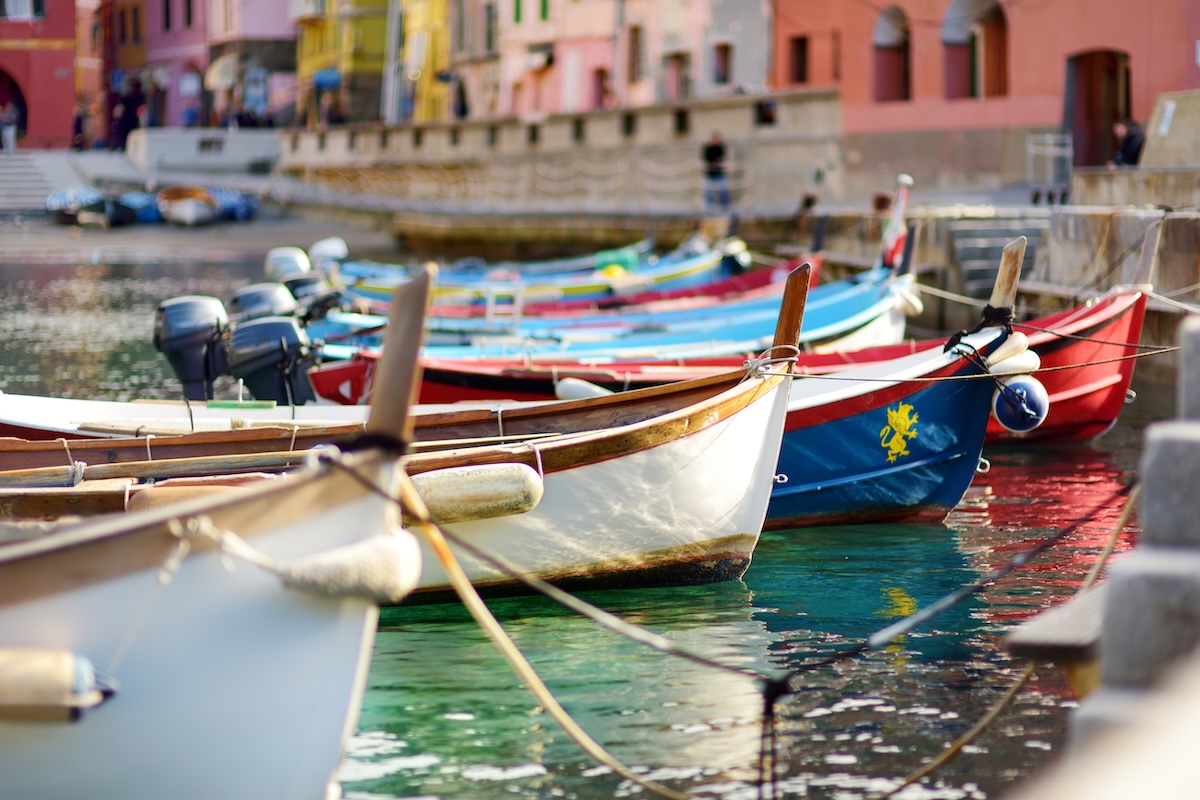
A few minutes later, you step off into a quaint village of pastel houses, fishing boats, café tables, and steep streets…and people, so many people.
Visiting in mid-May, before the high-summer season, we thought we would avoid the biggest crowds. Sadly, we were wrong. Cinque Terre attracts several million visitors a year, with crowds swelling from late spring through early fall.
5 Cinque Terre Villages in 1 Week

Luckily, spending a week in Cinque Terre offered the luxury of not having to conquer it in a couple of days. There was no pressure to see all five villages in a day. Instead, the plan was simple: travel by train, take a boat along the coast, spend an afternoon tasting wine in Manarola, eat plenty of seafood and pesto, and allow enough time to sit still.
The villages are surrounded by Cinque Terre National Park. Its most recognizable landscape was created by both nature and humans. For centuries, farmers carved narrow terraces into mountains that plunge toward the Ligurian Sea, supporting them with miles of dry-stone walls and planting grapes and olive trees on slopes that appear almost impossible to cultivate.
Four of the five villages—Monterosso, Vernazza, Manarola, and Riomaggiore—became our stops along what felt like one of the world’s most entertaining commuter rail lines. The fifth village, Corniglia, is on the train line but requires a climb of almost 400 switchback stairs to reach the village.
The Cinque Terre Train Is Part of the Experience
The Cinque Terre train is wonderfully practical and modern. The villages are separated by high and rugged cliffs that make traveling between them by car difficult, but the railway stitches the coast together. Trains run frequently, and most rides between neighboring villages take only a few minutes. A day pass hovers around 18 euros per person.
That makes it possible to wake up in one village, have lunch in another, and head somewhere else for dinner without ever feeling as though you have devoted the day to traveling.
Our plan was simple. Make a reservation for lunch in one of the villages and then go there and return to our home base in Monterosso. There is something almost comical about the brevity of the trips. You settle into your seat, if you can find one, the train plunges into a tunnel, and before you have finished a conversation, it is time to get off.
The train also changes the pace of the trip. There is no car to park and no need to worry about navigating narrow Italian roads. A missed train is rarely a crisis. Another will come along, and there is always a café nearby where waiting becomes part of the day.
Monterosso: The Cinque Terre at the Beach

Monterosso al Mare feels different from the other villages. It is more open and flatter, and it has the best real beach in the Cinque Terre. Rows of umbrellas line the rocky sand, restaurants face the water, and the promenade encourages a slower kind of sightseeing. This is the village for a long seafood lunch followed by an afternoon near the water.

As the biggest of the five, it offers the most places to stay. We settled into a small, tidy apartment, where we could see and hear the waves. It was above the boardwalk, and the stream of tourists chattering was drowned out by the noise of the ocean.

We threw open the windows and enjoyed the breeze. We found a restaurant we really liked on the boardwalk, Da Miky, and went back twice.

It’s listed in the Michelin Guide and lived up to its reputation both times. Sleek and contemporary, the food was innovative and delicious.

Here, we tried anchovies three ways.

The old town is a short walk from the ocean down a long tunnel. You emerge into a plaza with several streets branching off. We arrived on market day and loaded up on a few groceries for our stay, including some lovely cheese. The local grocery store was small and cramped, but it had everything else we needed.
One morning, breakfast was at a local café because they listed pancakes on their menu. We stopped for coffee at a tiny artisanal bakery, Pasticceria Laura, which had been open since 1966, with its special take on the Torta Monterossina and a lovely array of other baked goods.
The region’s food is reason enough to linger. Pesto originated in this region, and it appears on menus with trofie, the short, twisted pasta that holds the sauce beautifully. There are anchovies prepared in ways that may convert people who think they don’t like anchovies, as well as grilled fish, fried seafood, and focaccia. We tried it all.
A week in Cinque Terre makes meals feel like events rather than just snacks between stops.
Vernazza: The Postcard Comes to Life

If Monterosso belongs to the beach, Vernazza belongs to its harbor. Many people hike from one town to the other. We did not.
Stepping from the train station and walking down toward the water reveals the Cinque Terre of postcards: tall, colorful buildings clustered around a tiny harbor, boats pulled onto the shore, and restaurant tables spilling toward the water.
Vernazza invited wandering, even though it meant dodging throngs of fellow tourists. There were narrow streets to explore, shops to browse, and plenty of reasons to stop for coffee or gelato, but we had a goal…lunch.
We settled high above the harbor, up a serious outdoor staircase in a restaurant called La Belleforte. Our table had a stunning view as boats came and went far below us. We started with Santa Margherita’s pink shrimp salad with cherry tomatoes and didn’t get past the first course with the local Trofie with Genova-style pesto.

Italy has always understood the value of sitting in a beautiful place with something good to drink and eat.
Seeing Cinque Terre From the Water

After several days of looking at the Mediterranean from the villages, it was time to reverse the view.
A boat trip along the coast completely changed our perspective. We had to wait for the right day when the water was calm enough for the boat to travel up the coast and into the small villages.
From the water, it becomes clear just how improbable these communities are. Villages seem to cling to the cliffs, surrounded by steep hillsides that generations of residents transformed into terraces.
From offshore, the individual villages also become part of a larger landscape. Riomaggiore’s houses rise sharply from its little harbor. Manarola appears almost stacked against the rock. Vernazza is tucked around its waterfront, while Monterosso stretches along the shore.
The train is the easiest way to visit the individual villages. The boat is the best way to see Cinque Terre as a whole.
Riomaggiore: A Tiny Village

Riomaggiore has an energy of its own. The main street slopes toward the small harbor, with cafés, restaurants and shops occupying the buildings along the way. The streets here were narrow, and the visitors were shoulder to shoulder.

We made our way toward the water and found yet another lovely restaurant, Rio Bistrot. It was tucked into a quiet alcove with just a few tables outside. We ate a leisurely seafood meal.
One of the advantages of staying several days is being able to visit villages at different times. The Cinque Terre at midday, when day-trippers fill the trains and streets, is not quite the same place as it is in the morning or evening. After the crowds begin thinning, the villages seem to exhale.
Drinking the Landscape in Manarola

Of all our days, one of the most memorable required almost no transportation at all. It was devoted to wine in Manarola.
Wine here is inseparable from the landscape. For centuries, growers have cultivated grapes on terraces carved into impossibly steep hillsides above the sea. Looking up at those vineyards makes every glass seem a little more precious. Walking across the high path to look at the vineyards as they clung to the side of the hills was an adventure by itself.
The local white wines are made largely from grapes such as Bosco, Albarola, and Vermentino. Then there is Sciacchetrà, Cinque Terre’s prized sweet wine, traditionally produced from grapes that are partially dried before fermentation.
A private wine tasting at Cantina Marinella in Manarola offered more than just sampling several local wines. Our guide, Maria, explained the landscape we had been looking at all week: the stone terraces, the vines above the villages, and the extraordinary amount of human labor required to cultivate grapes here.

The wine tasting was accompanied by three different courses, each paired to the local wine. We started with dried tomatoes, steamed shrimp, and a potato salad with green beans. Then, we sampled fresh mozzarella and local tomatoes. The final round was offered with prosciutto and local cheese.


Our favorite was the Bucce, a Vendemmia, 2025, and the most complex of the group. Seriously, it was one of the best lunches we had, although several glasses of the local wine may have influenced that perspective. Afterward, there was nowhere we particularly needed to go, except back to the train.
We finished our stay in Cinque Terre with a wonderful meal high on the hill overlooking Monterosso. La Terrazza offers exceptional views of the coastline, as well as perfectly prepared and served meals that showcase the area’s rich bounty. The walk up to (and down from) the restaurant gave us a unique perspective on what it means to visit this extraordinary place.
A Different Way to Experience Cinque Terre

Cinque Terre is frequently presented as a hiking destination, a place to march from village to village along trails overlooking the Mediterranean. But walking the trails isn’t necessary to experience the region.
The trains make the villages remarkably accessible. The boats reveal a coastline invisible from the railway. And staying for a week rather than rushing through in a day provides something increasingly rare in famous destinations: time.
Time for another coffee. Time to return to the same restaurant. Time to take the train to Vernazza simply because it seems like a good place for lunch. Time to spend an afternoon learning why people have grown grapes on these difficult hillsides for centuries.
By the end of the week, the train schedule had become familiar. Monterosso, Vernazza, Manarola, and Riomaggiore no longer seemed like destinations that needed to be checked off a list. They felt more like neighborhoods connected by a very unusual subway system.
And perhaps that is the pleasure of giving Cinque Terre seven days instead of one.
Traveling more slowly, you stop trying to see it all.
You simply start living there for a while.
IF YOU GO
Save to Pinterest!!