48 Hours in Rome: A Luxury Traveler Returns to the Eternal City
Contributor Ali Webb spends 48 hours in Rome and finds there is never enough time to appreciate the city’s eternal promise.
There are cities you visit, and then there are cities that seem to wait for you.
Decades after first arriving in Rome as a young traveler with more enthusiasm than money, I returned for 48 hours and found the Eternal City exactly as I remembered — and completely different. Rome still dazzles, still exhausts, still overcharges for coffee in famous cafés, and still delivers moments so beautiful they stop you in mid-step.
It is, perhaps, the perfect old friend.
An Elegant Stay at Nobildonne Relais
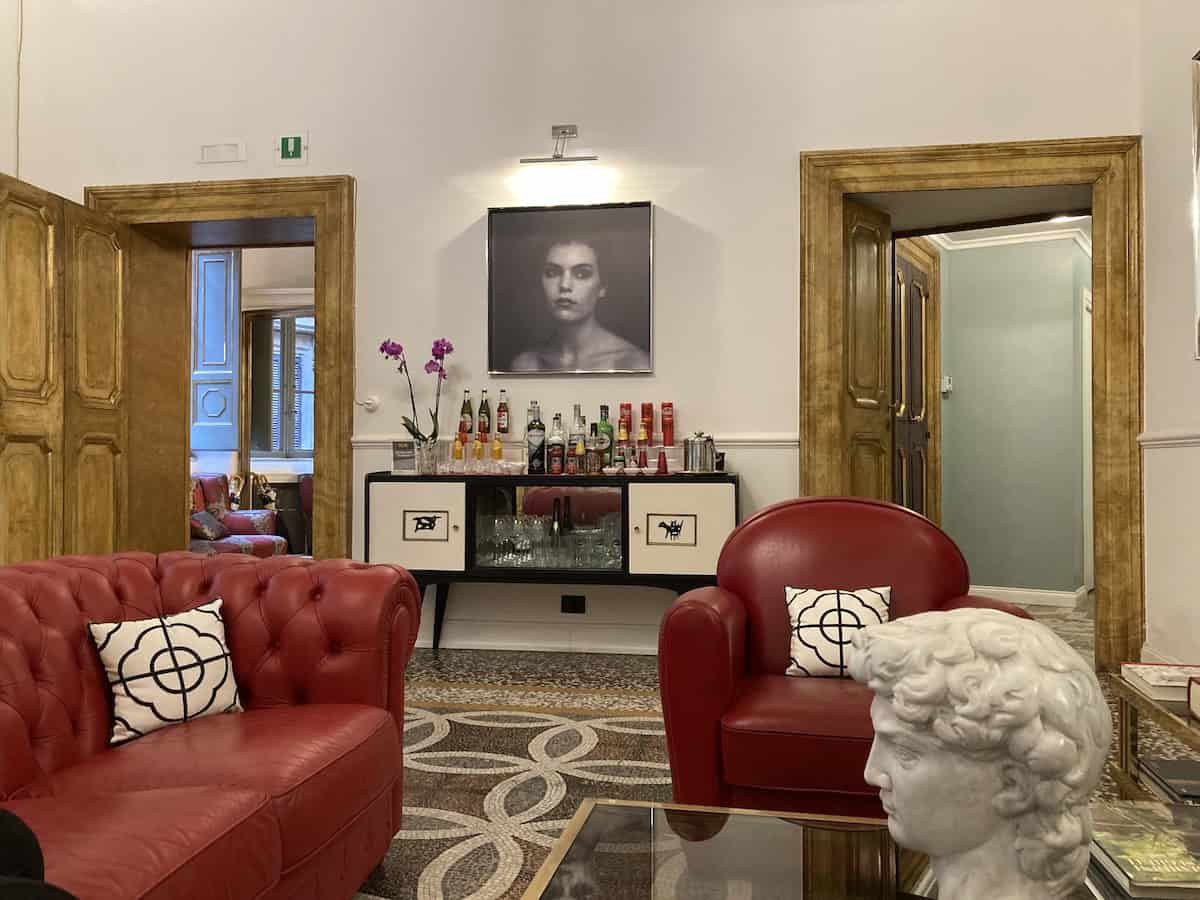
This visit began at a small hotel called Nobildonne Relais, five elegant rooms tucked inside a villa at No. 35 on Via della Fontanella di Borghese, near the Spanish Steps. We arrived exhausted and slightly rumpled from travel and were unexpectedly allowed into our room early. Within moments, Rome began working its familiar magic.
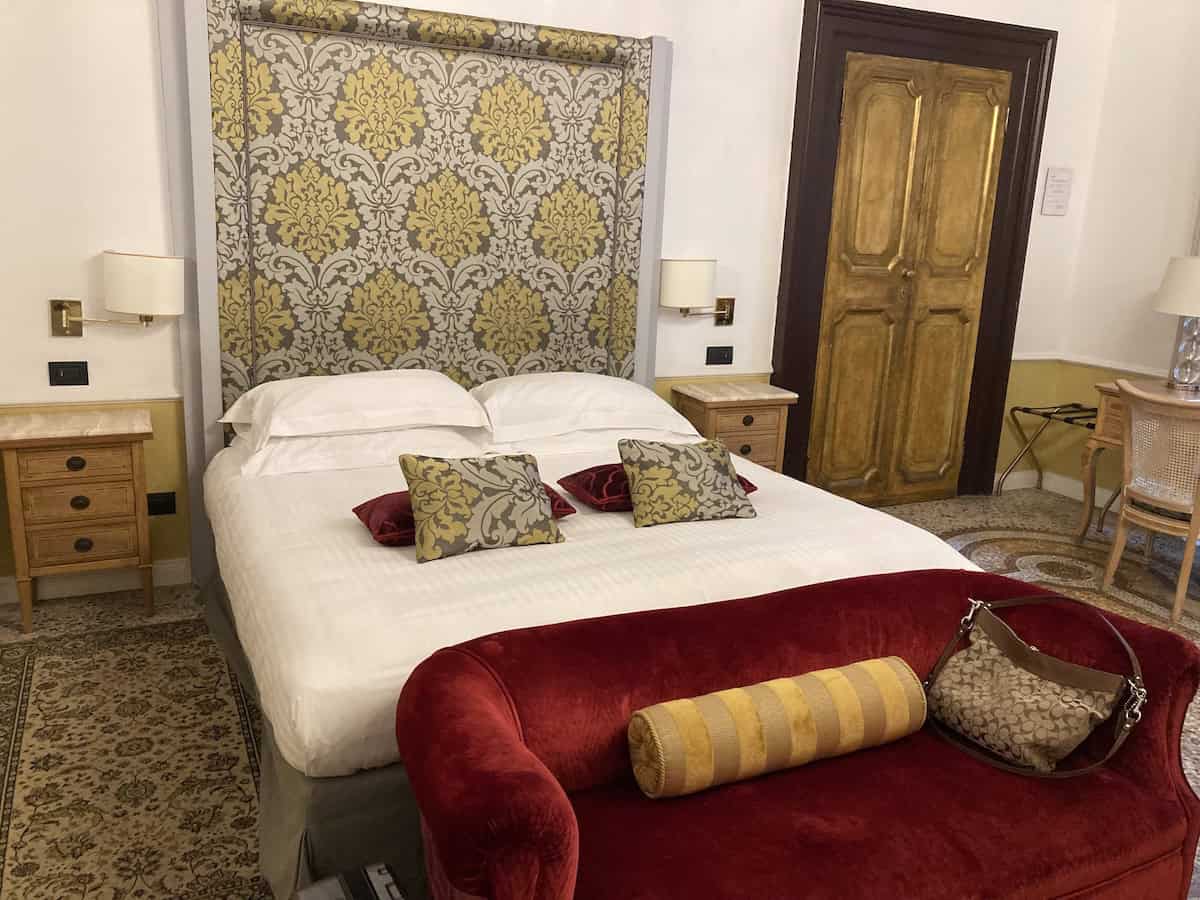
The room felt cinematic: frescoed ceilings, a chandelier casting warm light across faded walls, tall windows opening onto quiet Roman streets. The bathroom was tiny—almost comically so—but somehow that only added to the charm. Rome rarely offers perfection. Instead, it offers atmosphere.
And atmosphere counts for a lot.
At six o’clock PM, the hotel offered a complimentary happy hour. Aperol spritzes in hand, we toasted our return.
Breakfast at Antico Caffè Greco
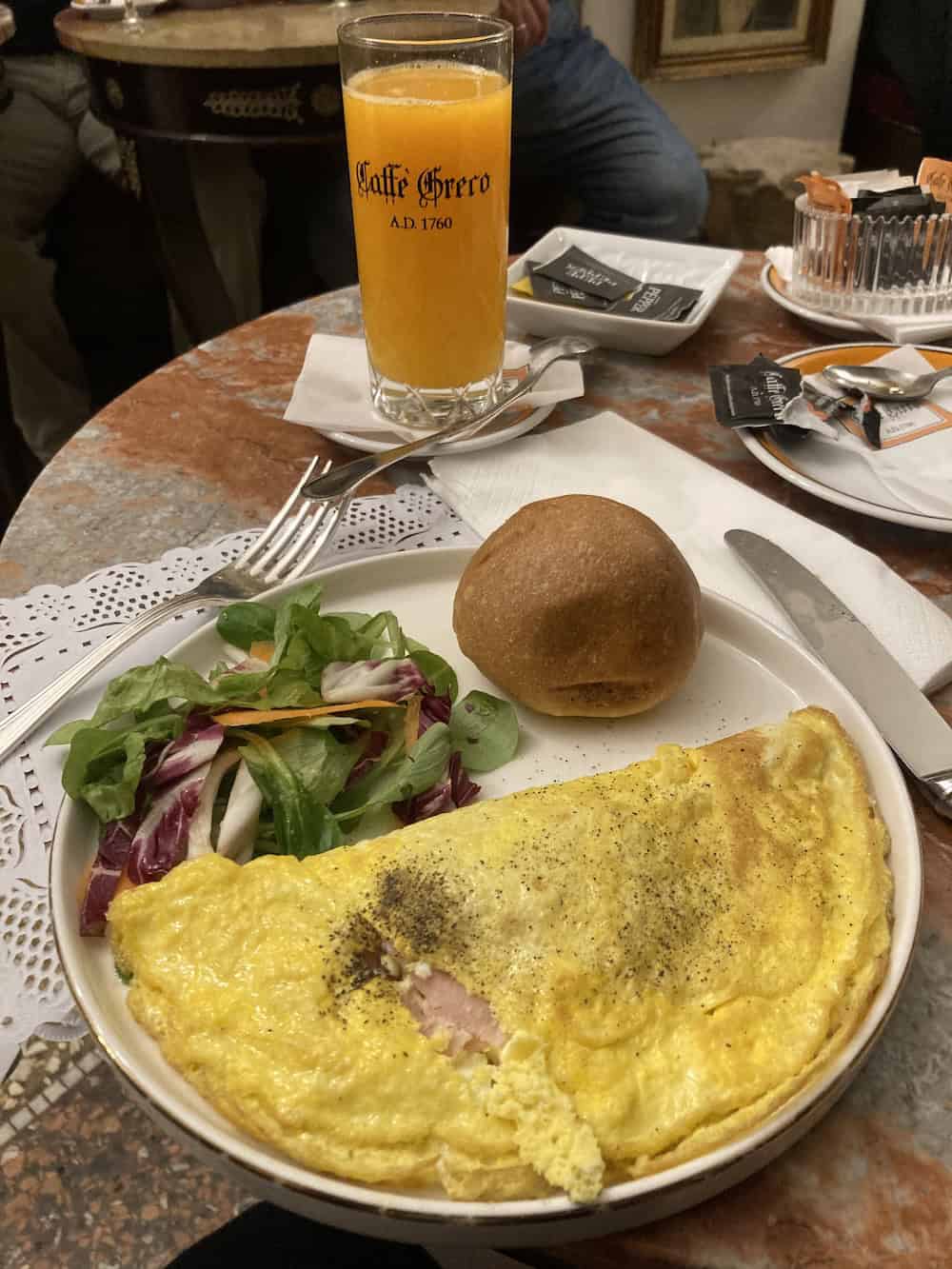
The next morning, we walked to Antico Caffè Greco, one of Rome’s legendary cafés and only a stone’s throw from the Spanish Steps. The croissant, coffee, and omelet cost nearly 20 euros, a price that seemed far too precious to engender a repeat visit.
Tourists packed every corner.
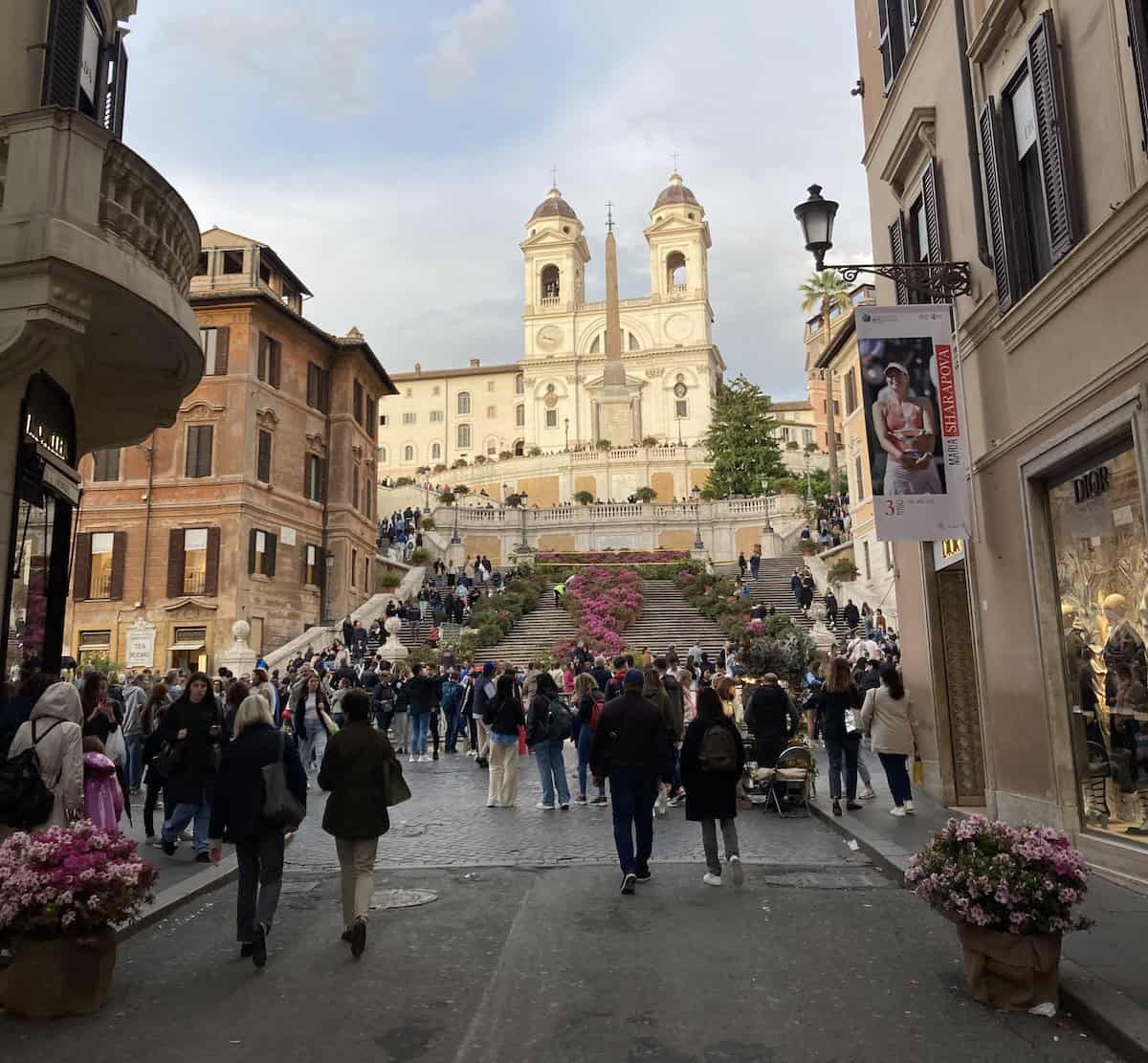
Outside, the Spanish Steps were overflowing with pink azaleas cascading down the staircase in dramatic spring color. Confetti-colored streets spilled outward into Rome’s luxury shopping district, where window displays offered handbags costing 10,000 euros alongside far more attainable temptations. Rome excels at this blend of fantasy and accessibility. You can dream extravagantly while eating pizza by the slice.
Lunch at Il Tullio
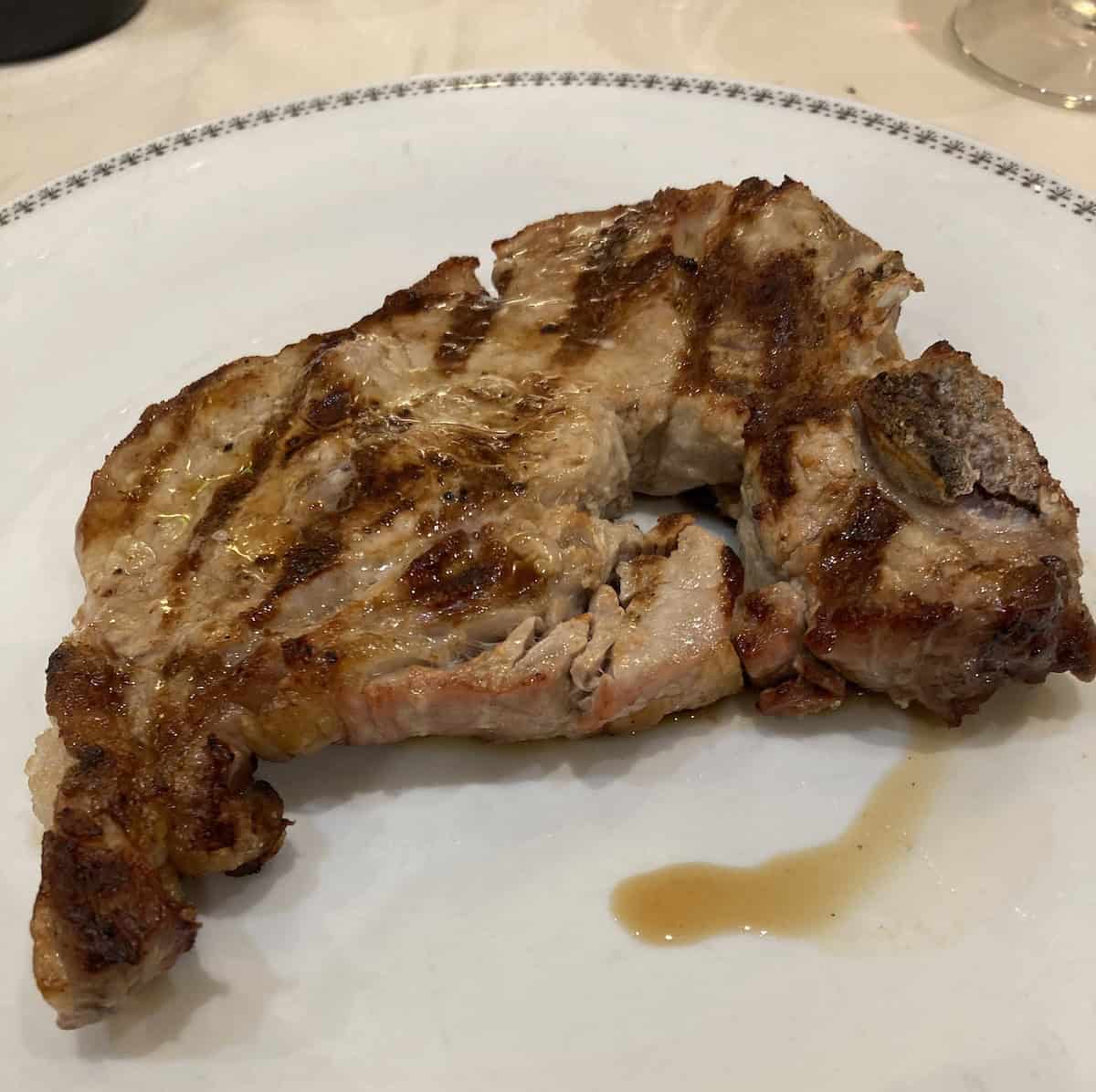
\Lunch at Il Tullio reminded me why Roman cuisine remains one of Italy’s great pleasures. Since 1950, the same family has been delivering great meals a stone’s throw from Piazza Barberini and Via Veneto. Minestrone rich with vegetables. Artichokes alla Romana. Silky cacio e pepe. Eggplant Parmesan layered delicately rather than drowning in cheese. A perfectly grilled veal chop.
Rome doesn’t chase trends. Rome already knows who she is.
Off-the-Beaten-Path
One of the great luxuries of returning to a city later in life is understanding that not every memorable experience needs to be monumental.
One afternoon, I booked a manicure at a neighborhood salon simply because my feet hurt and I wanted to sit still for an hour. Women chatted while having their hair done. Italian television played in the background. No one rushed. The manicure itself was excellent, but what I remember most is the ordinariness of it — slipping briefly into Roman daily life instead of merely observing it.
Breakfast at Night and Day Café
Across from the Pantheon—an extraordinary architectural marvel—we ducked into the Night and Day Café to wait out a rainstorm, serving an “international breakfast” of eggs, bacon, juice, and coffee for 10 euros.
Rain poured relentlessly outside while we huddled beneath awnings. There was, naturally, a charge for bottled tap water and extra for a decaf cappuccino because this is Rome, where hospitality and mild extortion often coexist comfortably.
A Stop at The Pantheon
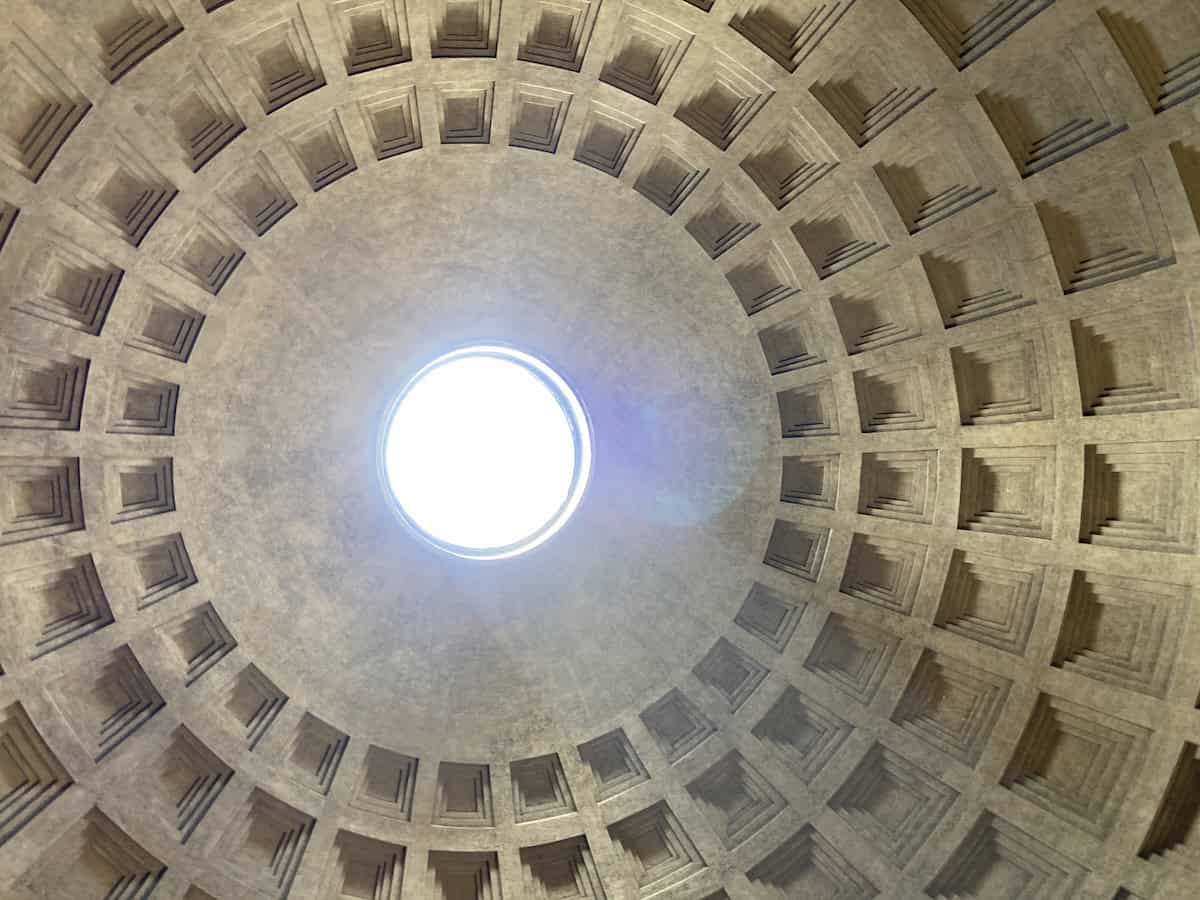
The Pantheon itself remains astonishing. Nearly 2,000 years old, still intact, still humbling. We waited 30 minutes for entry before realizing the obvious lesson modern travelers repeatedly learn in Italy’s large cities: Buy timed tickets in advance.
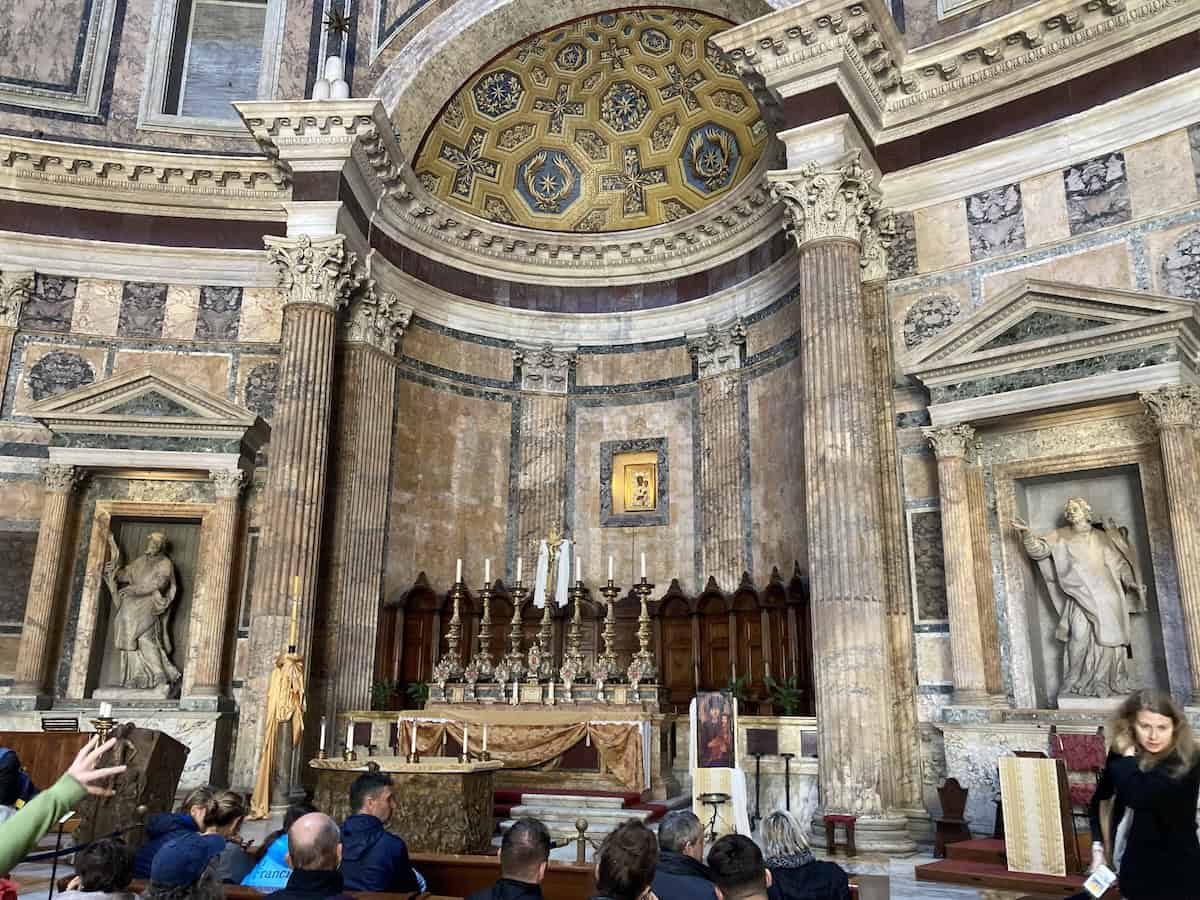
Rome rewards preparation, but survives chaos.
More Dinners, Gelato and a Passeggiata
At Osteria da Mario, a small local restaurant, we shared bruschetta, pasta heavy with garlic, chicken breast, and artichokes.
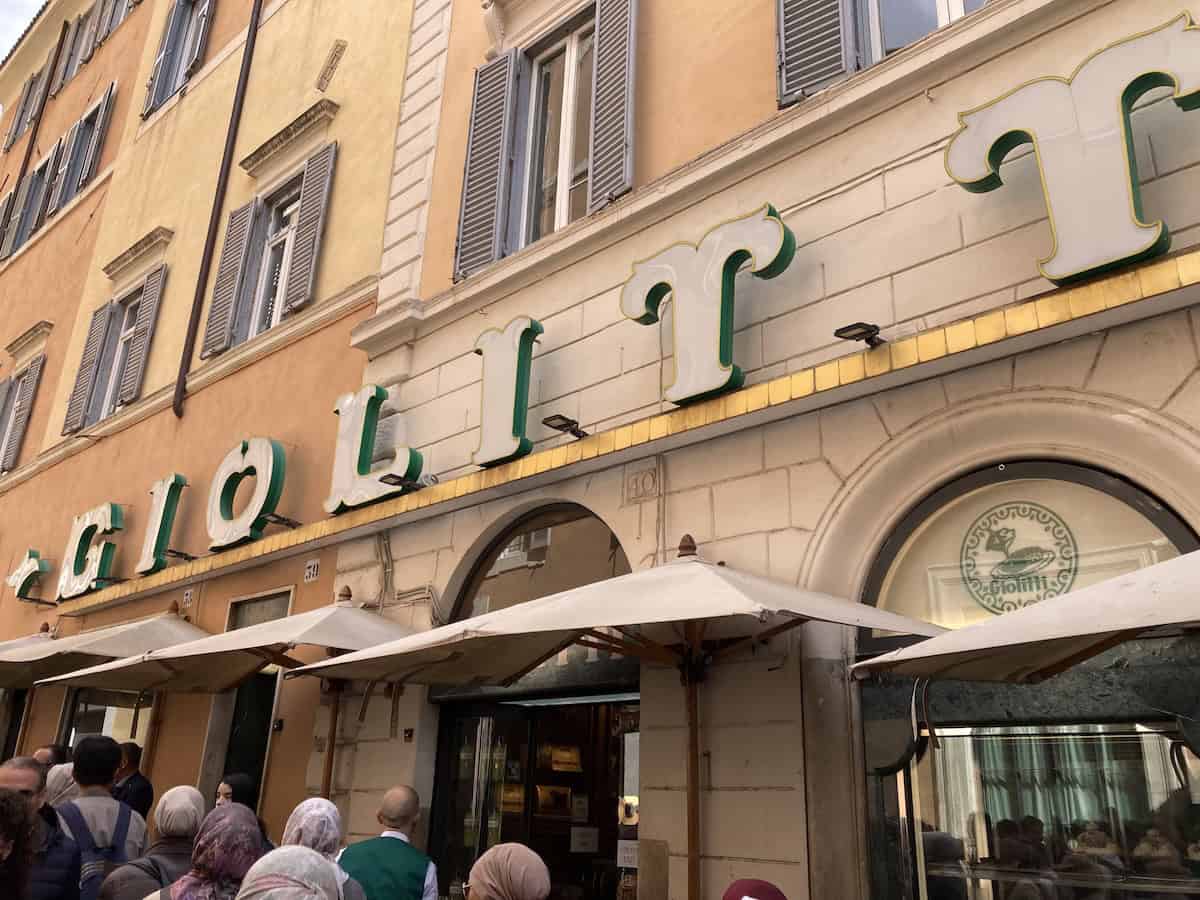
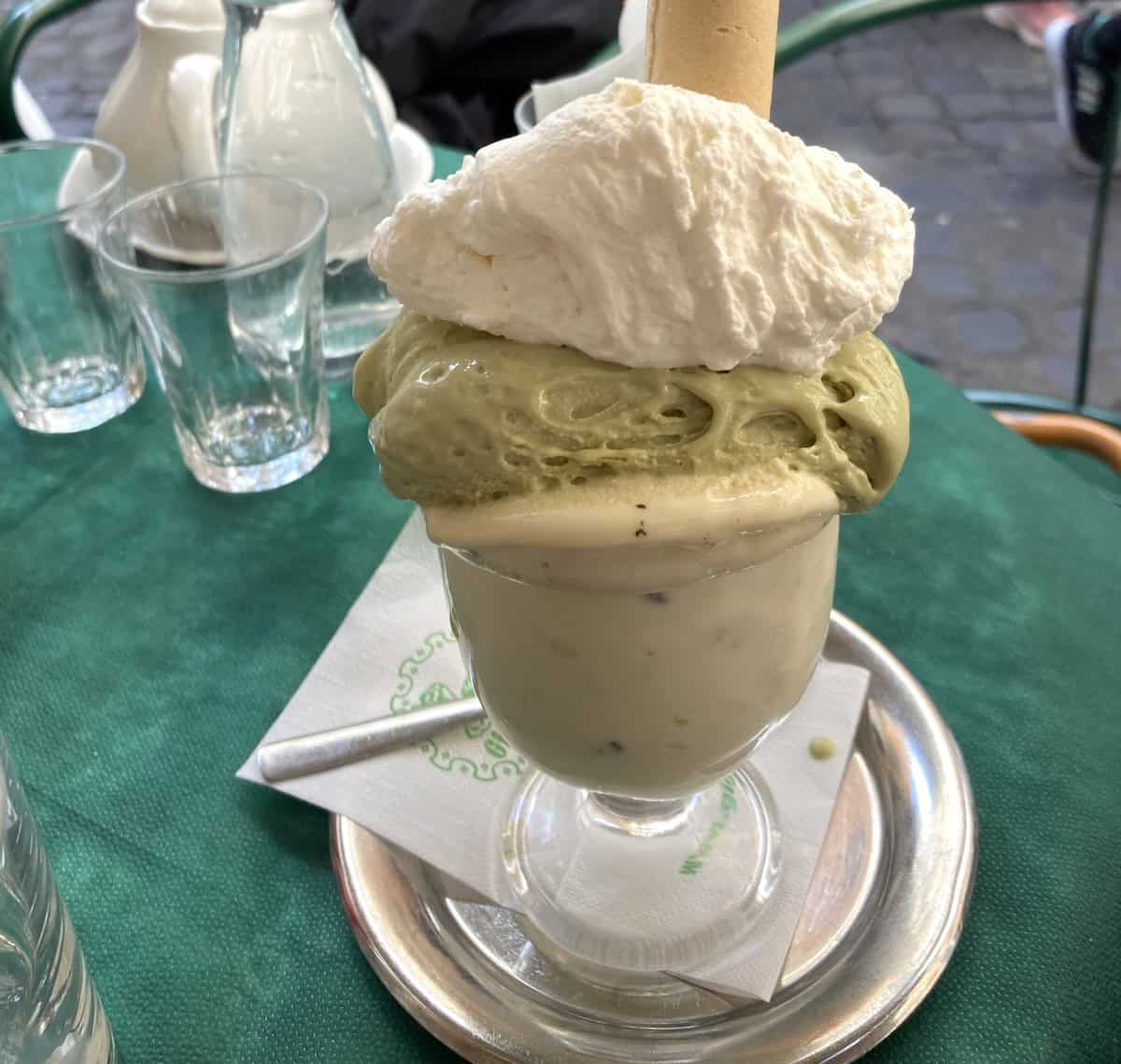
At Giolitti, one of Rome’s historic gelato institutions (founded in 1890), we surrendered to table service and pistachio gelato, because sometimes resisting tourist rituals is pointless.
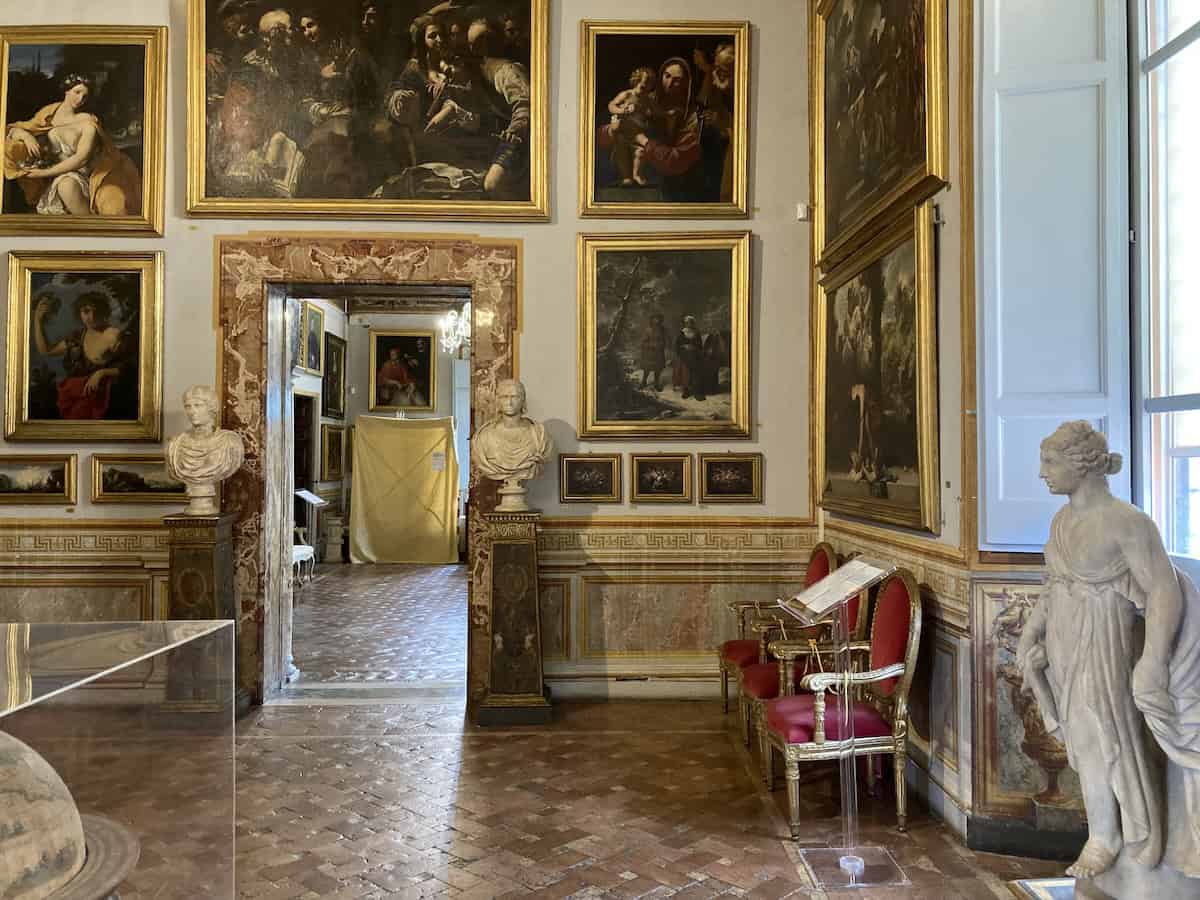
As repeat visitors to Rome, we wanted to see something other than the big-name sites, so we wandered through the intimate rooms of the Spada Gallery, where perspective tricks and quiet masterpieces provide relief from Rome’s larger crowds.
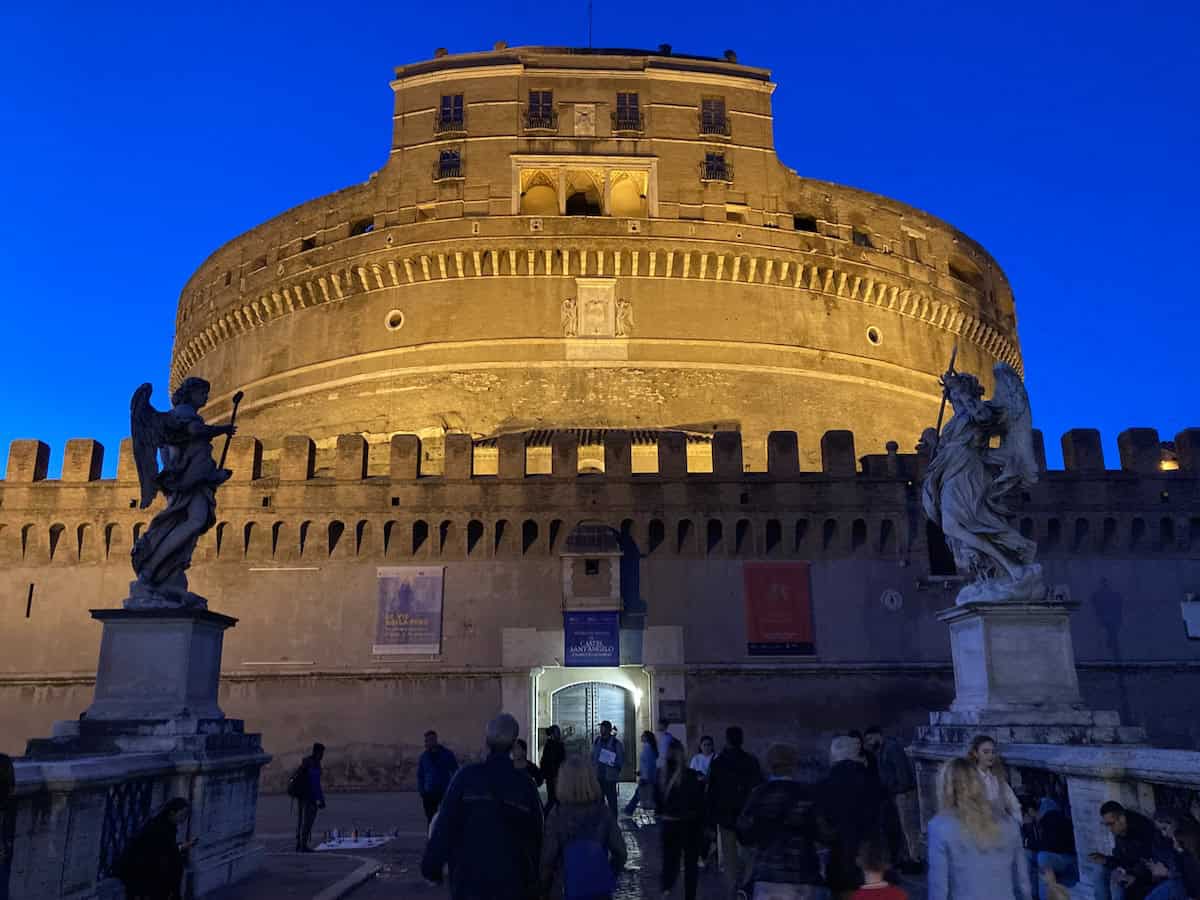
One evening, we crossed the Tiber into Trastevere, which is still lively, chaotic, and irresistibly atmospheric after dark. At Trattoria da Romolo Alla Mole Adriana, we ate lamb ribs, broccoli, lasagna, and fried vegetables while crowded tables around us filled with loud conversations and flowing wine. Nearby, Castel Sant’Angelo — once Hadrian’s tomb — glowed against the night sky. Through the floor-to-ceiling windows, we could see the Castel’s walls.
Crossing the bridge over the Tiber after dark, Rome revealed itself again in its most seductive form: illuminated domes, reflections in black water, and voices echoing off stone.
The Eternal Promise of Rome
Rome feels increasingly meaningful over time.
The city itself contains every era simultaneously. Ancient ruins beside designer boutiques. Crumbling walls beside immaculate churches. Teenagers taking selfies where emperors once ruled.
Rome understands aging.
On our final day, we passed through Roma Termini railway station and wandered into the astonishing food hall at Eataly Roma Termini. Who knew you could eat at 40 different Eataly locations around the world?
Travelers hurried toward trains while shoppers casually purchased wine, pasta, cheese, and olive oil as though this level of culinary abundance were entirely ordinary.
In Rome, somehow, it is.
Forty-eight hours is never enough here. It never was when I was young, and it certainly isn’t now. Yet perhaps Rome’s greatest gift is convincing you that the relationship remains unfinished — that another walk, another meal, another sunset over the Tiber still waits ahead.
“Hello, Rome, my old friend” turns out not to be a greeting. It is a promise to return.
*Contributor Ali Webb, PhD, is adjunct faculty at the University of Michigan and Columbia University. Her long career in strategic communications has offered her many opportunities for domestic and foreign travel.
Save to Pinterest!!