Visiting the National Museum of the Pacific War in Fredericksburg, TX
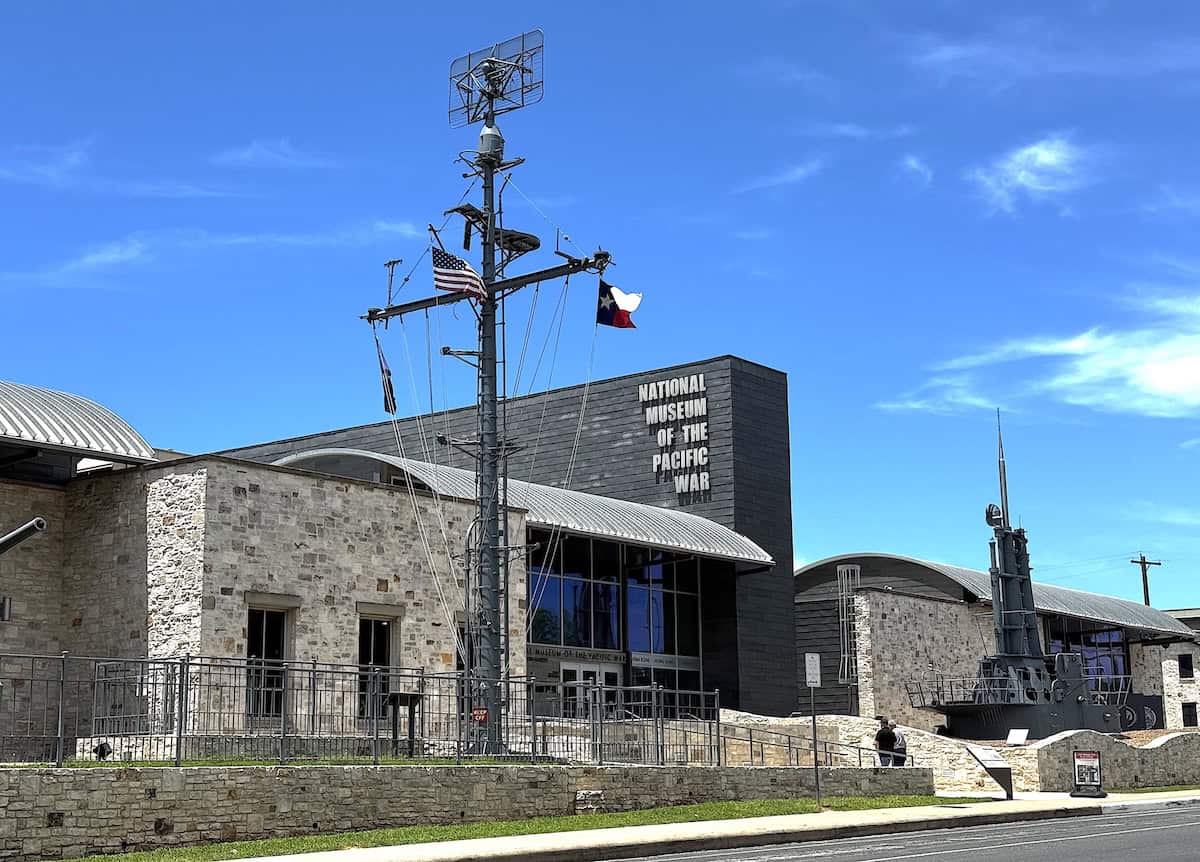
Summary: Contributor Jackie Sheckler Finch visits The National Museum of the Pacific War in Fredericksburg, Texas. Founded in 1967, the museum honors World War II veterans and the life of Fleet Admiral Chester W. Nimitz, who was born there. A key exhibit explores Nimitz’s life and a near-career-ending injury, in which a ring caught in a diesel engine saved his hand from further damage. During the war, Nimitz led the U.S. Pacific Fleet and eventually accepted Japan’s surrender. Post-war, he championed reconciliation, helping to create the museum’s Japanese-style Garden of Peace. A recent 2025 renovation updated the George H.W. Bush Gallery with interactive displays and nine virtual characters, including Ensign Kazuo Sakamaki, the first Japanese prisoner of war, whose story reflects the war’s complex history. The museum remains a dedicated space for remembering those who fought in the Pacific conflict.
If not for a class ring, a man’s left hand might have been destroyed and his United States Navy career ended. And without that man, the Pacific battles during World War II might have been fought quite differently.
“And who knows what might have been the result. How that could have changed World War II if Admiral Charles Nimitz had not been in charge,” said our tour guide Dee at the National Museum of the Pacific War in Fredericksburg, Texas.
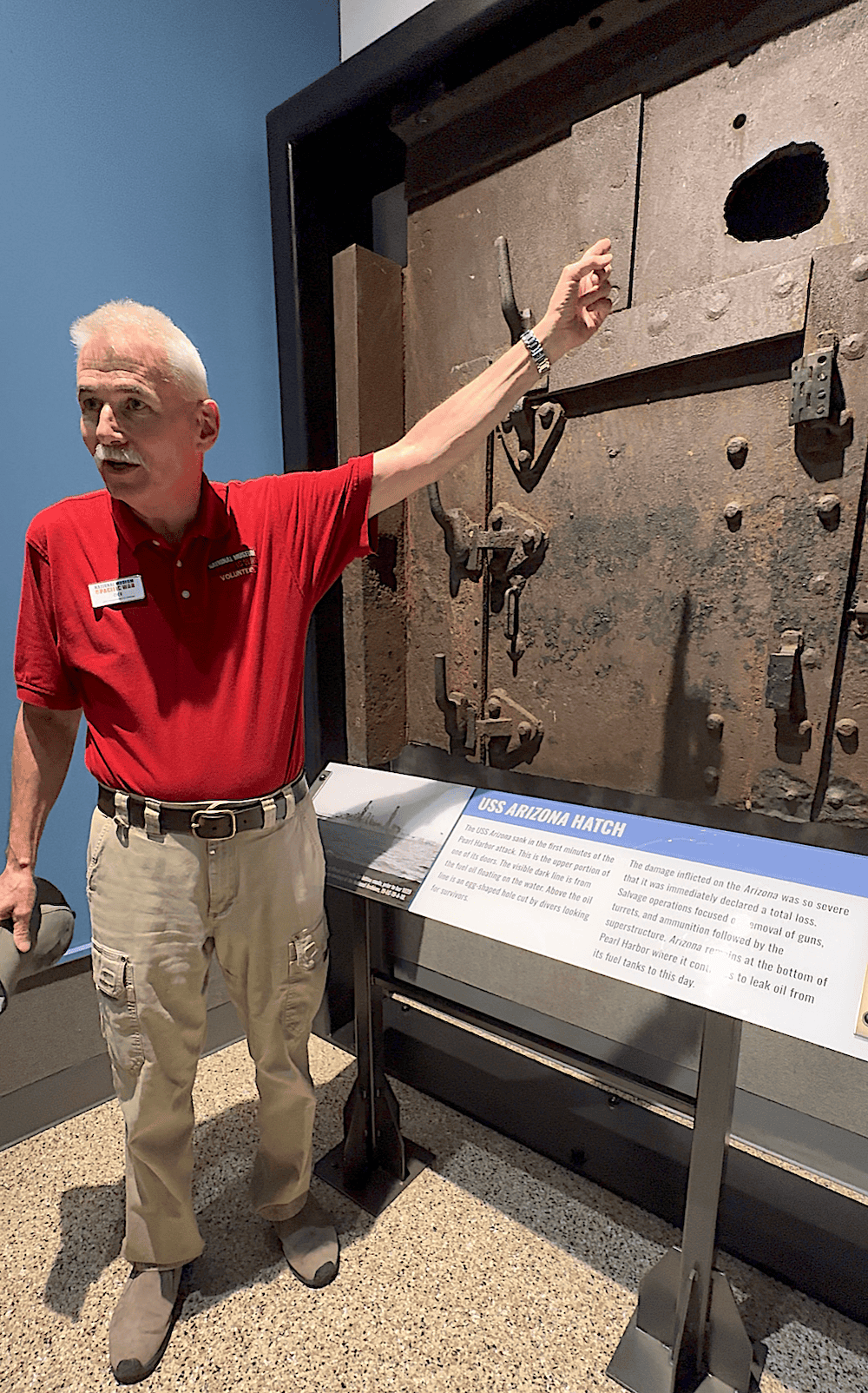
The story of Fleet Admiral Chester W. Nimitz and other World War II veterans is told at the museum.
But why is such a world-class facility nestled in Fredericksburg, in Texas Hill Country, so far from the Pacific Ocean?
Why is the Museum in Texas Hill Country?
“The answer is simple,” Dee said. “Chester Nimitz was born here and grew up here. He also insisted that he didn’t want any museum dedicated to him. He wanted it dedicated to all the everyday people who served with him in World War II.”
Founded in 1967, the museum recently underwent a major renovation to meet the needs of today’s visitors while honoring the history at its core.
For instance, when the George H.W. Bush Gallery first opened in 2009, many World War II veterans were still visiting the museum in person, Dee said.
“Many World War II veterans are now gone,” Dee said. “Now the museum has been updated for today’s visitors of all ages.”
However, the amazing story of Nimitz and the Pacific War remains the same.
Early Life of Chester W. Nimitz
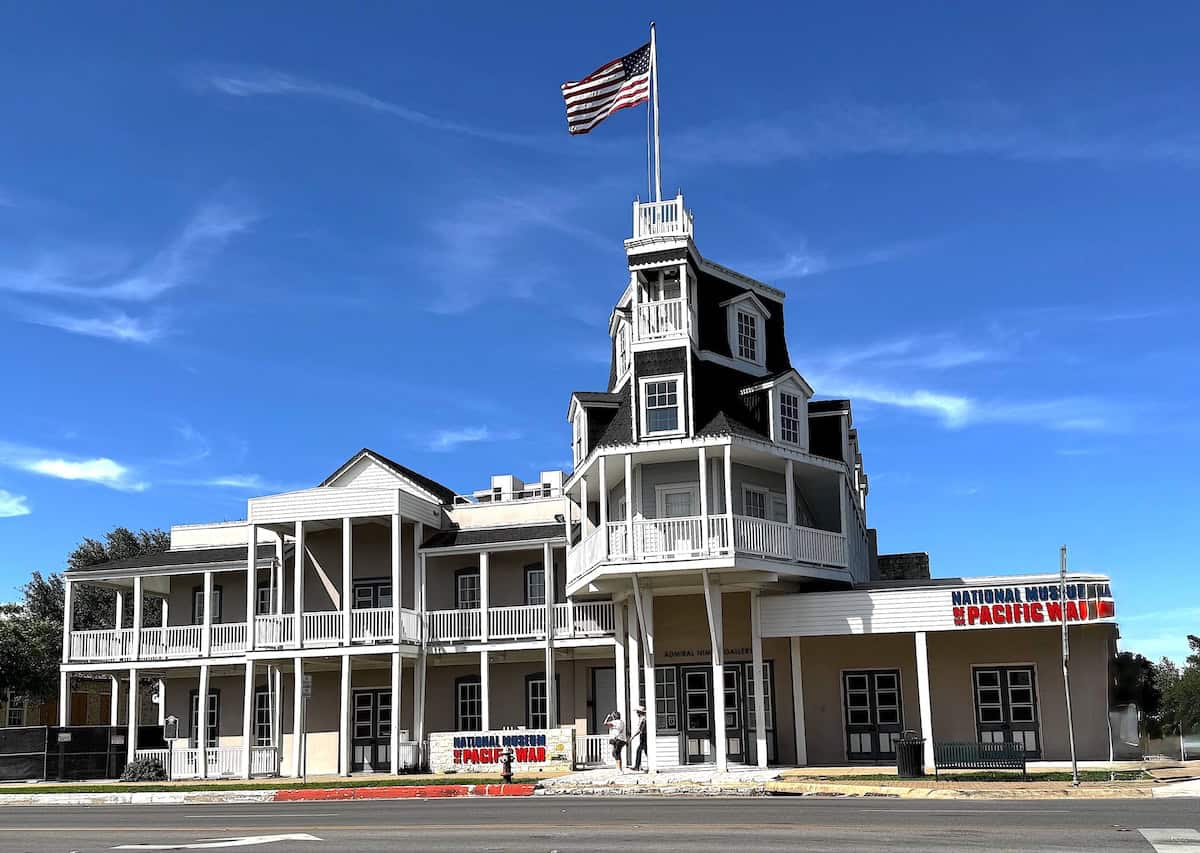
Born on Feb. 24, 1885, five months after his rheumatic father died, Chester W. Nimitz was raised by his mother and his paternal grandfather in a steamship-shaped hotel on Fredericksburg’s Main Street.
His grandfather, Charles Nimitz, was a retired sea captain who had outfitted his hotel with a ship’s bridge and a pilot house from which he could scan the Texas hills and prairies.
Young Chester regarded his grandfather as “the most important man in his life” and enjoyed hearing the older man’s exciting sea tales. While still a teen, Chester met two West Point officers and decided to apply for an appointment to the Academy to become a soldier.
When he found that no West Point appointments were available, 15-year-old Chester took a competitive exam for the Annapolis Naval Academy and was accepted. He left high school to attend Annapolis without his diploma.
Entering the Naval Academy in 1901, Nimitz graduated seventh in his class four years later. His first tour was being assigned to the battleship Ohio, where he saw much of the Orient. In Japan, he met Admiral Togo, the father of the Japanese Navy. The two men would ultimately share an unexpected future together.
The Ring Finger Accident
“The Navy was very interested in moving away from gas engines to diesel,” Dee said. “So, young Chester Nimitz was sent to Germany to study diesel engines because he was very fluent in German.”
When he returned, Nimitz taught at a Marine diesel school. “As most machinists will tell you, you never wear any kind of jewelry in a machine shop,” Dee said. “It was an oversight by young officer Chester Nimitz because he didn’t take off his Academy ring when he put on gloves to demonstrate the machinery to his students.”
However, the mistake of wearing a ring turned into a blessing. “His glove got caught in the gearing of the diesel engine and started pulling his hand in,” Dee says.
“But the gearing on the engine stopped hard on the ring. If not for that ring, his whole hand would have been drawn in and mangled, and he would have been released from service,” Dee said.
“Happily, the ring saved him because Admiral Chester Nimitz was the genius that we all needed in the Pacific during World War II,” Dee said.
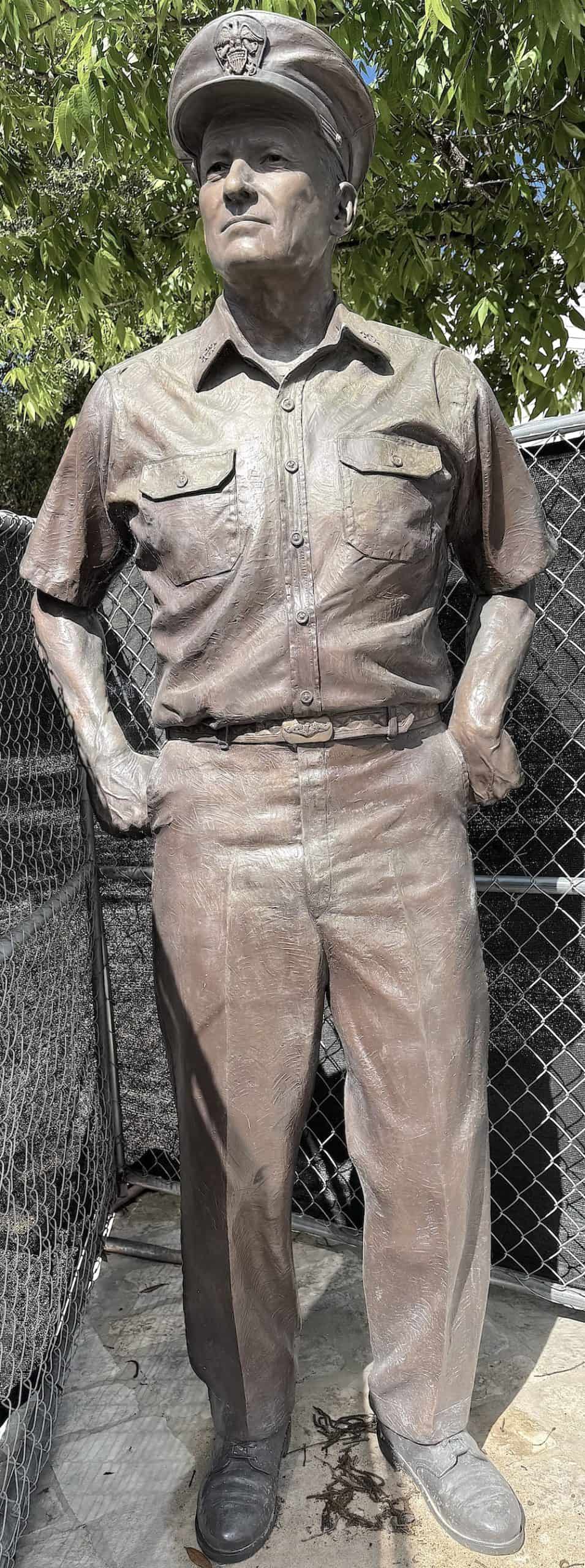
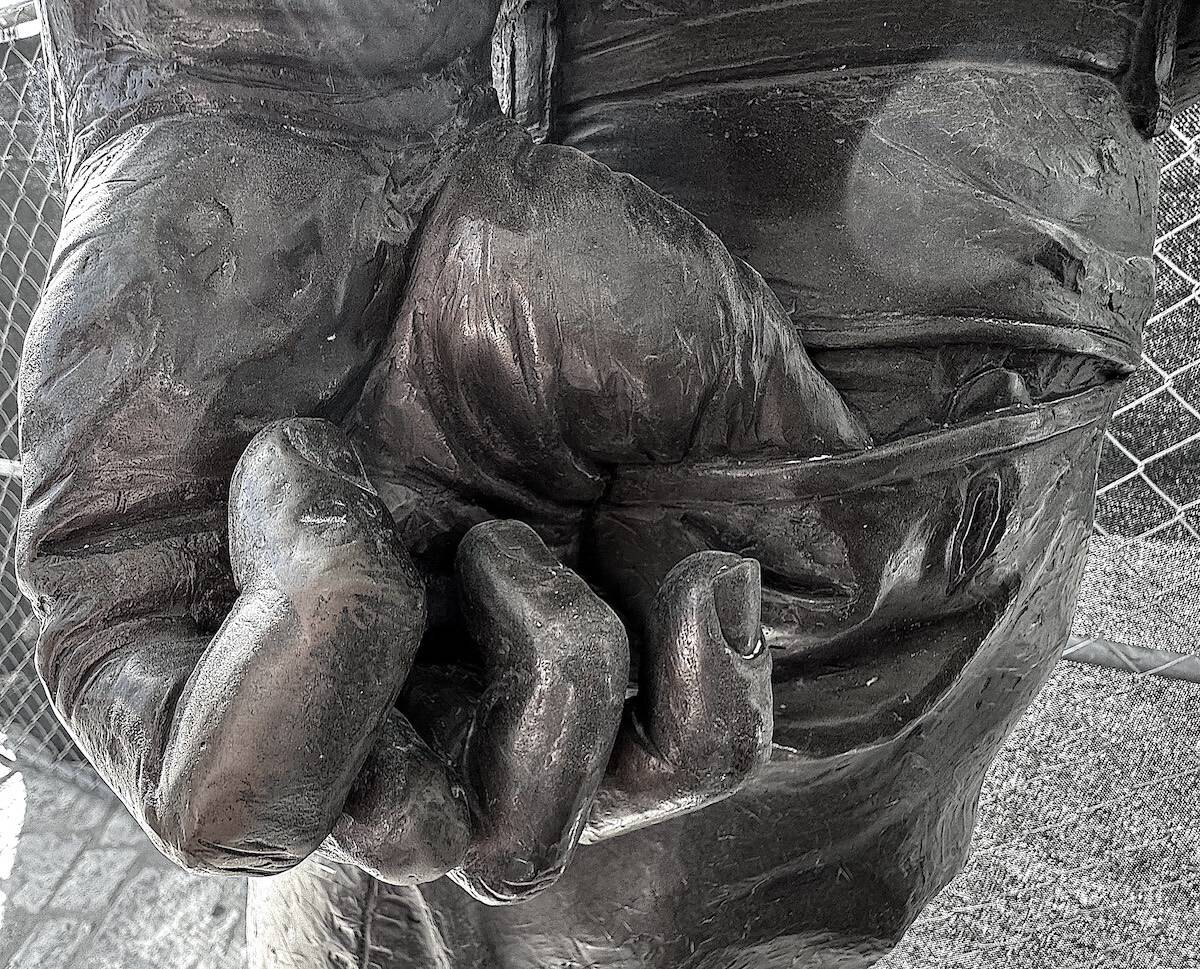
A statue of Nimitz outside the museum shows him with his hands tucked behind his back, his thumbs linked into his back pants pockets.
If visitors stop to look at the back of the statue, they will see that the officer’s ring finger on his left hand is missing up to the second knuckle.
Wartime Admiral Chester Nimitz
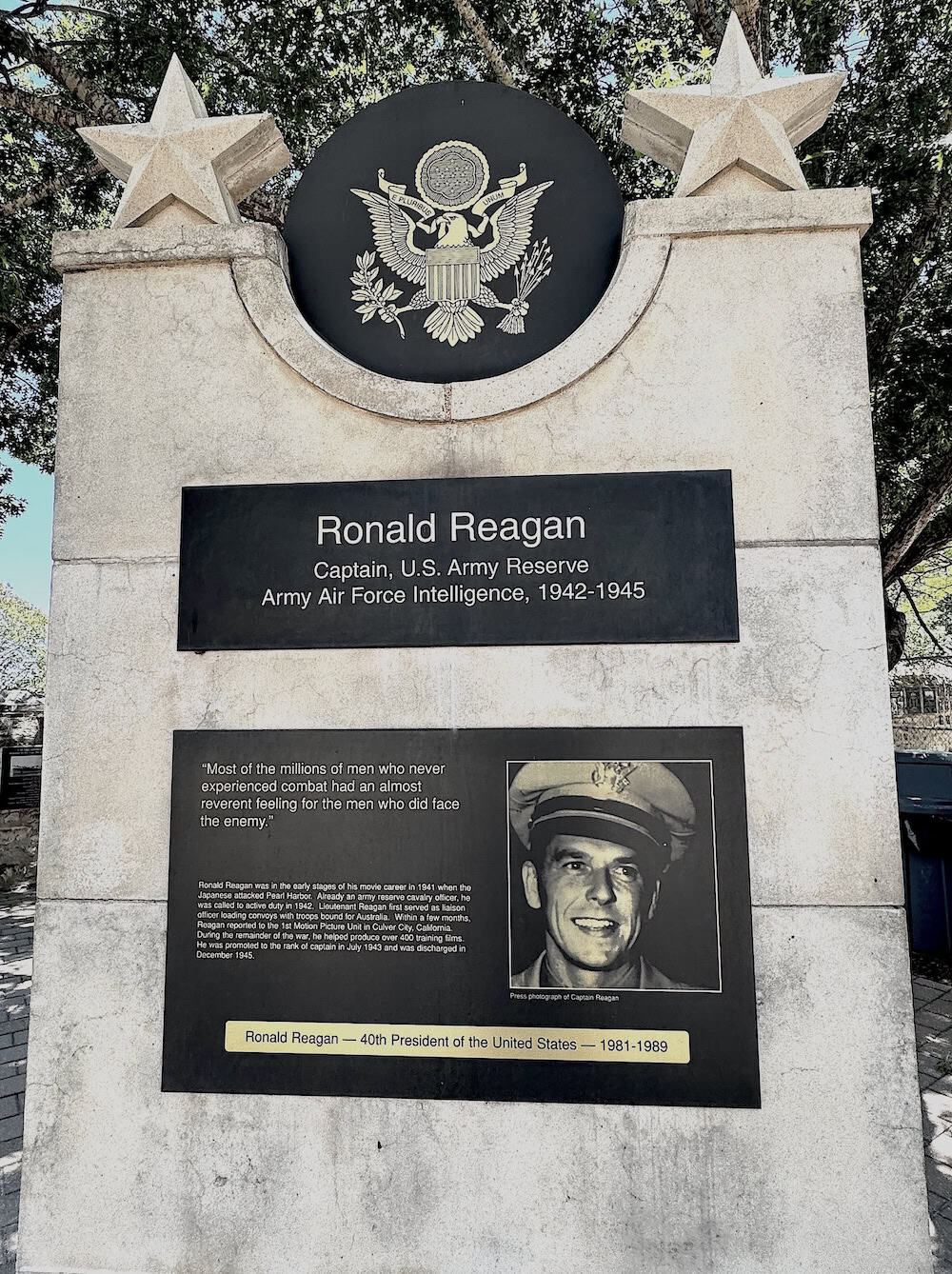
On Dec. 7, 1941, the Japanese launched a surprise attack on Pearl Harbor. On Dec. 31, President Franklin Delano Roosevelt chose Admiral Nimitz to be commander-in-chief of the United States Pacific Fleet.
“When Admiral Nimitz took over the Pacific Fleet, many of our ships lay at the bottom of Pearl Harbor,” Dee said. “Despite a shortage of ships, planes and supplies, Admiral Nimitz used his strategic mind and excellent leadership abilities to halt the Japanese attacks.”
During World War II, Nimitz commanded a Pacific force of 2 million men and 1,000 ships that drove the Japanese back to their homeland.
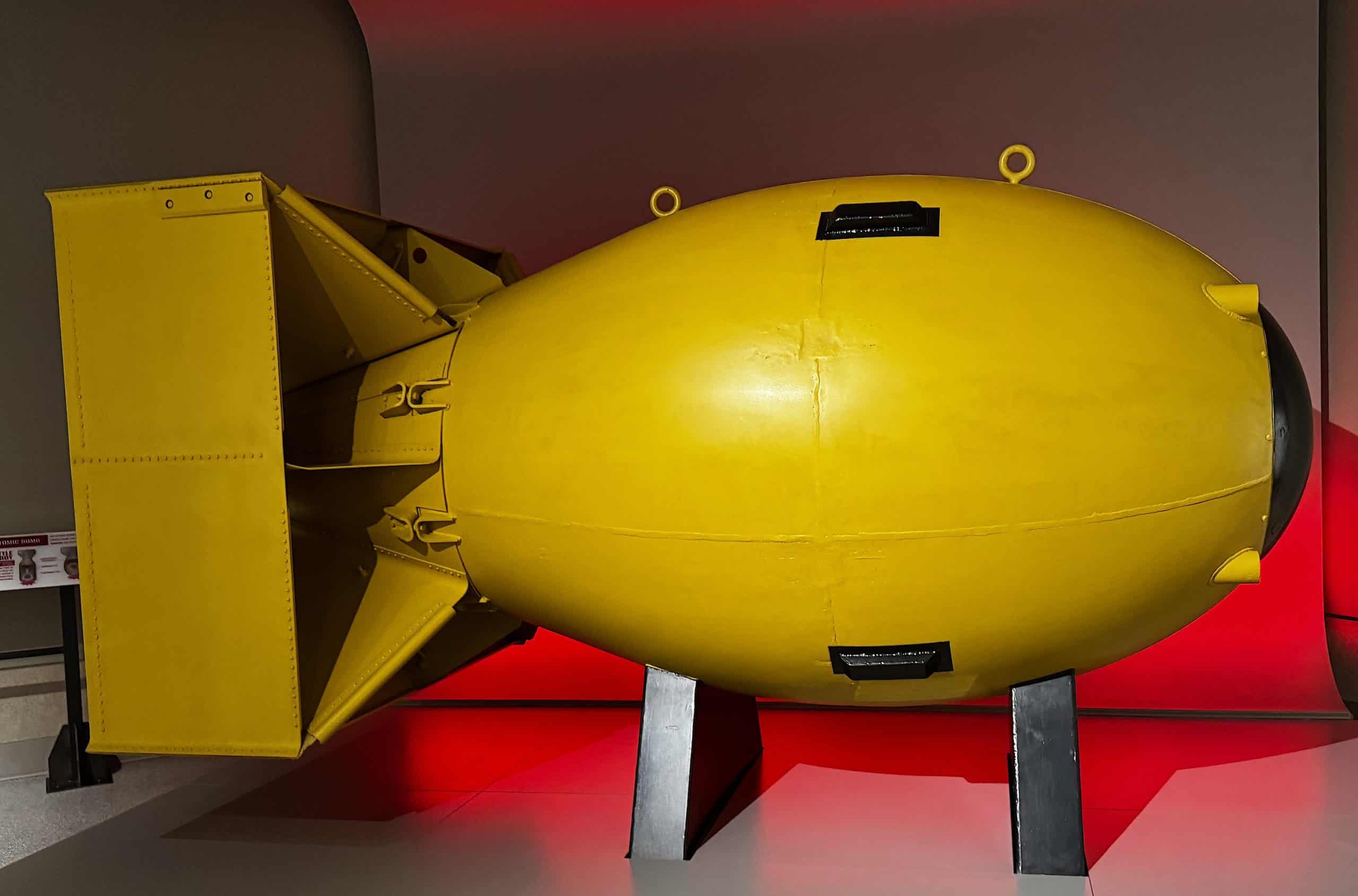
Two atomic attacks on Japan in August 1945 forced the Japanese to admit defeat. On Sept. 2, 1945, Admiral Nimitz signed the Japanese Instrument of Surrender on behalf of the United States aboard the battleship USS Missouri in Tokyo Bay.
Restoring the Relationship With Japan
After the war, Nimitz worked to help restore a relationship with Japan. “After the surrender of Japan, Admiral Nimitz insisted on respectful treatment of the Japanese people,” Dee said. “They were no longer America’s enemies.”
When Admiral Togo’s flagship, the Mikasa, was going to be destroyed, Nimitz placed guards at the ship memorial to preserve it. Nimitz also contributed the first funds to restore the old battleship as a memorial to Admiral Togo and his revered naval career.
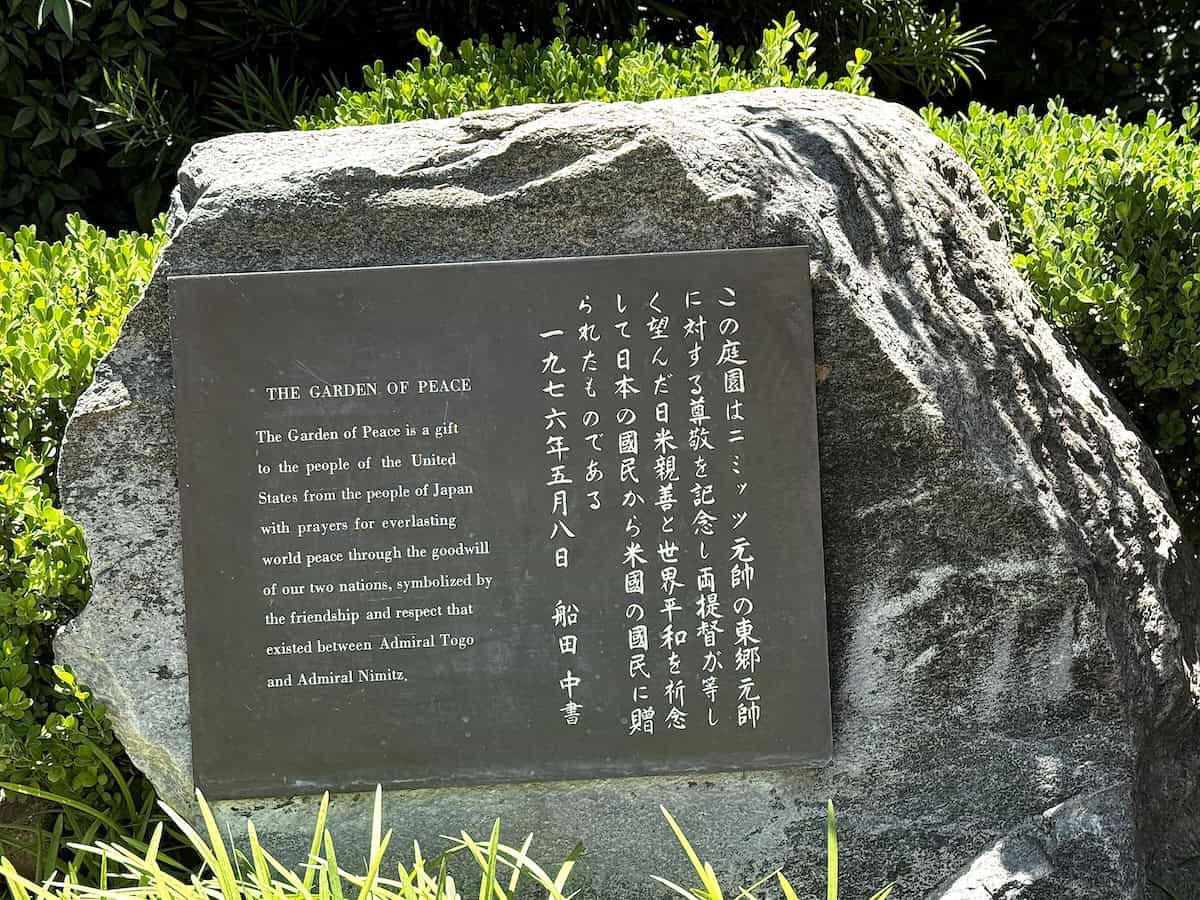
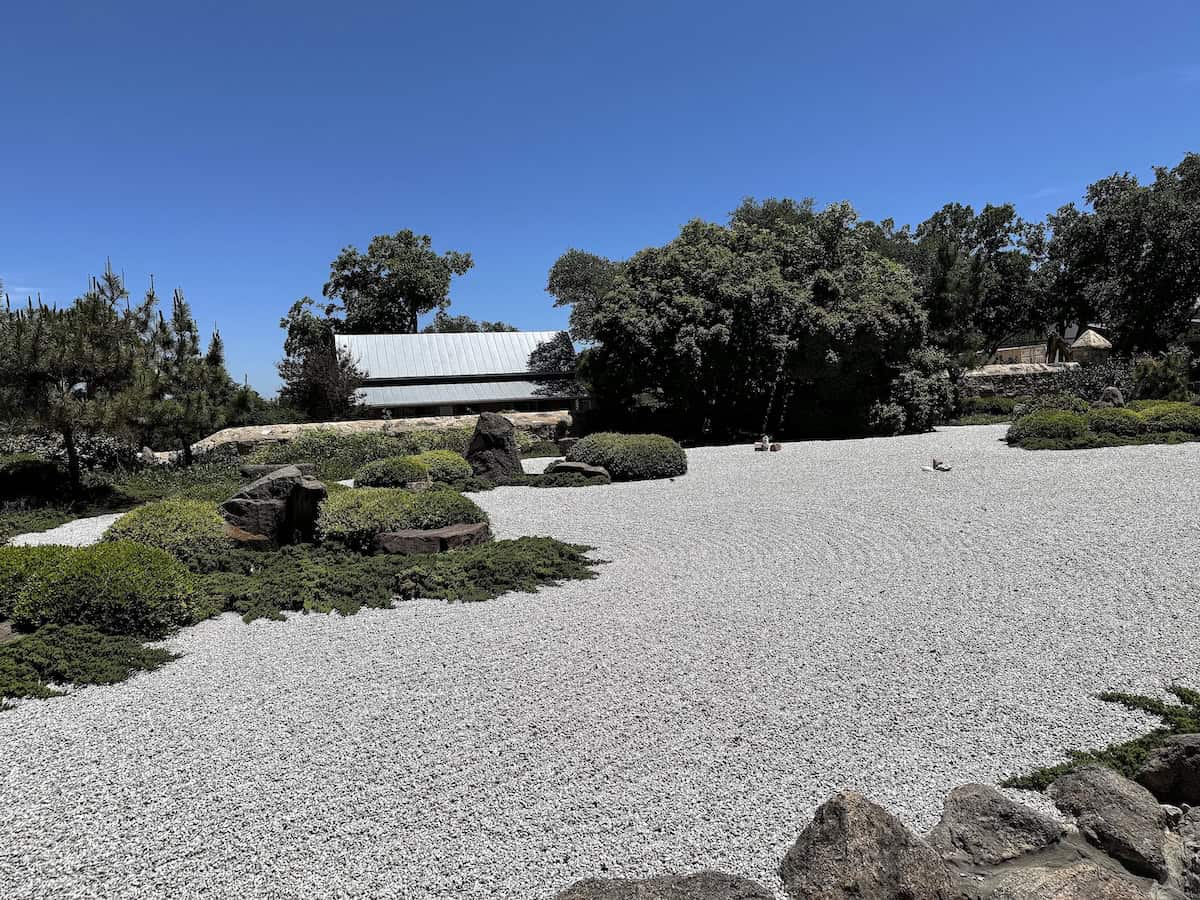
“As a result, the Japanese people helped raise money to create a Japanese-style Garden of Peace here at the museum,” Dee said.
The Garden of Peace includes features of a traditional Japanese garden, complete with bonsai trees, raked stones, a koi pond, a small bridge and larger rocks. The garden also includes a replica of Admiral Togo’s study.
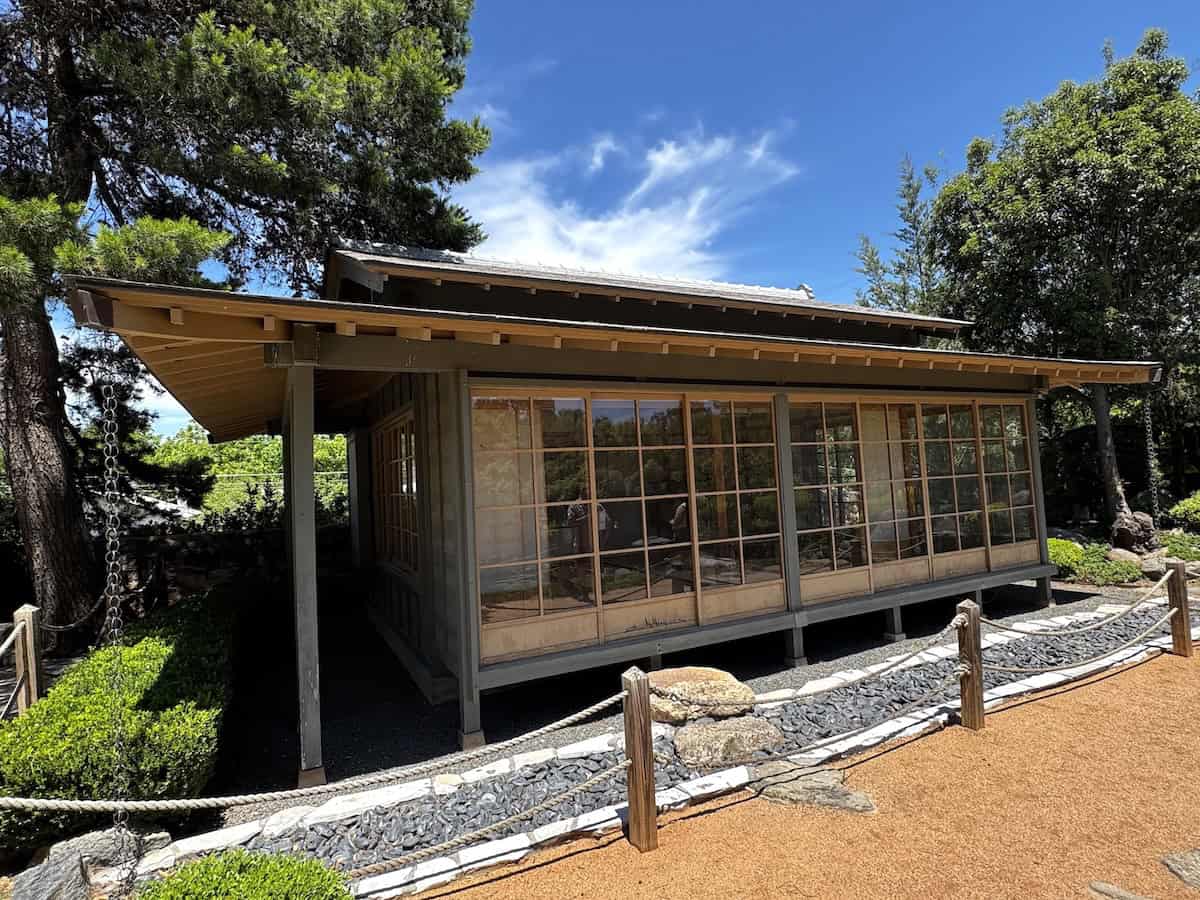
“Craftsmen from Japan traveled to Fredericksburg and built Admiral Togo’s study in traditional Japanese fashion without the use of a single nail,” Dee said. “The garden represents the friendship and mutual respect between Admiral Togo and Admiral Nimitz.”
Death of Admiral Nimitz
In late 1965, Nimitz suffered a stroke, complicated by pneumonia. On Feb. 20, 1966, he died at home with his wife Catherine by his side. Married April 9, 1913, Nimitz and his wife Catherine had four children – Catherine, Chester Jr., Anna and Mary.
Although Nimitz was entitled to a state funeral and burial at Arlington National Cemetery, he chose a much simpler funeral to be laid to rest with his men.
On Feb. 24, his 81st birthday, Nimitz was buried with a standard military funeral and regulation headstone at Golden Gate National Cemetery in San Bruno, California.
Virtual Characters Added in Museum Renovation
Reopened on Dec. 6, 2025, the 33,000-square-foot George H.W. Bush Gallery at the museum tells the full story of the Pacific War from Pearl Harbor to the atomic bomb.
“Every wall, floor and display was redesigned and painted with lighter colors instead of the original black and red,” Dee said.
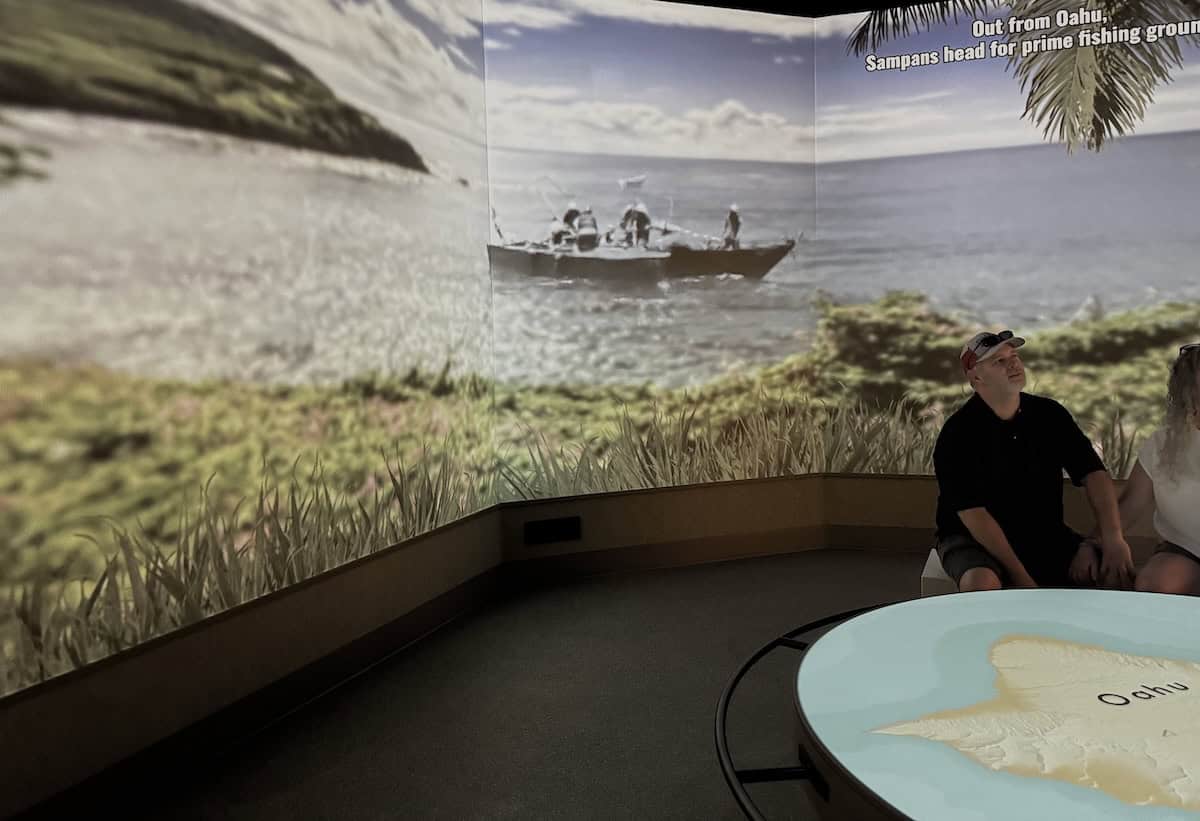
More than 300 newly displayed artifacts highlight the real experiences of people. Interactives and games have been designed to make the museum experience less passive and more experiential.
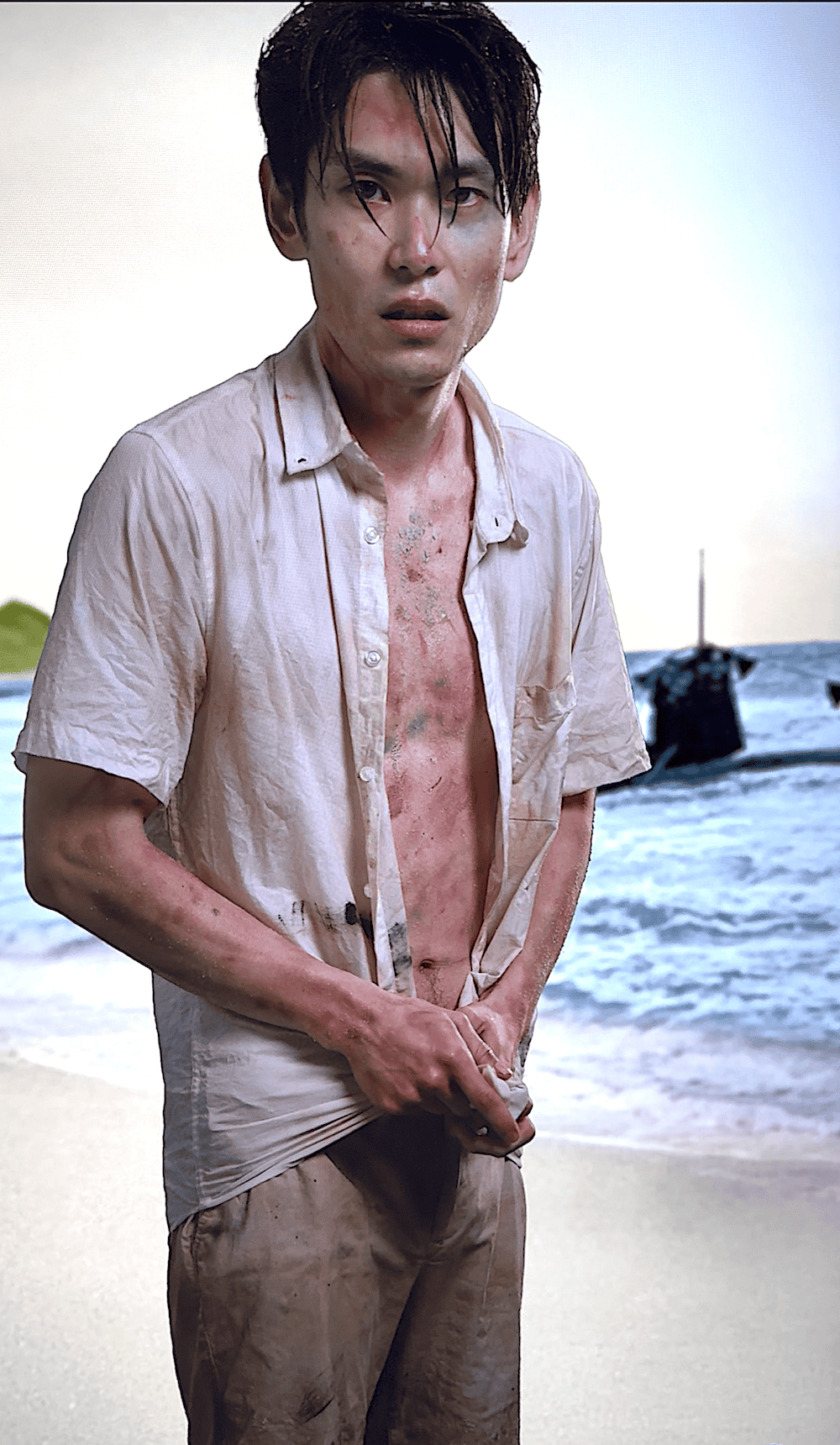
“Nine virtual characters have been added. Each one is based on real people from the war who interpret their story for visitors,” Dee said.
First Japanese Prisoner of War
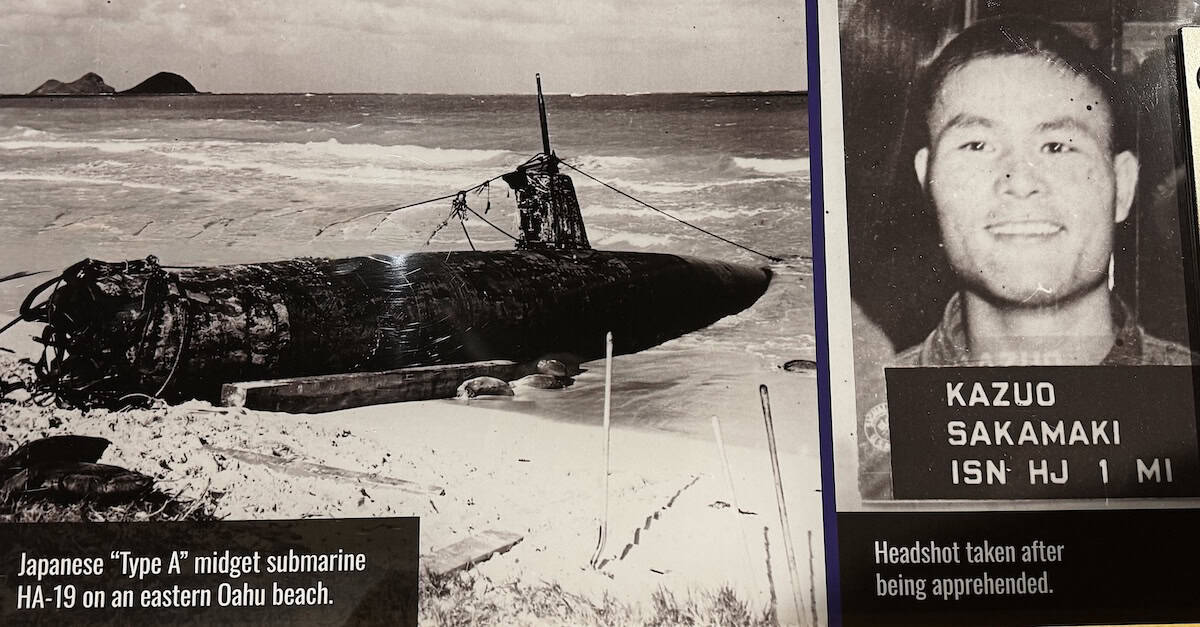
One story involving a virtual character is about the first Japanese prisoner of World War II, Ensign Kazuo Sakamaki, who was aboard the Japanese mini-submarine HA-19. Now displayed at the museum, the mini-sub was one of five used in the attack on Pearl Harbor.
“Designed for speed and stealth, the subs carried two men and two torpedoes,” Dee said. “But the HA-19’s gyrocompass failed, making it run aground at the entrance of Pearl Harbor and forcing the two men to abandon ship.”
One crew member drowned. Pilot Ensign Sakamaki made it ashore and was taken prisoner.
“Being captured brought him great shame,” Dee said, adding that to the Japanese, a true Japanese warrior would either die fighting or commit suicide before surrendering.
“Sakamaki asked to be killed or to be allowed to commit suicide,” Dee said. “Neither request was granted.”
Japanese POW After War Ends
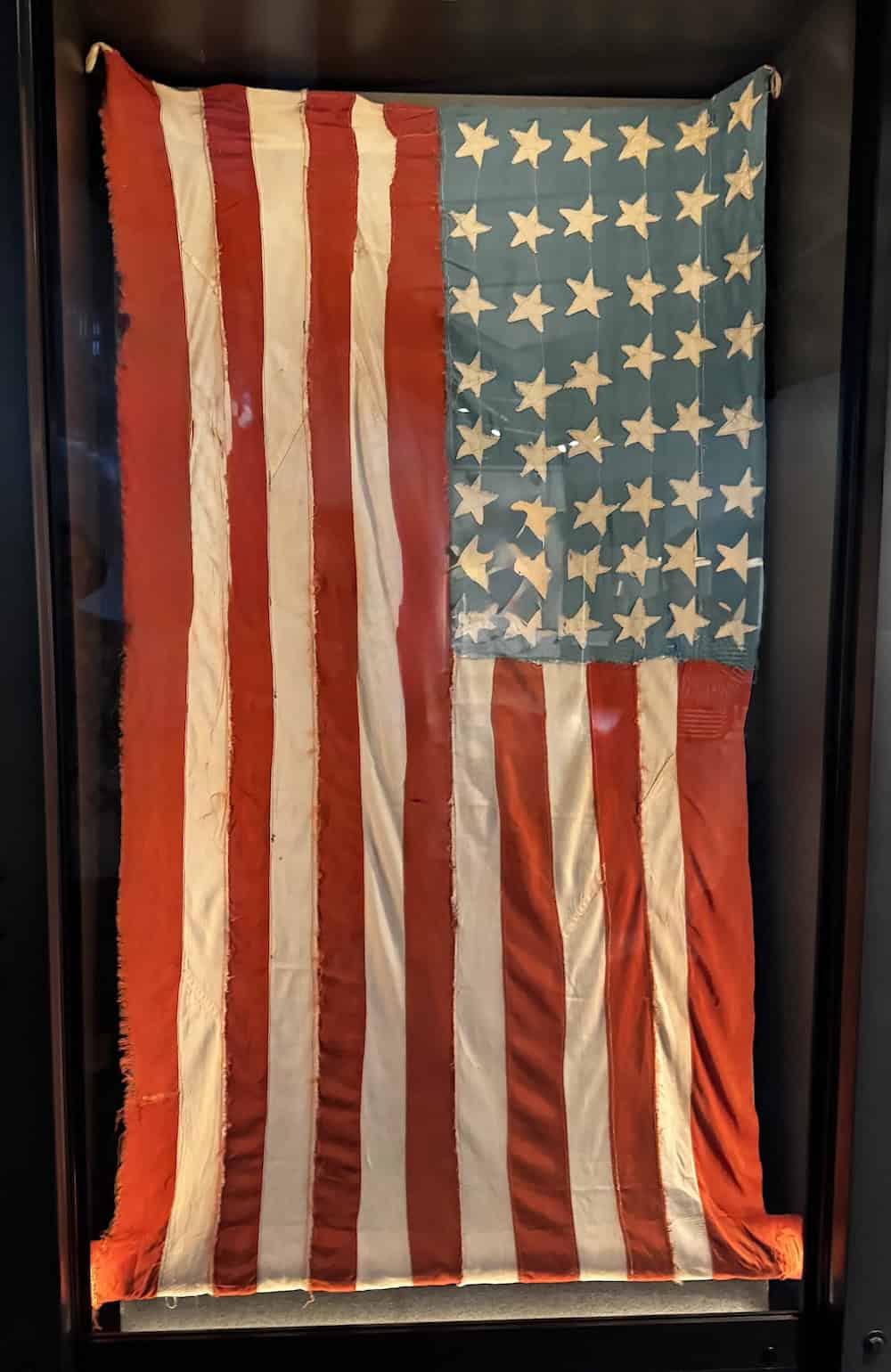
Instead, Sakamaki spent most of his captivity in a Wisconsin prisoner-of-war camp. “He learned to speak English while he was in prisoner-of-war camps,” Dee said.
“When he was released after the war, he went to work for Toyota and became president of the Toyota subsidiary in Brazil in 1967,” Dee says. “He married and had a family.”
Sakamaki also wrote a book titled “I Attacked Pearl Harbor.” In 1991, Sakamaki traveled to Fredericksburg for the 50th anniversary of the attack on Pearl Harbor.
When he saw his old submarine for the first time in 50 years, he cried. Sakamaki died Nov. 29, 1999, in Japan at age 81.
Disclosure: The author was the guest of the Fredericksburg Convention & Visitors Bureau, but any opinions expressed in this post are her own.
IF YOU GO
For additional information, please contact the National Museum of the Pacific War at www.pacificwarmuseum.org or the Fredericksburg Convention & Visitors Bureau at www.VisitFredericksburgTX.com
Save to Pinterest!!