The Ancient High Line of Lucca, Italy

Lucca, Italy, is renowned for its intact Renaissance walls dating back to the 15th century. Once you’ve been to Lucca (in north-central Italy), you’ll know why touring these walls is often at the top of every visitor’s itinerary.
For those who live in the city, the walls of Lucca offer an escape from the narrow city streets and alleys, where bicycles and Vespas weave between cars. The walls are a place where residents can relax and wander while they soak in fresh air and the beauty of nature.
Walking the Walls of Lucca
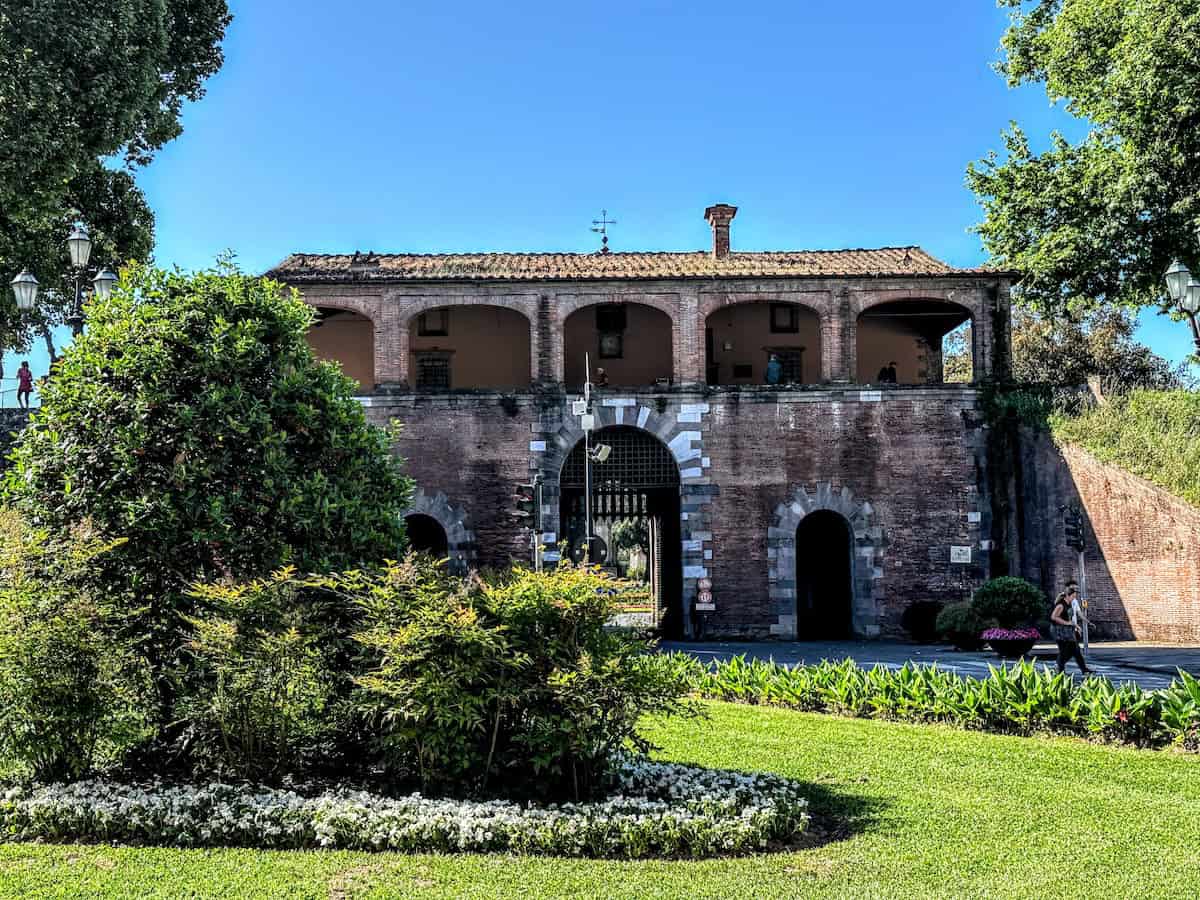
After you access one of the entry points (either an old stone staircase or paved ramp) leading up to the walls, the scale of the wall construction becomes even more impressive. The wide greenway is lined with centuries-old, stately trees that seem to reach the sky; some stretch as high as 100 feet off the ground.
The defensive walls surrounding Lucca’s historic center are massive, made of stone, brick, and clay. They are over 39 feet high and 98 feet wide at their base. The walk around the perimeter is about 2.6 miles (and takes about an hour).
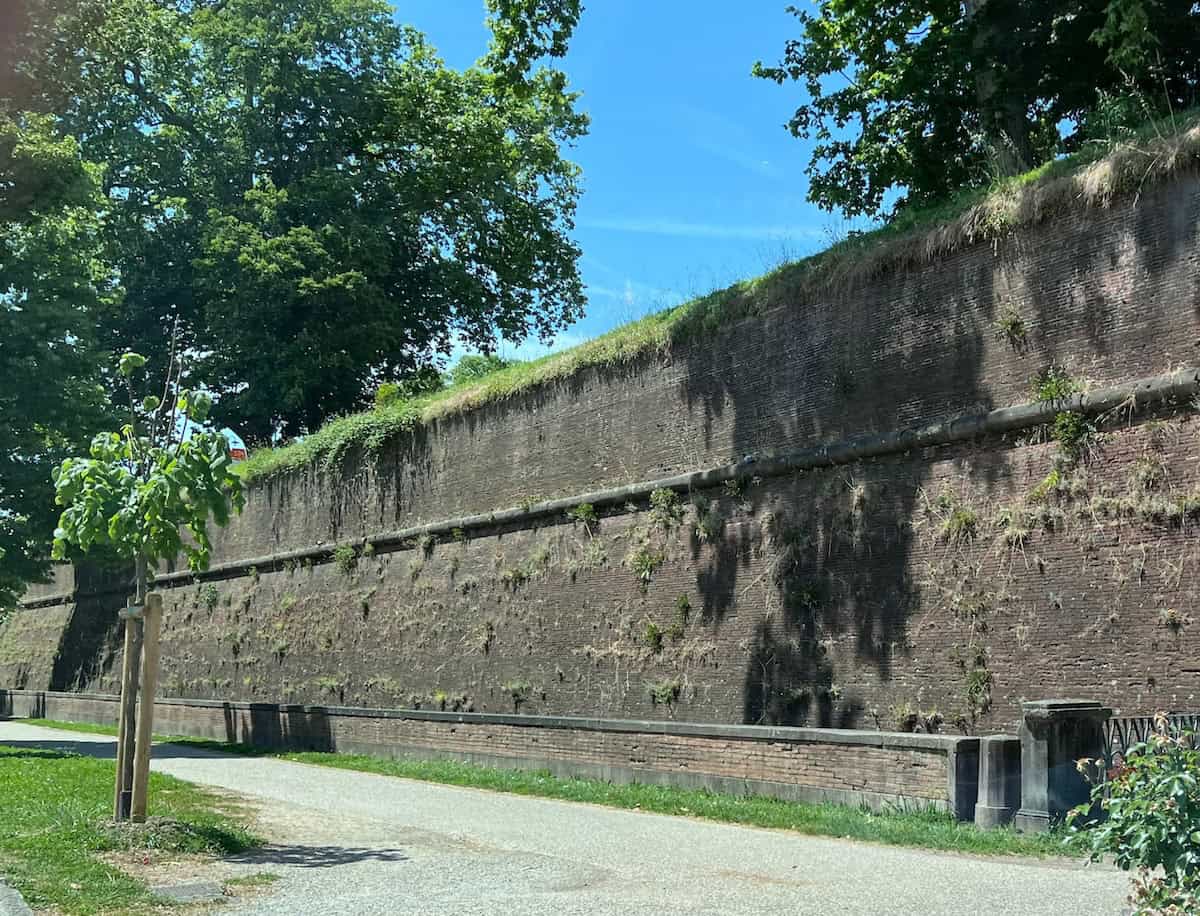
Much like a multi-lane pedestrian highway, you can walk (or bicycle) along a large path or follow an unpaved path that runs parallel on each side. (Vehicular traffic was banned from the city walls in 1984.)
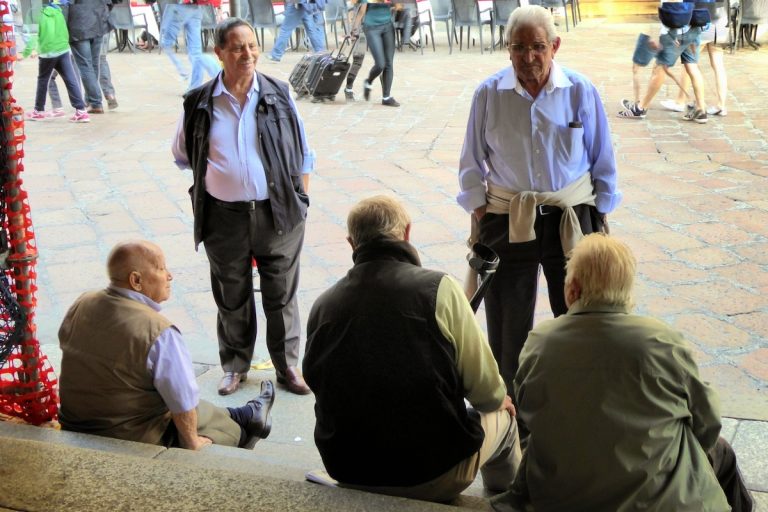
This people-friendly, elevated urban park is a recreation paradise filled with runners, cyclists, dog walkers, and families with mothers pushing baby carriages. During the day, you might see groups of pensioners (umarell) catching up with each other. In the early evening, many Italians use the walls for their passeggiata.
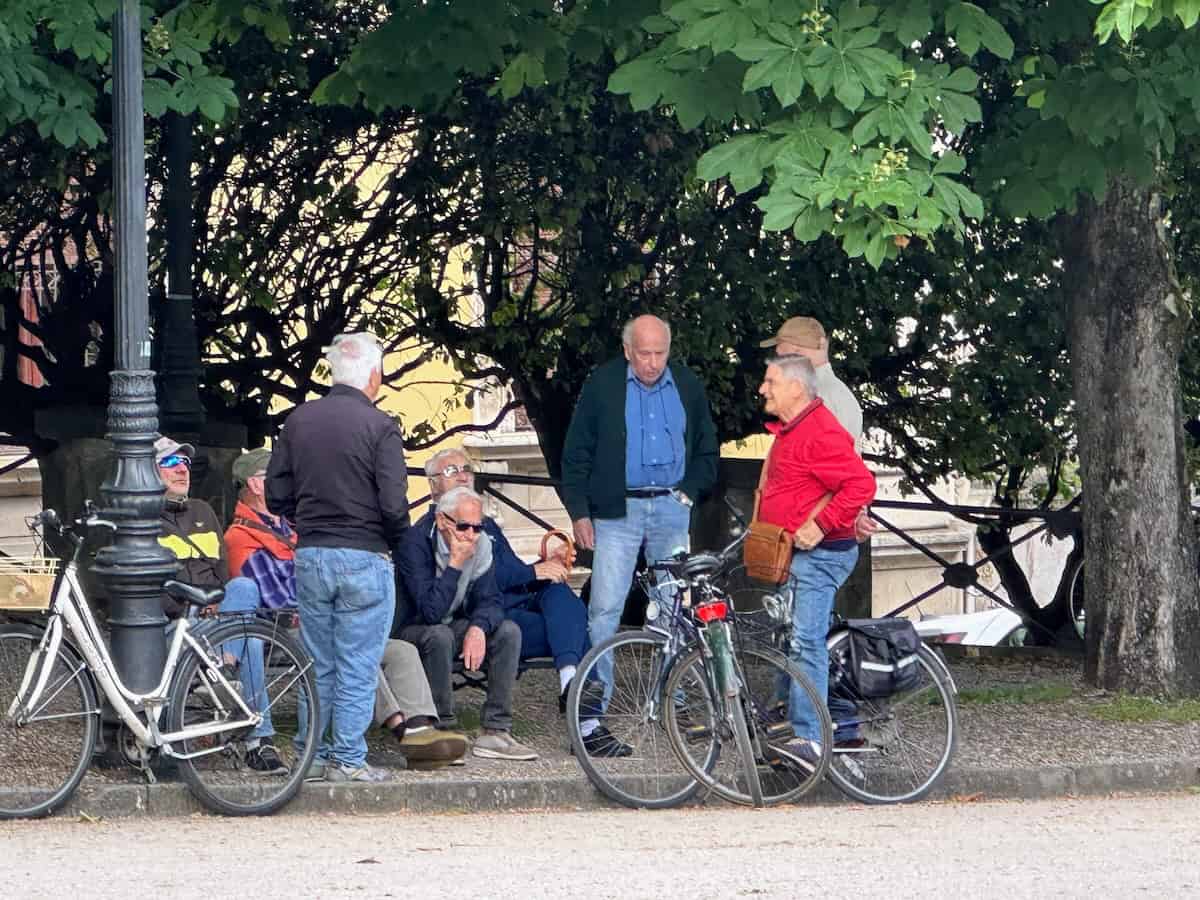
Benches invite you to travel slowly, sit under the shady trees, and enjoy the magnificent views of the historic center from this unique “observation tower.”
In the early 1930s, Mario Tobino, a poet, writer, and psychiatrist, described the intimacy he found on top of the walls as a “dining room and garden, and at the same time memory of many past events.”
Origins of the Walls of Lucca
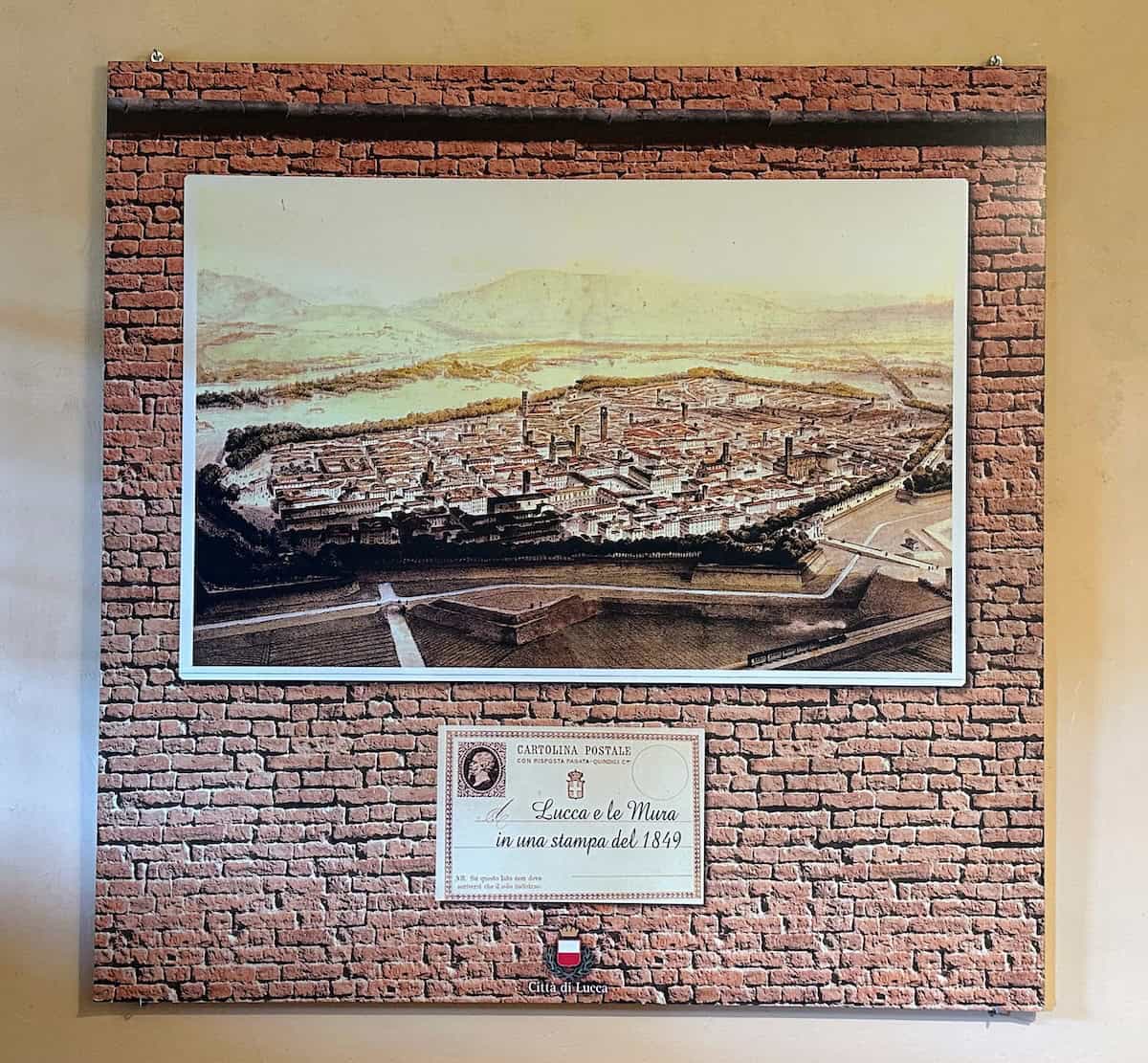
Originally built to defend the city from its enemies, the City Walls of Lucca never had to be used for military purposes. However, in 1812, the gates of the walls were closed and plugged up, helping protect the city from a devastating flood.
The walls have six access points (a gate or a porta, in Italian). Three are original, and three were opened later. Ten defensive buildings (called a bastion, or baluardo) that bulged out of the walls were built to defend the walls that were most exposed to attack.
A Forebearer of the New York City High Line?
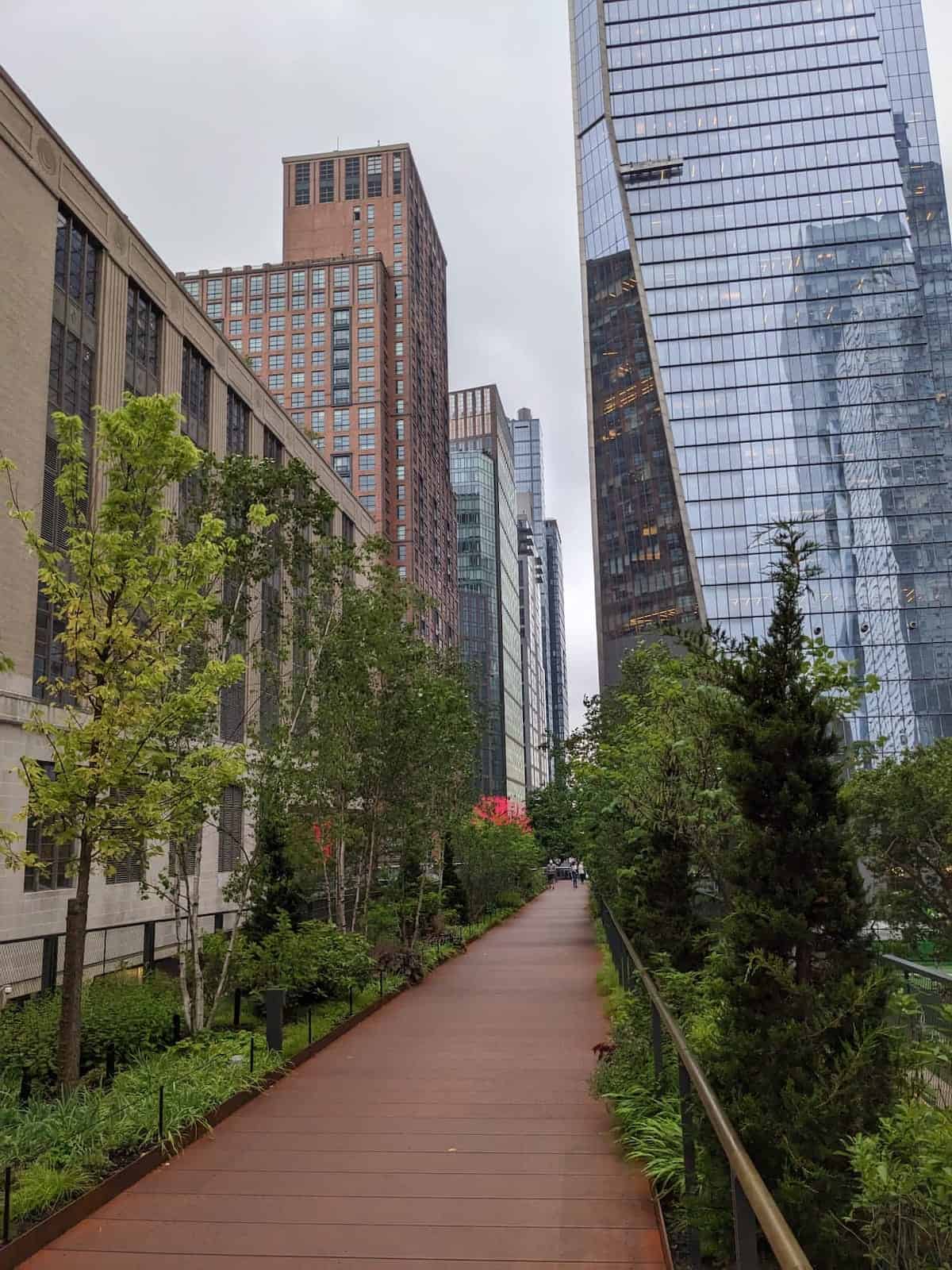
Although these preserved walls have a much longer and richer history, to a New Yorker, they are reminiscent of the New York City High Line, which became an instant hit when it opened in 2009.
The public park in New York is perched atop a historic elevated freight line saved from demolition. An oasis in the bustling city, the 1.45-mile walkway is lined with greenery and attracts more than 8 million visitors annually.
Like the walls of Lucca, it is a model of preservation, transformation, and creative reuse.
The city of Lucca had the foresight to purchase the walls from the State in 1870, but it is Duchess Marie Louise of Bourbon who is credited with transforming them from a defensive structure into a public walkway and park.
Taking A Walk Back in Time
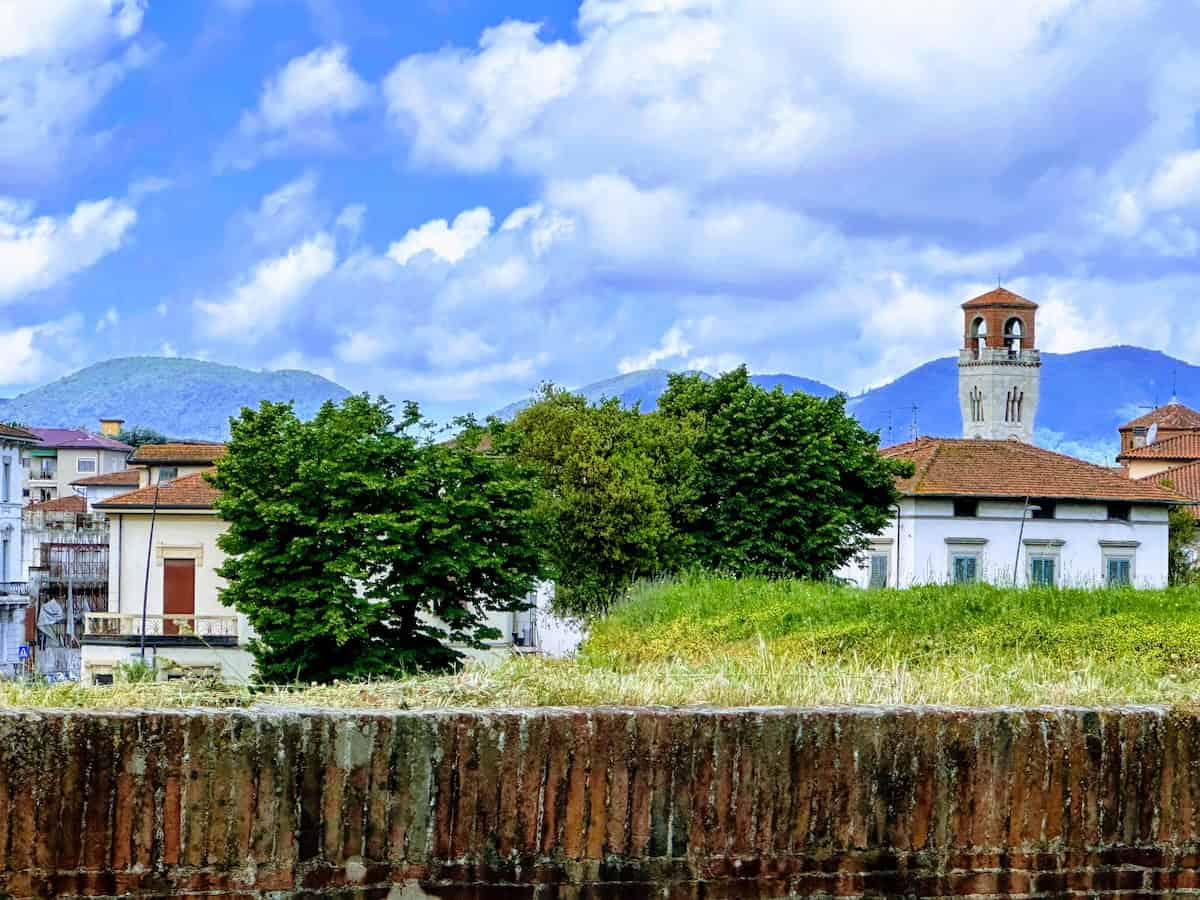
As you walk, there are so many things to see.
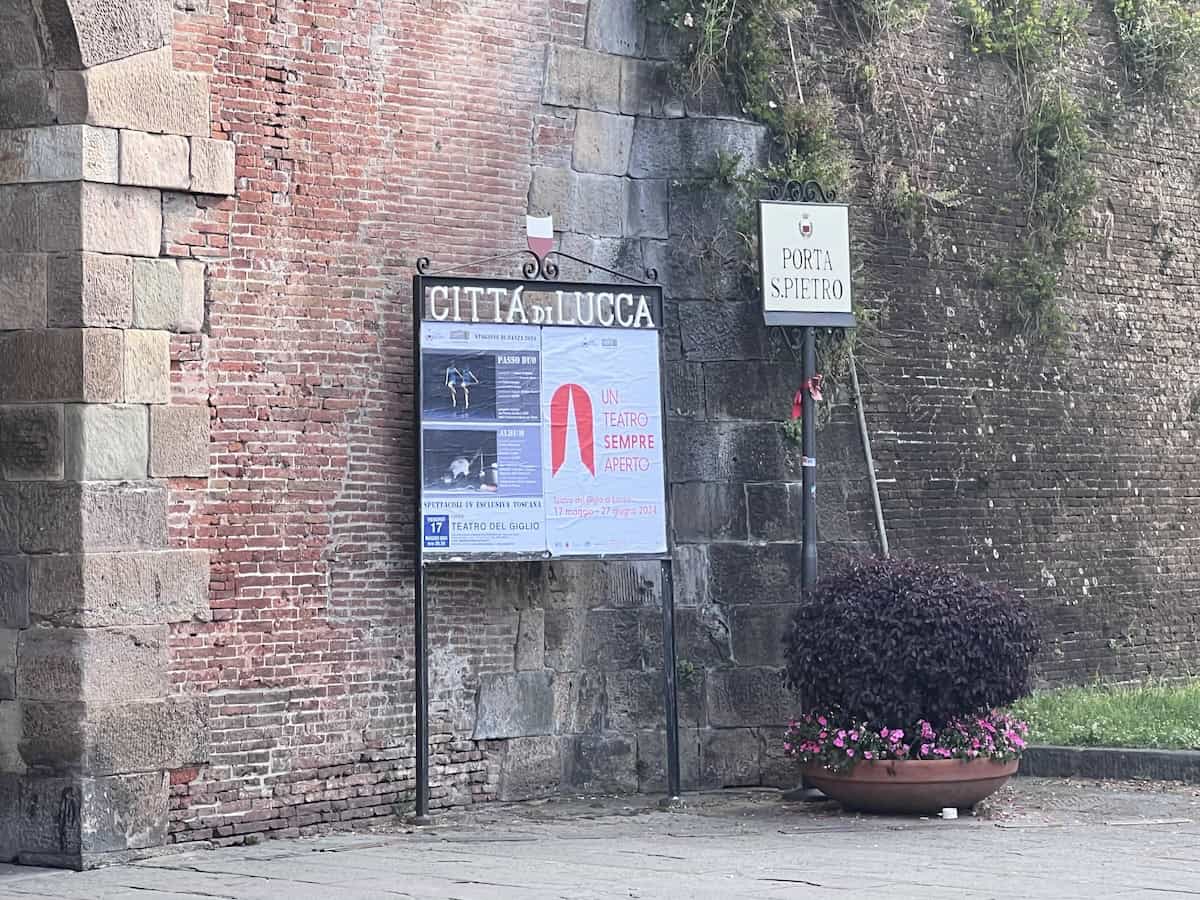
Our hotel was closest to the Porta San Pietro, the first gate opened that allowed “foreigners.” The other original gates are Porta San Donato Nuova (with a drawbridge and chains) and Porta Vittorio Emanuele. These three original fortified gates were built in the second half of the 16th century.
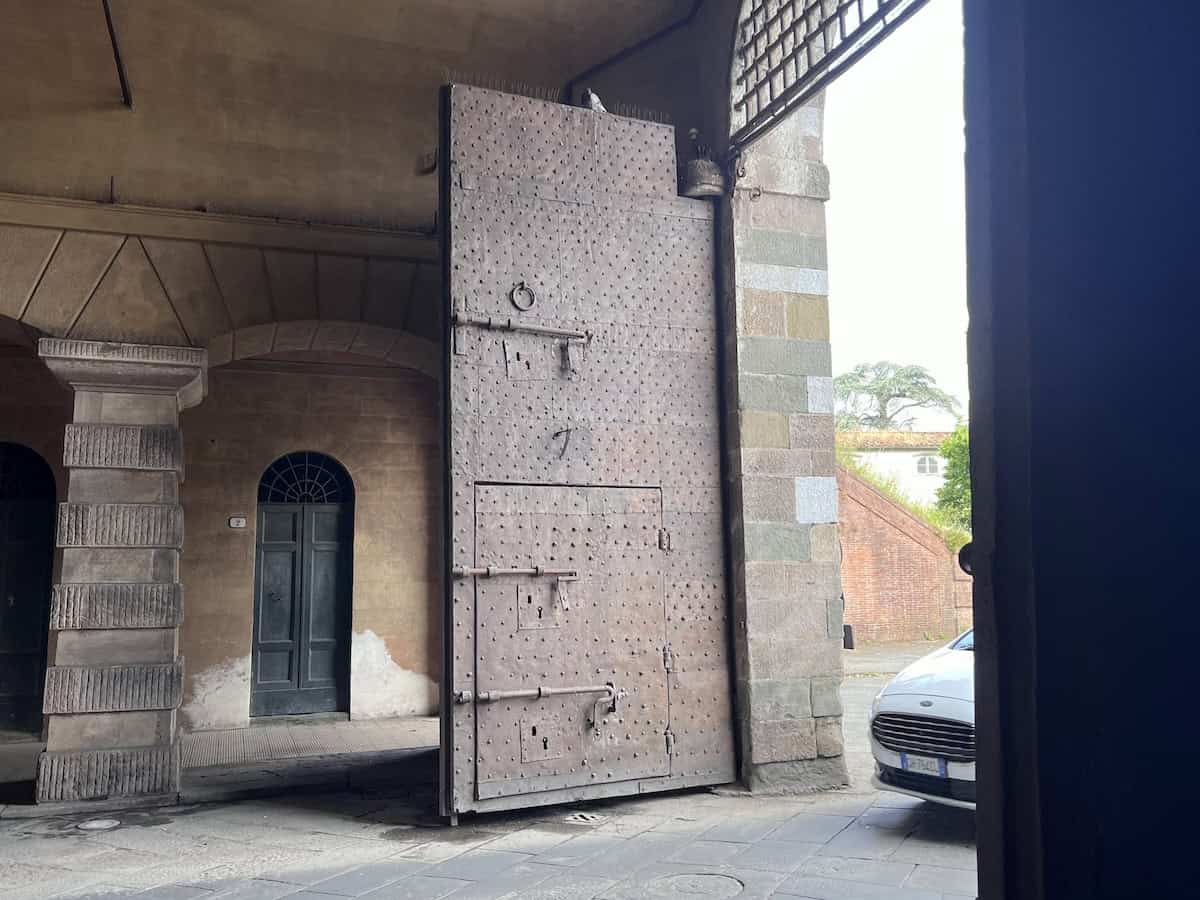
Make it a point to stop at the Gatehouse Porta San Donato (an InfoPoint for the Mura di Lucca), which has a small museum, literature about the walls and the city, and an excellent historian who can help answer questions.
The historic Lucca restaurant Da Giulio offers outdoor seating on the heavy stone wall near Porto San Donato.

There are restaurants, fountains, spacious grassy areas, playgrounds, and small buildings (much the size of a lock house you would see on a canal) that include a mint museum with ancient coins and places to stop for Italian coffee.
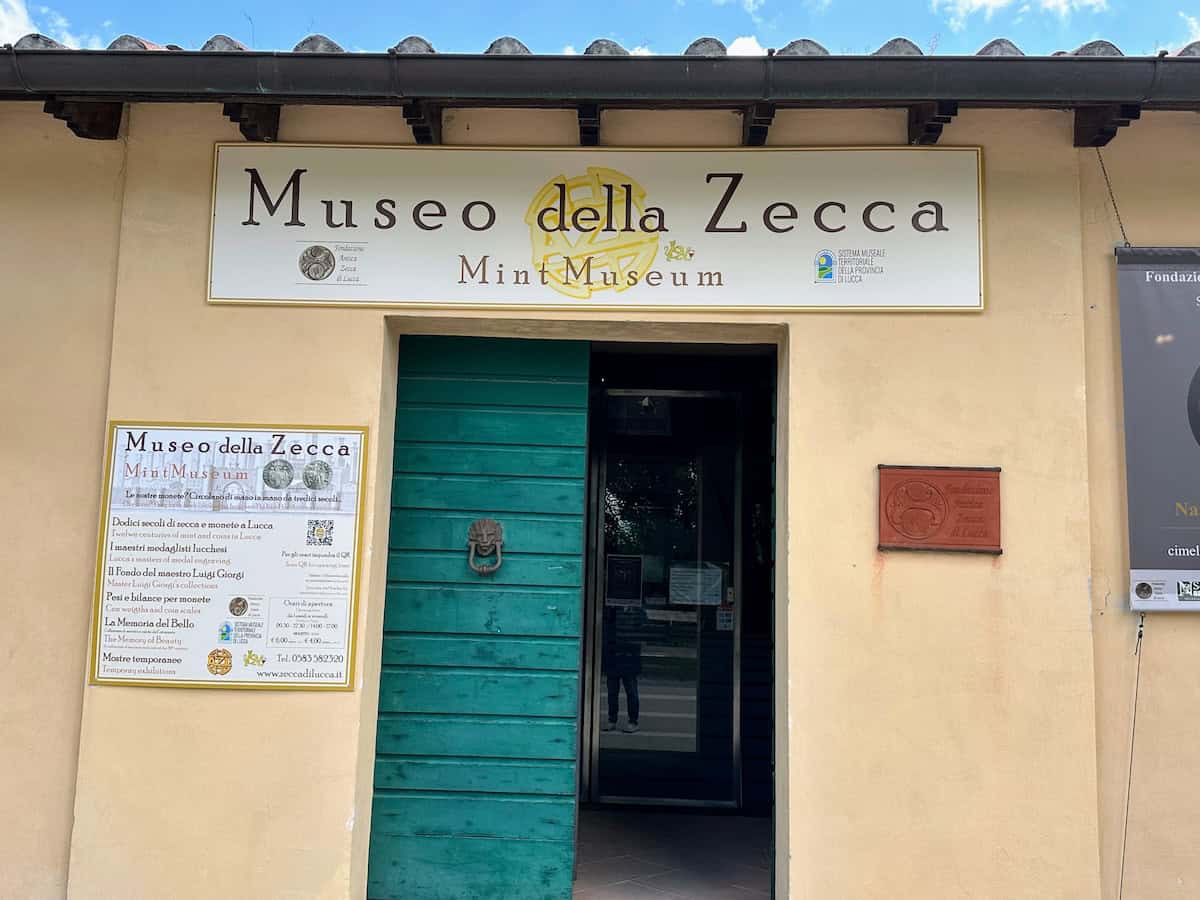
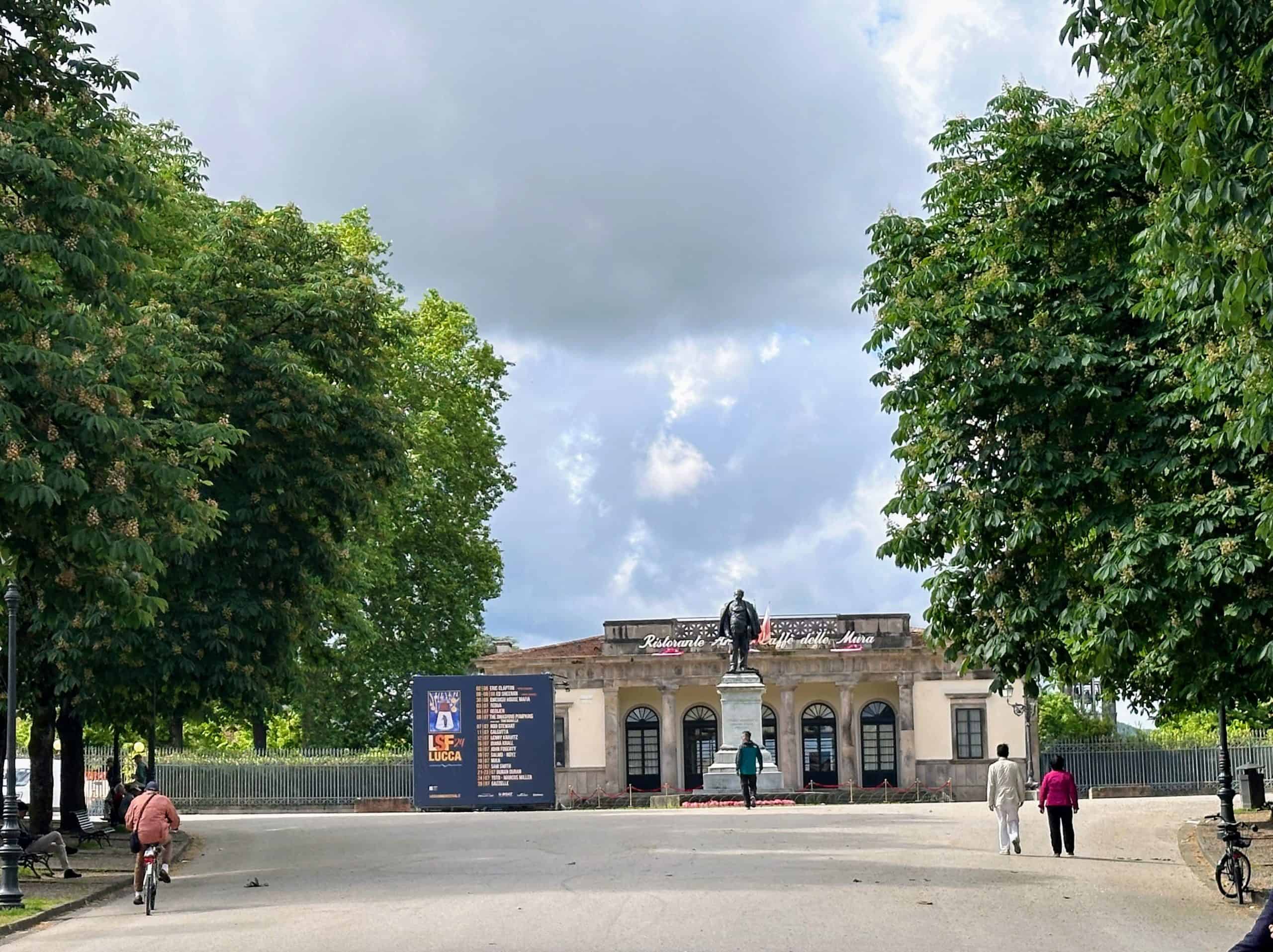
You’ll have a bird’s eye view of some of the city’s most interesting churches, monuments, and private villas in the Tuscan countryside.
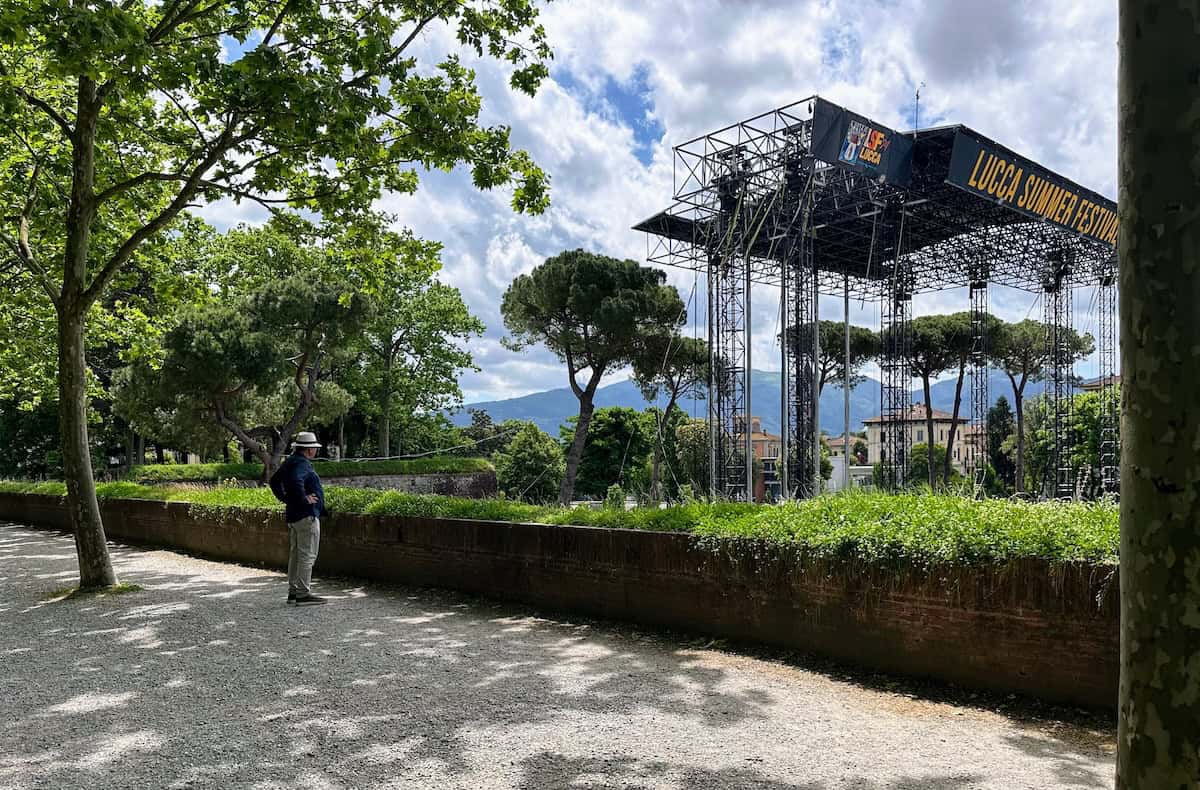
The magic of the ancient Walls of Lucca makes a compelling case for staying in the city for several days to fully enjoy its beauty and learn about its rich history.
Also on MoreTimeToTravel:
All photo credits: Irene and Jerome Levine
Save to Pinterest!!



Thanks for the tour and the beautiful photos!
Hope you get there soon~