Eating Through New Orleans, The Ultimate Neighborhood Food Guide
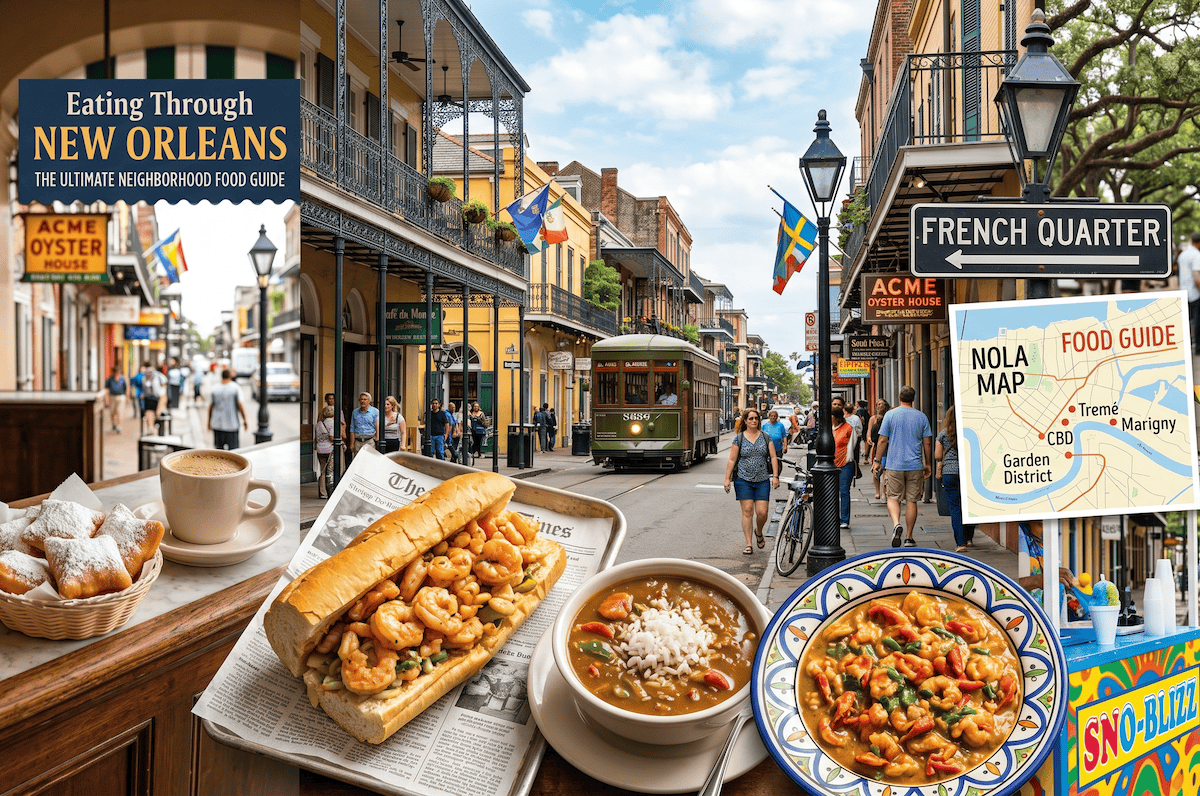
Contributor Ali Webb eats her way through New Orleans, one neighborhood at a time.
Mark Twain supposedly said, “New Orleans food is as delicious as the less criminal forms of sin.” If he didn’t, he should have.
Eating in this city is so superlative that it should be sinful. Luckily for all of us, absolutely no sin is involved with eating your way through New Orleans.
As you wander through its streets, you feel the true rhythm of New Orleans is measured not in hours, but in meals. And each of its neighborhoods has its own culinary personality. With 1000 restaurants spread over 73 neighborhoods, this journey could take a lifetime. Sadly, we only have time for five neighborhoods—this time.
Bywater Restaurants
We start in the Bywater, a neighborhood just downriver from the French Quarter and one that has evolved from a working-class industrial area into one of New Orleans’ most creative enclaves.
Colorful shotgun houses sit beside murals, music clubs, and artist studios, giving the area an energy that feels both deeply rooted and constantly evolving. The Bywater itself feels like old and new New Orleans existing side by side—weathered shotguns, murals, artists’ studios, and tiny corner bars all layered together.
One Bywater institution offers a morning ritual. Applied Arts Coffee combines a coffeehouse, gallery, and community gathering place for families and friends. Inside, sunlight filters across local art and mismatched seating, while baristas move steadily behind the counter, pulling espresso shots and steaming milk. Parents with children in strollers and friends gathering to catch up fill the seats.
The coffee is serious without being pretentious. Like so many places in New Orleans, conversation matters here.
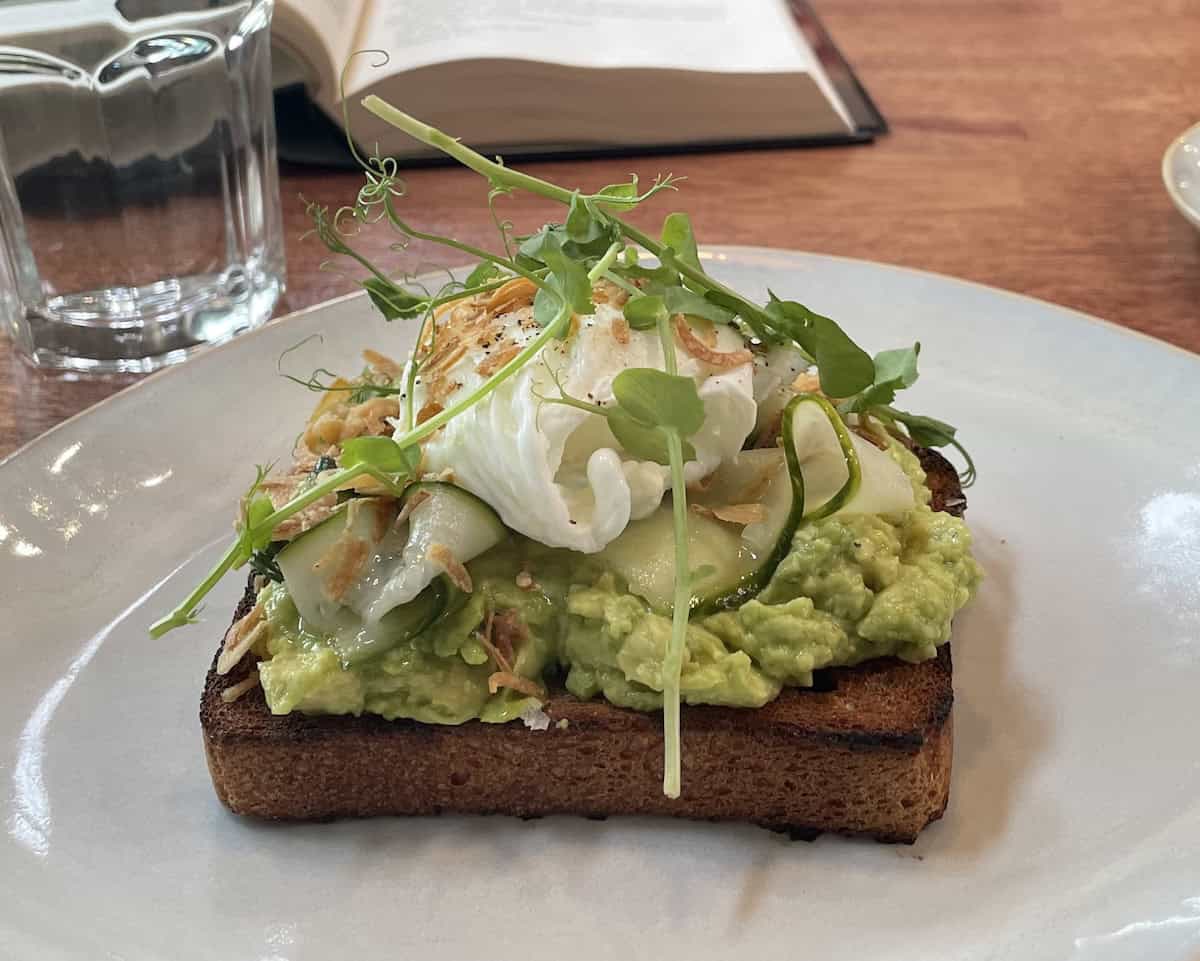
Another Bywater morning could start with breakfast at Elizabeth’s Restaurant, where the dining room hums with locals and visitors waiting patiently for plates of praline bacon, biscuits, grits, and eggs. Like much of the Bywater and neighboring Marigny, Elizabeth’s reflects the area’s blend of longtime residents, artists, musicians, and newcomers drawn to its unpolished authenticity.
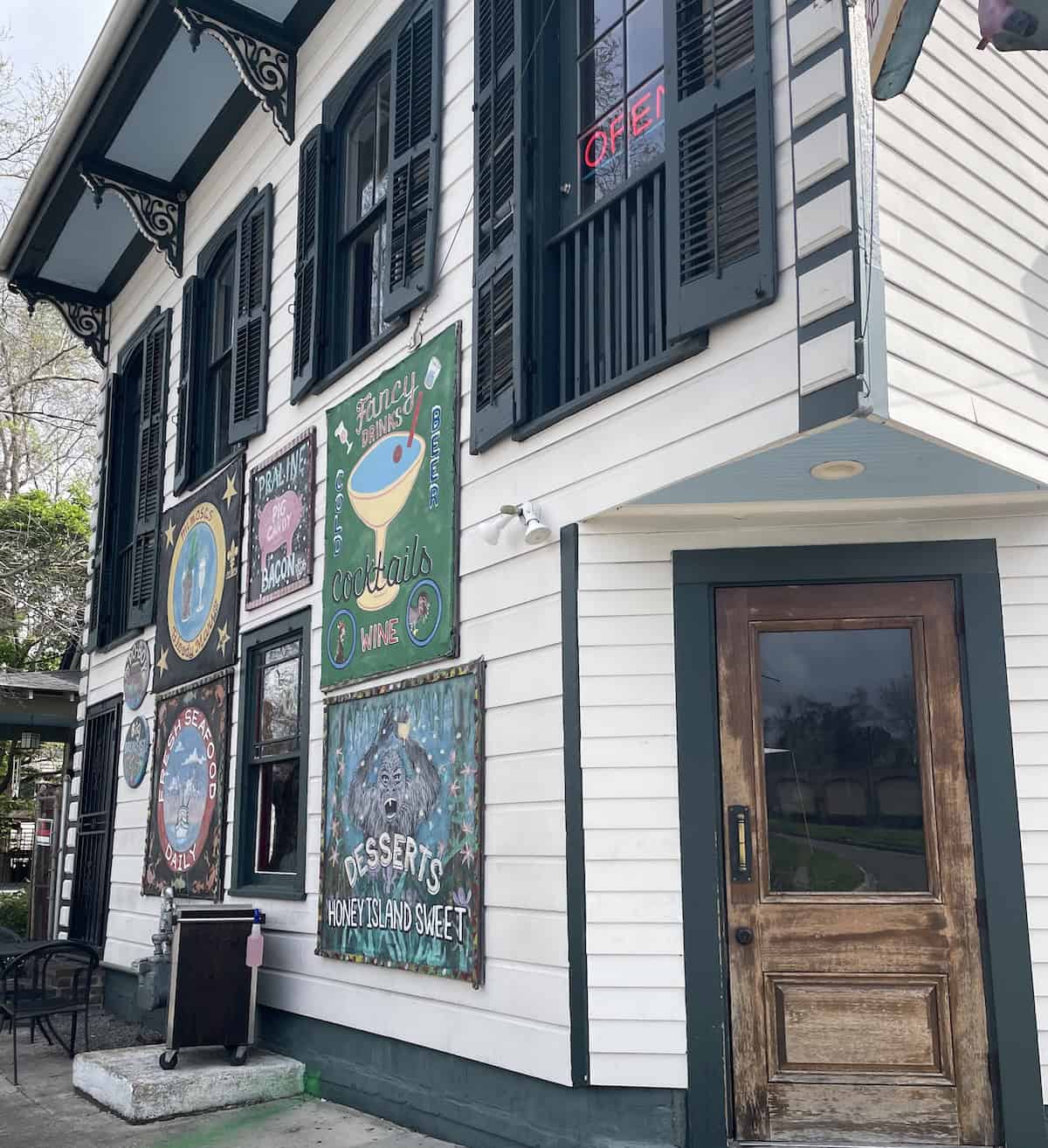
Praline bacon sounded excessive until the first bite arrived—a combination of smoky, sweet, salty, and crisp that somehow worked perfectly. Nearby tables ordered shrimp and grits, French toast, and enormous omelets, while servers wove through the room balancing heavy plates and coffee refills.


Lunch meant Frady’s One Stop Food Store, a corner grocery that looks exactly like what it is: an old neighborhood store that happens to make some of the city’s best sandwiches.
The door swung open, and the smell of frying shrimp immediately filled the room. Behind the counter, po’ boys are assembled with the quiet efficiency that comes from decades of repetition. There is little need to study the menu.
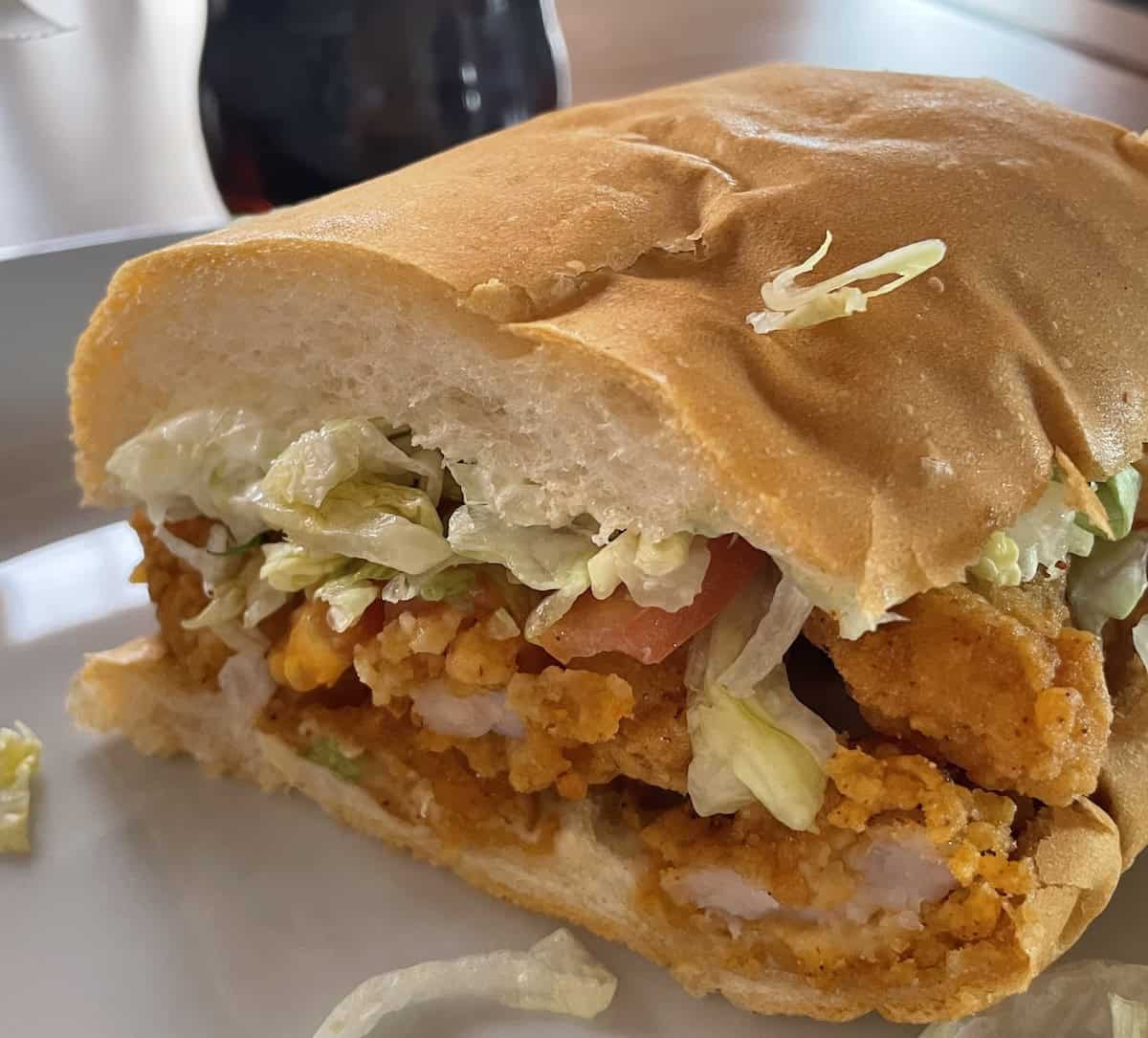
Shrimp po’ boy.
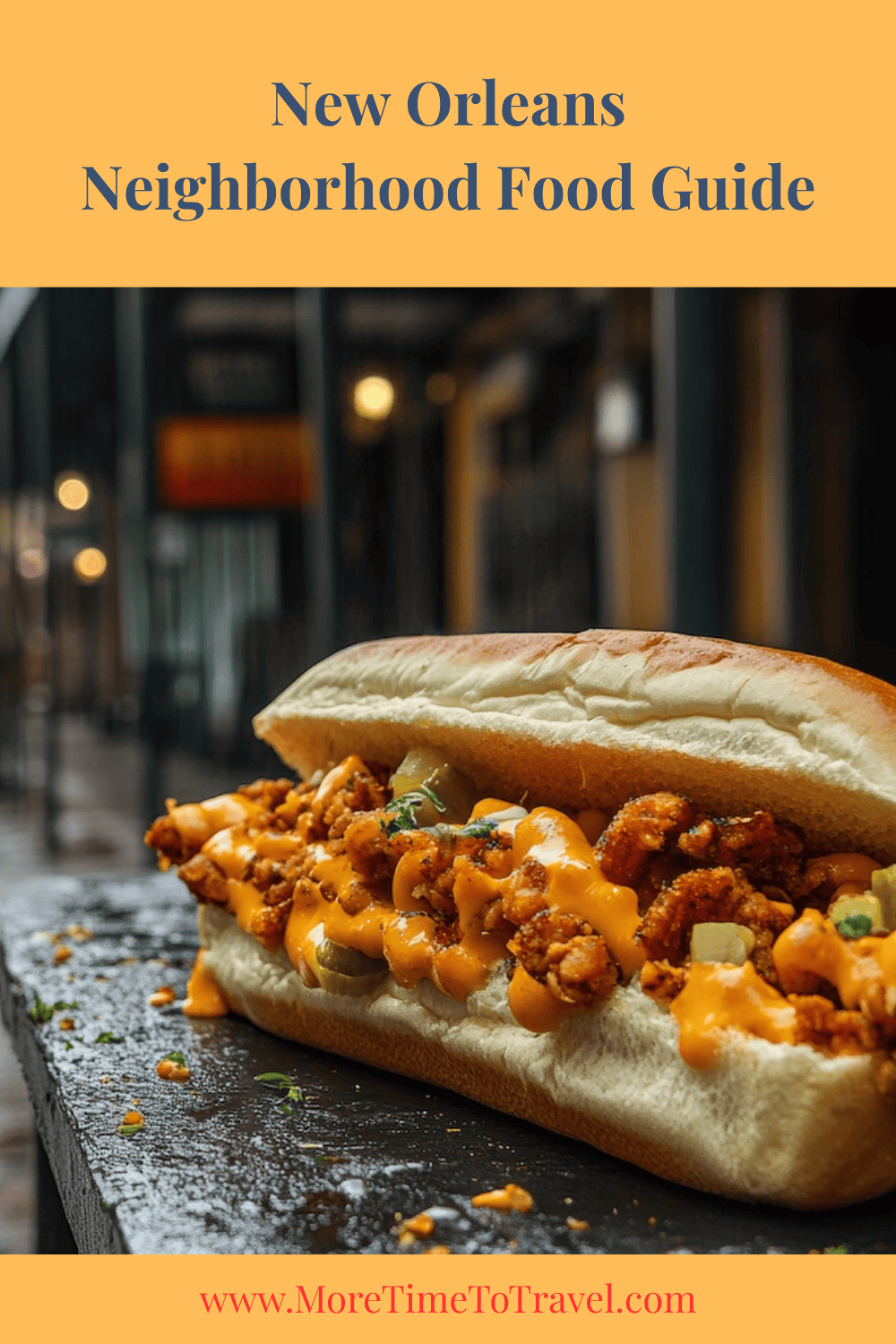
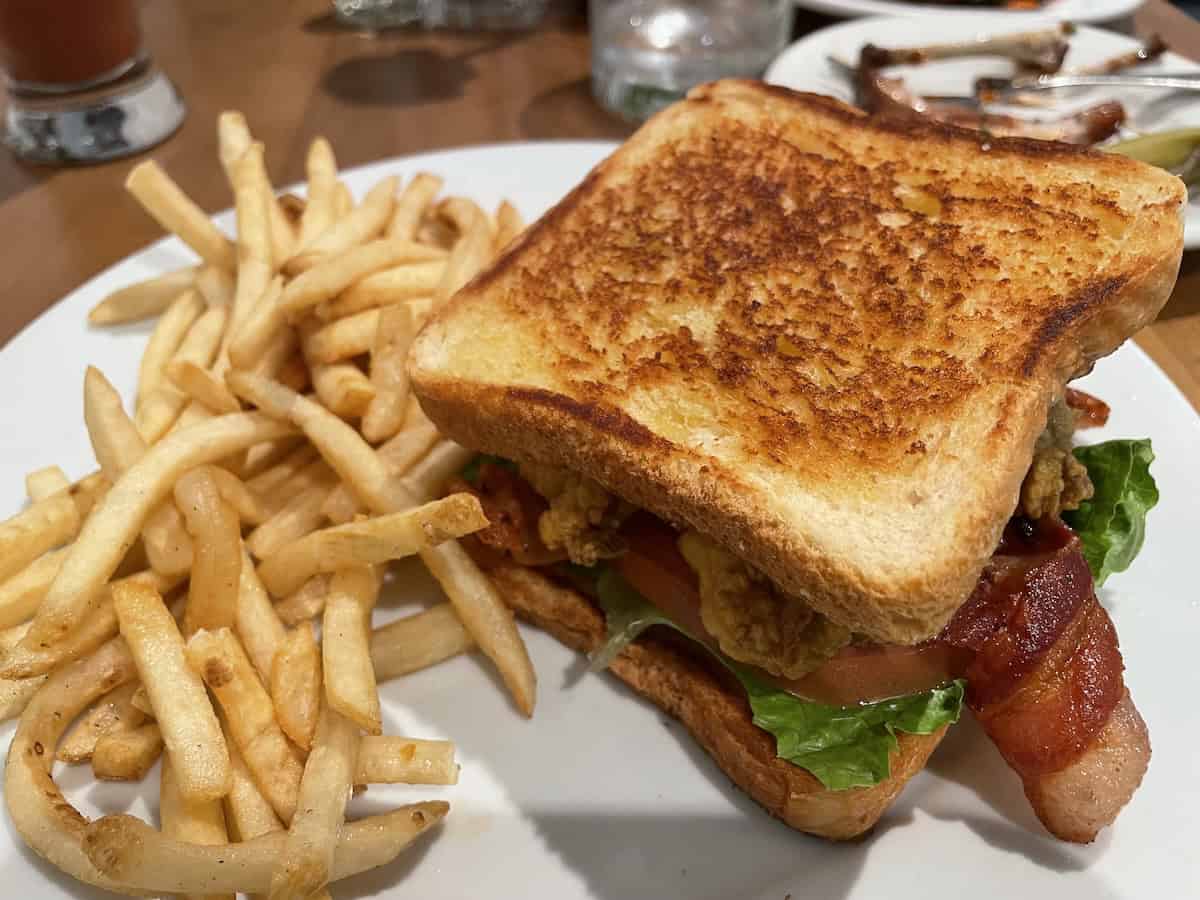
The shrimp are lightly battered and fried until crisp, then piled onto soft Leidenheimer French bread with lettuce, tomato, pickles, and mayonnaise added. Wrapped in paper and handed across the counter, it is warm, messy, and perfect…and so big as to be very shareable. It tastes unmistakably of New Orleans.
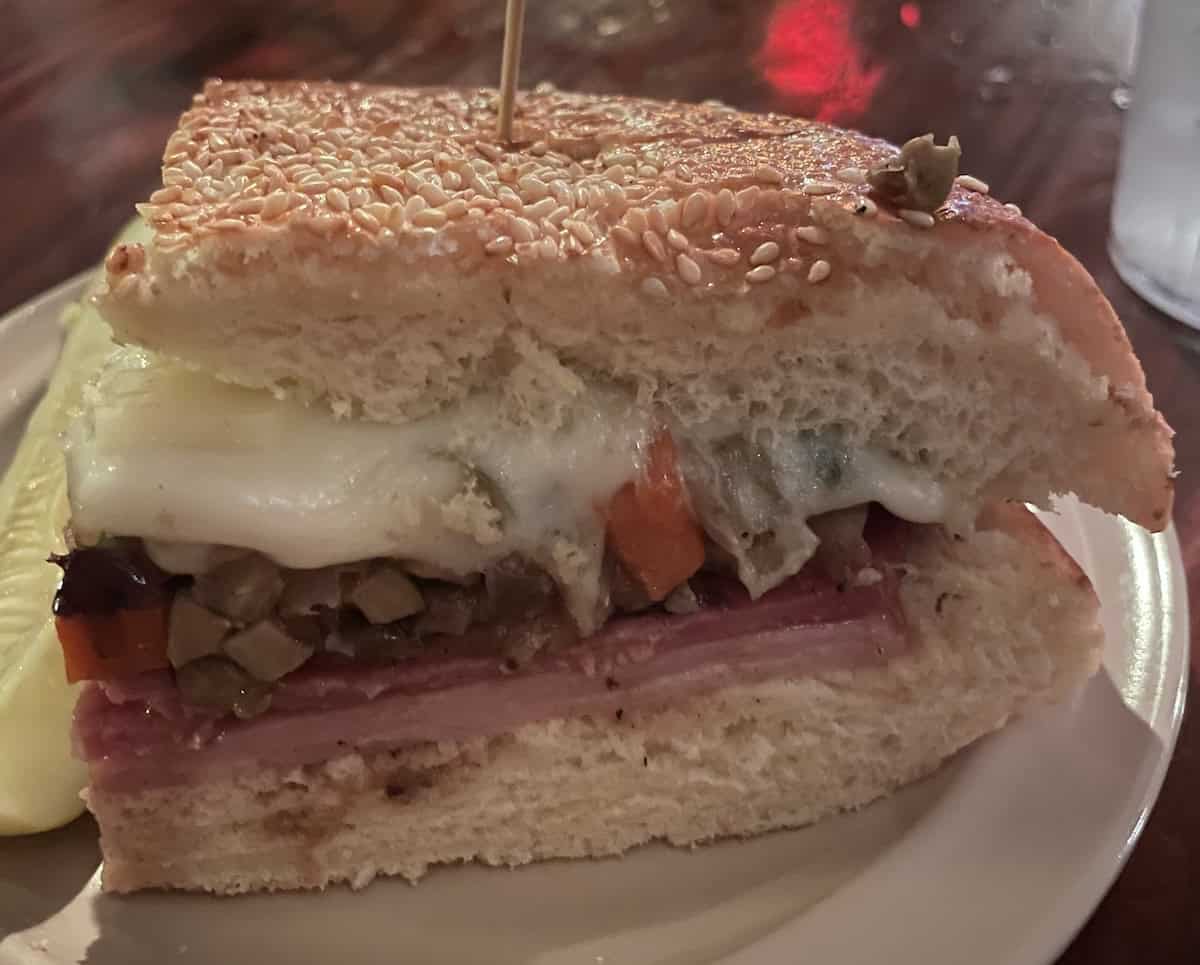
The muffuletta deserves equal attention. Layers of ham, salami, mortadella, provolone, and olive salad are pressed into a round Sicilian loaf, creating a sandwich that is both salty and briny, rich yet balanced.

Lunch at Frady’s feels less like dining out and more like being welcomed into the neighborhood.
Moving to the Nearby French Quarter
Continuing our culinary journey, the late afternoon in the French Quarter begins to glow in the soft Gulf light, making the wrought-iron balconies appear theatrical. The Quarter remains the city’s historic heart, where Spanish balconies, hidden courtyards, and centuries-old buildings create one of America’s most recognizable urban landscapes. It is the perfect hour to slip into Napoleon House, one of the city’s most atmospheric bars.
The building dates to the early nineteenth century and still carries the feeling of another era. Ceiling fans rotate lazily overhead, while sunlight drifts through tall, shuttered windows. Prints and pictures line the rough-hewn papered walls. The marble bar holds the quiet polish of decades of cocktails and conversation.
Here, the correct order is the famous Pimm’s Cup.
The drink arrived tall and icy, a refreshing mixture of Pimm’s (a gin-based fruit liqueur), lemonade, and ginger ale garnished with cucumber. In the Louisiana heat, it felt almost medicinal. The pace inside Napoleon House is slow in the best possible way. Nobody appears hurried. Conversations drift easily between tables while classical music plays softly in the background.
Someone inevitably ordered the warm muffuletta here, as well toasted, pressed, and melting slightly around the edges. It is not possible to eat too many muffulettas in New Orleans.
Morning in New Orleans rarely starts early, but brunch at Buffa’s Bar & Restaurant offers an ideal beginning to the day. Located at the quieter residential edge of the French Quarter near Esplanade Avenue, Buffa’s attracts as many locals as tourists, especially musicians finishing late-night gigs.
Buffa’s combines breakfast and live music in a way that feels quintessentially New Orleans. Jazz musicians settle into morning sets, while diners sip coffee over eggs, biscuits, and grits.
The food was comforting, rather than elaborate—exactly what is needed after a late night in the city. The music, however, transforms brunch into something memorable. A trumpet eased into a jazz standard, while bass and piano settled into rhythm below it. Conversations softened. Some diners focused entirely on the performance, while others continued lingering over coffee.
In New Orleans, music is never far from the table.
So many culinary institutions fill the Quarter; the starting place for family restaurant dynasties like the Brennans’ Commander’s Palace or Dooky Chase’s.
Tables in the Central Business District
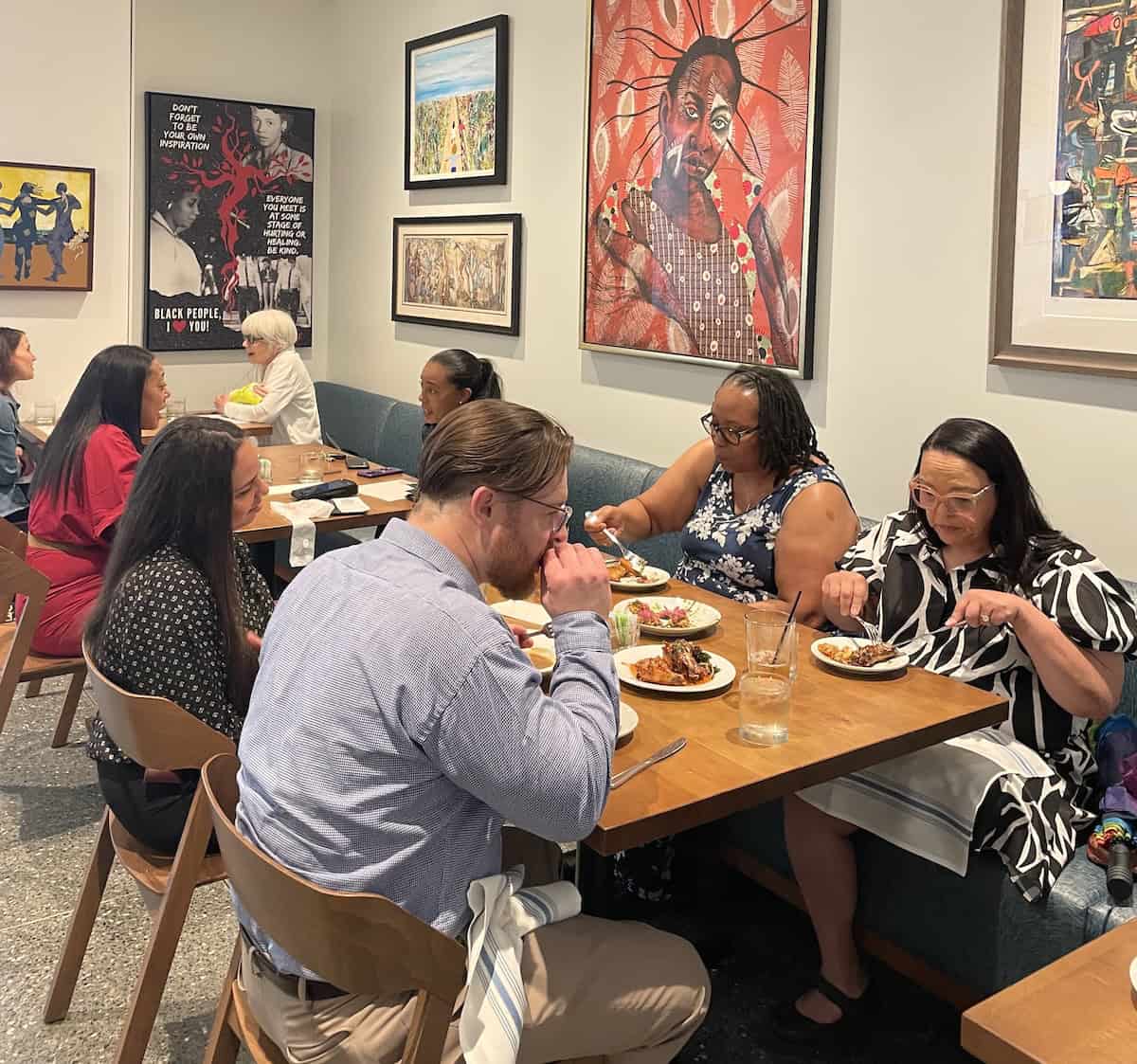
Now the road takes us to another neighborhood, the Central Business District of New Orleans, where Chapter IV carries the legacy of the Chase family into a sleek, contemporary setting of its own.
This district, once dominated by banks, shipping offices, and warehouses, has transformed in recent decades into a lively mix of hotels, restaurants, luxury apartments, and cultural venues linking downtown to the Warehouse Arts District.
Operated by Dooky Chase IV, the restaurant blends modern New Orleans style with the culinary traditions that made the Chase family legendary. The atmosphere is open and modern, and the menu has combined the family roots of the matriarch, Leah Chase, with the innovation of her grandson. Dining there offers a reminder that New Orleans cuisine is never frozen in time; it evolves through each generation while still honoring the city’s deep culinary roots.
Heading to Uptown New Orleans
Family legacies continue in every neighborhood. Uptown New Orleans unfolds beneath grand oak trees and along the St. Charles streetcar line, its neighborhoods filled with universities, historic homes, and restaurants beloved by locals. Dinner calls for a trip uptown to Brigtsen’s Restaurant, tucked into a Victorian cottage on Dante Street.
If Frady’s represents New Orleans at its most casual, Brigtsen’s reveals what happens when the city’s culinary traditions are treated with elegance and deep respect by one family for 40 years. The dining room feels intimate and welcoming, more like a gracious home than a restaurant.
The menu celebrates Creole cooking with extraordinary care. Duck arrived perfectly roasted with crisp skin and a rich sauce balancing sweetness and spice. Gulf fish was paired with crabmeat or shrimp drawn from nearby waters. Each dish reflects the layered influences that define New Orleans cuisine—French, Spanish, African, Italian, and Caribbean traditions all meeting on a single plate.
Dessert may be bread pudding soaked in bourbon sauce, warm enough to perfume the entire table.
Our Last Bites in Mid-City
The trip closed with a stop in Mid-City and dinner at Mandina’s Restaurant. A century-old institution reflecting another essential part of the city’s culinary identity: Italian-Creole cooking. M
id-City has long been associated with family-owned restaurants and everyday New Orleans life, and Mandina’s feels comfortably removed from the tourist corridors.
Families gathered around large tables, while servers carried seafood platters, pasta bowls, and gumbo through crowded dining rooms. The room buzzed with familiar energy—servers greeting regulars, families sharing dishes, conversations carried across the restaurant.
The menu reads like a history of New Orleans itself.
Fried shrimp, trout almondine, red gravy over spaghetti, soft-shell crab, turtle soup finished with sherry – hard choices.
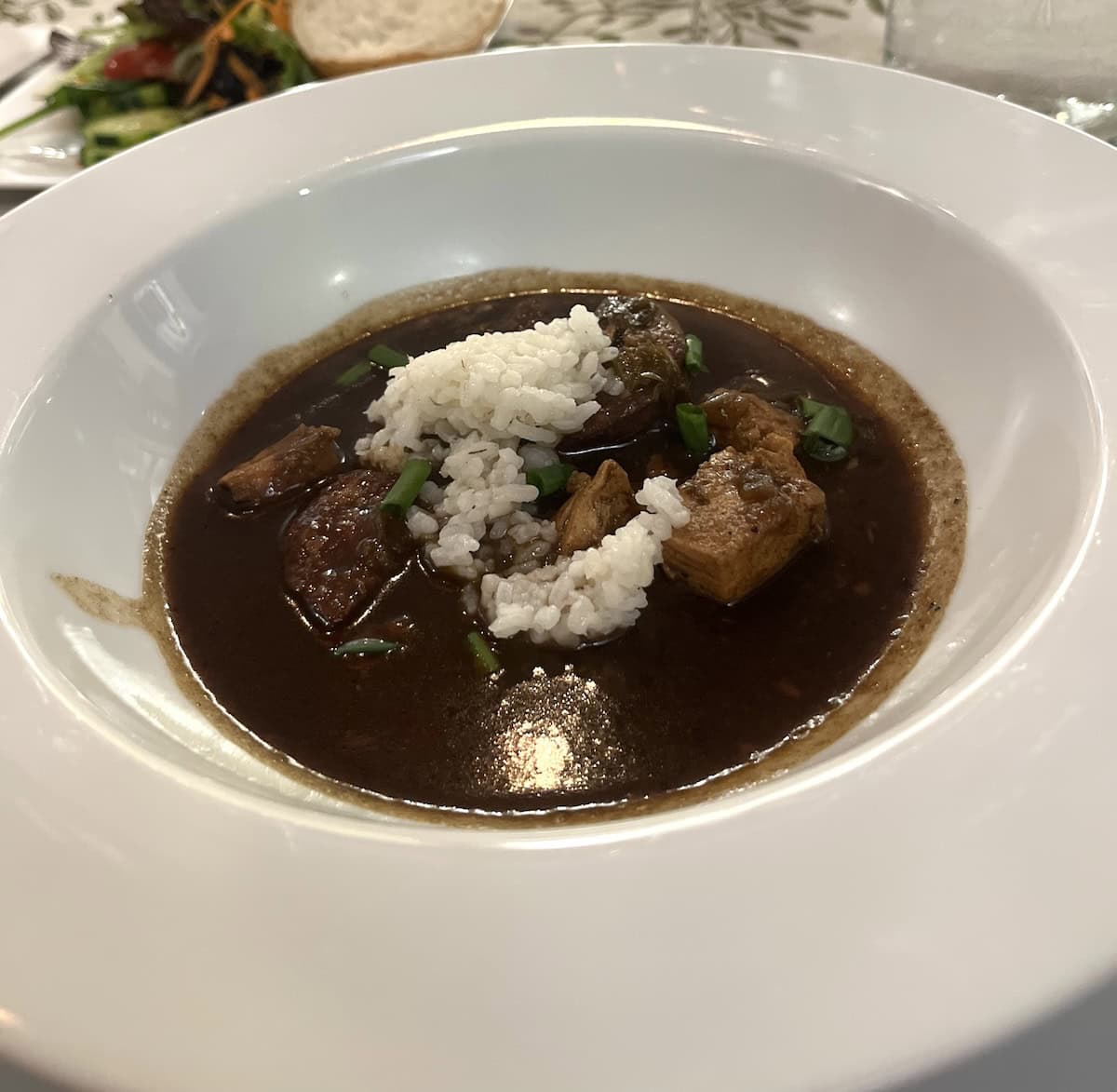
The gumbo arrived dark and rich, built on a slow-cooked roux that speaks to patience and tradition. Nearby tables ordered onion rings nearly the size of bracelets and platters overflowing with fried Gulf seafood.
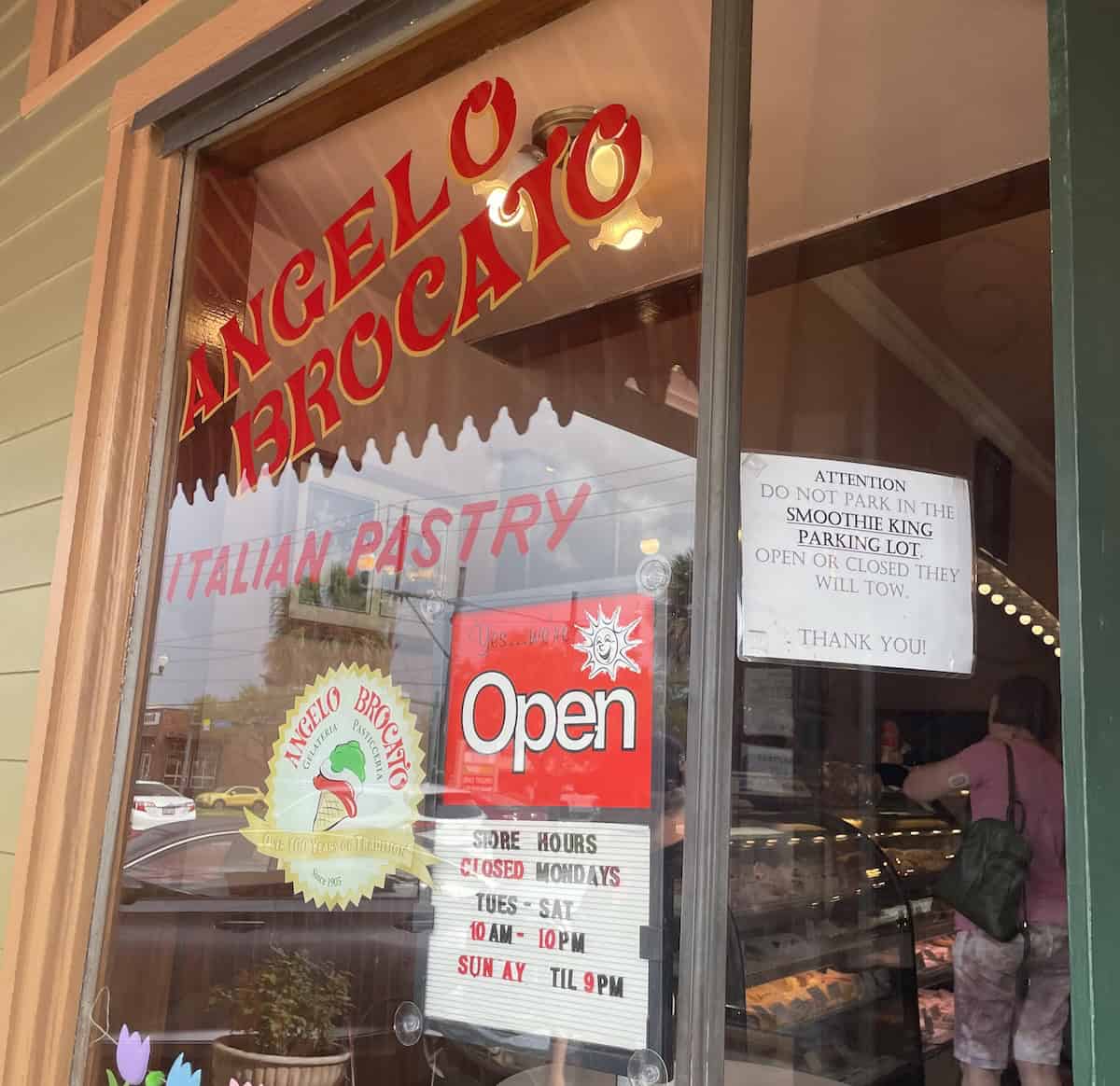
For over 100 years, the same family has been making gelato and pastries with their family recipes at Angelo Brocato. You know the cannoli Siciliana are fresh because they pipe the creamy filling into the pastry while you wait.
Restaurants Tell the Stories of New Orleans
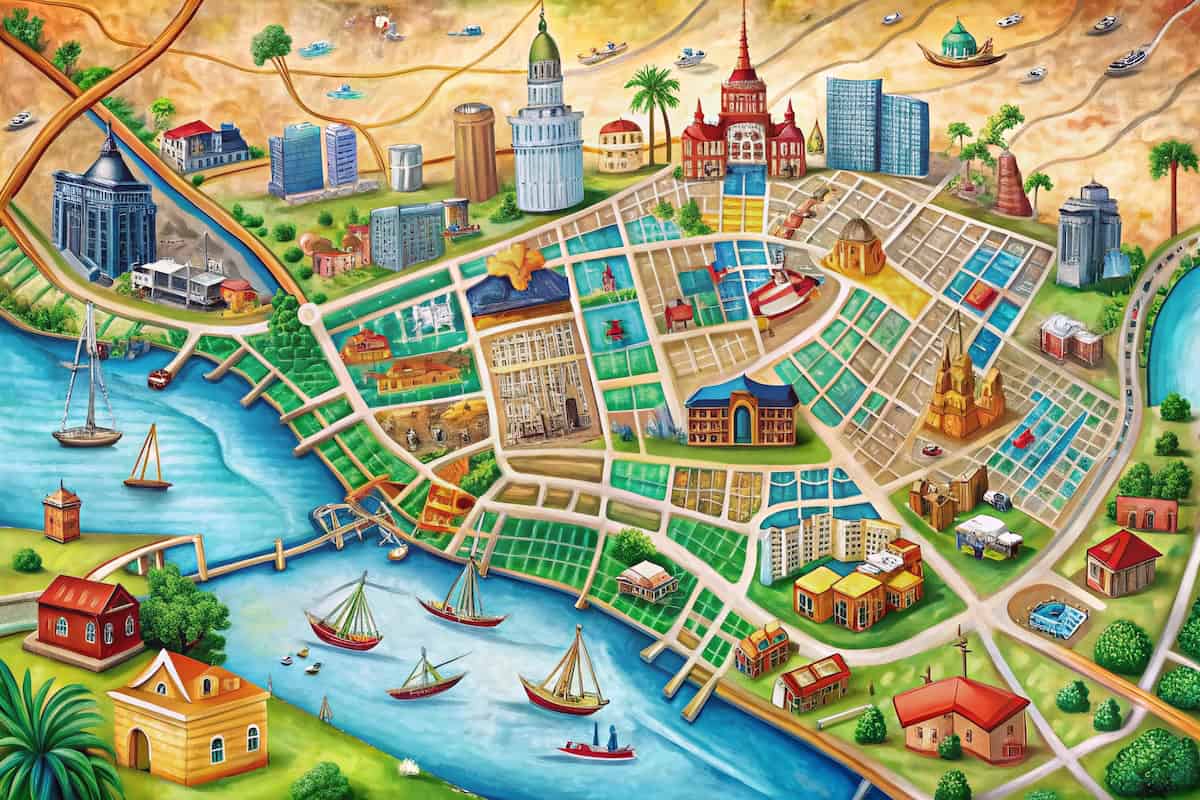
In many cities, restaurants compete for attention. In New Orleans, they work together to tell the story of the city itself. Exploring New Orleans means moving neighborhood by neighborhood, each with its own culinary story.
Eat your way through New Orleans, and you discover something essential: This is not simply a city with great restaurants.
It is a city where food, music, and conversation remain the shared language of everyday life.
About Ali Webb:
Contributor Ali Webb, PhD is adjunct faculty at the University of Michigan and Columbia University. Her long career in strategic communications has offered her many opportunities for domestic and foreign travel. She wrote a bi-monthly Sunday travel column, The Indulgent Traveler, for a Gannett daily in Michigan and now contributes to other travel websites. She also writes on Substack.
Save to Pinterest!!