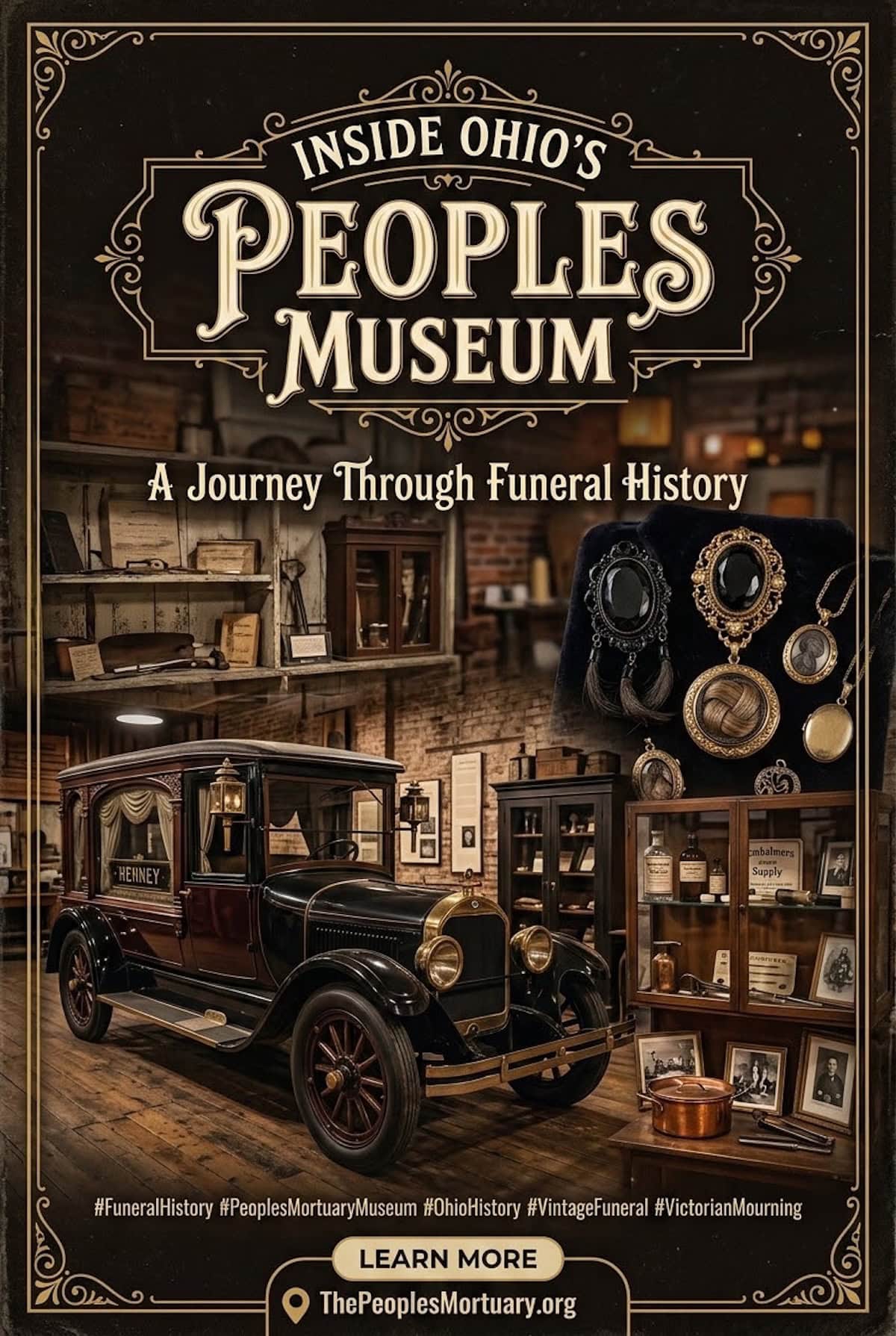
Inside Ohio’s Peoples Mortuary Museum and Its Funeral History
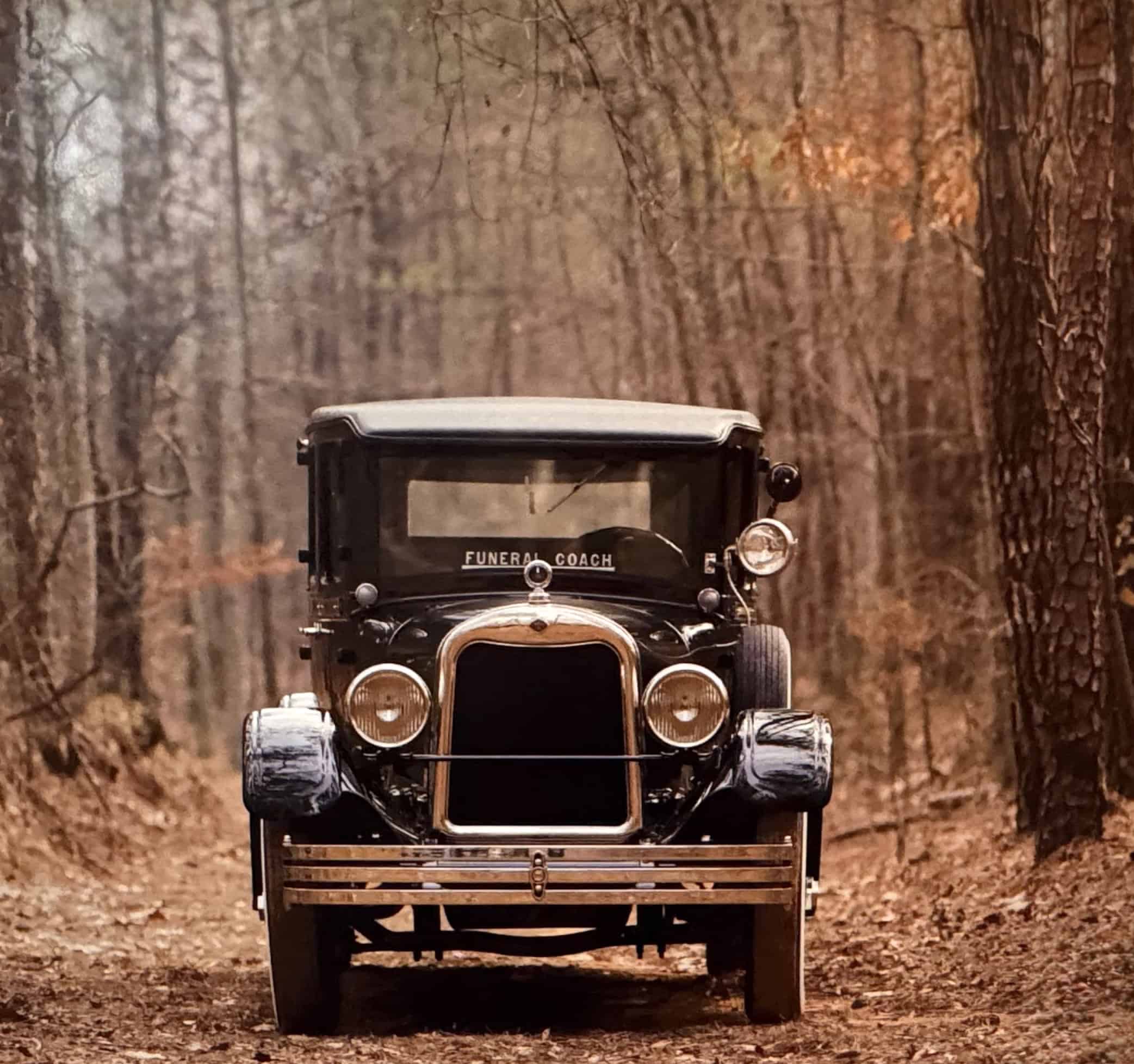
Summary: Contributor Jackie Sheckler Finch speaks to longtime funeral director Bill Peoples about Peoples Mortuary Museum in Marietta, Ohio. He tells her about his collection of antique hearses, Victorian mourning jewelry, ice box coffins and early embalming tools. Visitors learn why families once sat up with the dead, how the Civil War popularized embalming, and why grieving widows cried into mourning pillows. Highlights include a Don Knotts tribute and the 1927 Henney hearse Bill Murray loved driving in the film “Get Low.”
When my great-grandmother was a child, she remembered being told about families having funerals in the parlors of their homes. And someone would sit with the deceased until burial time.
I figured that must have been out of respect for the dead. No, my great-grandmother said, it was in case the dead revived and weren’t actually bereft of life.
Spooky. But such incidents did happen. Folks in the Victorian era especially—before embalming a dead body became routine—were afraid of being buried alive.
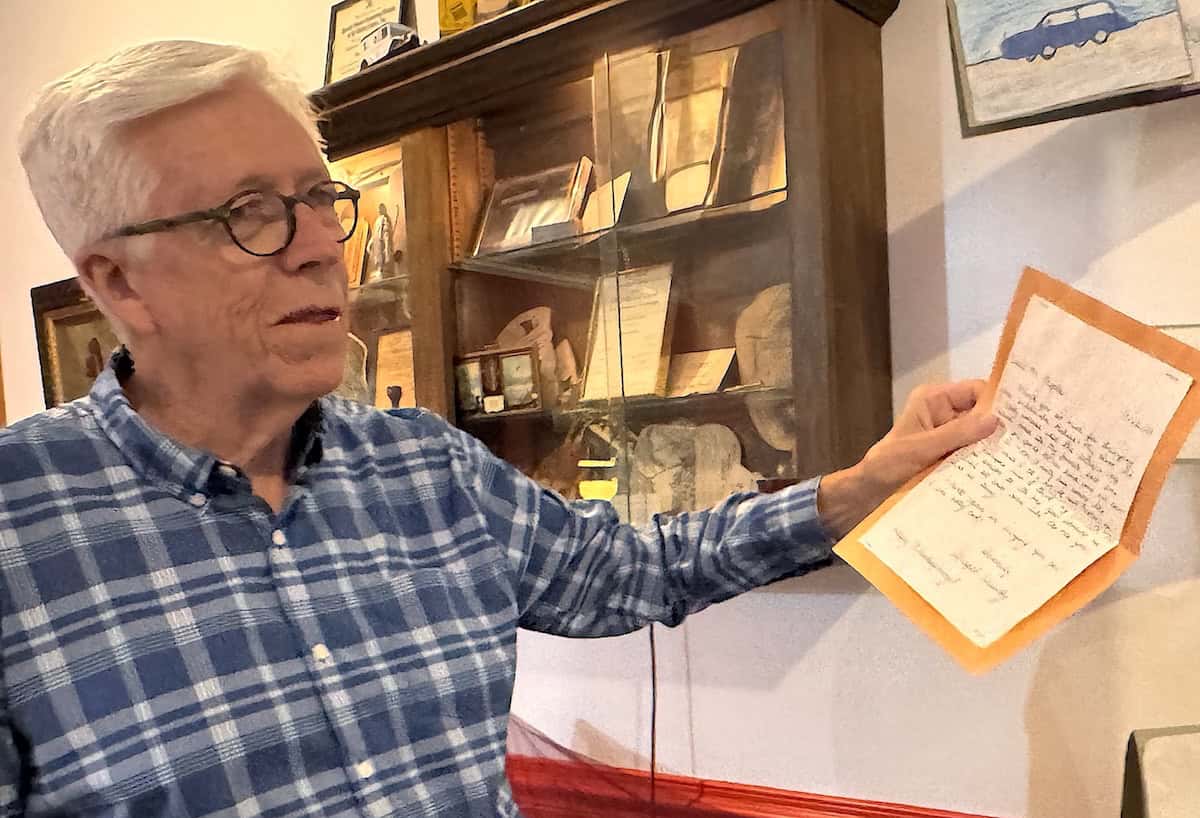
To learn more about historic changes in funeral procedures, I visited Peoples Mortuary Museum in Marietta, Ohio, on a brisk October day. There, William “Bill” Peoples shared a treasure trove of mortuary items and information he’s collected over the years.
Changing Funeral Traditions
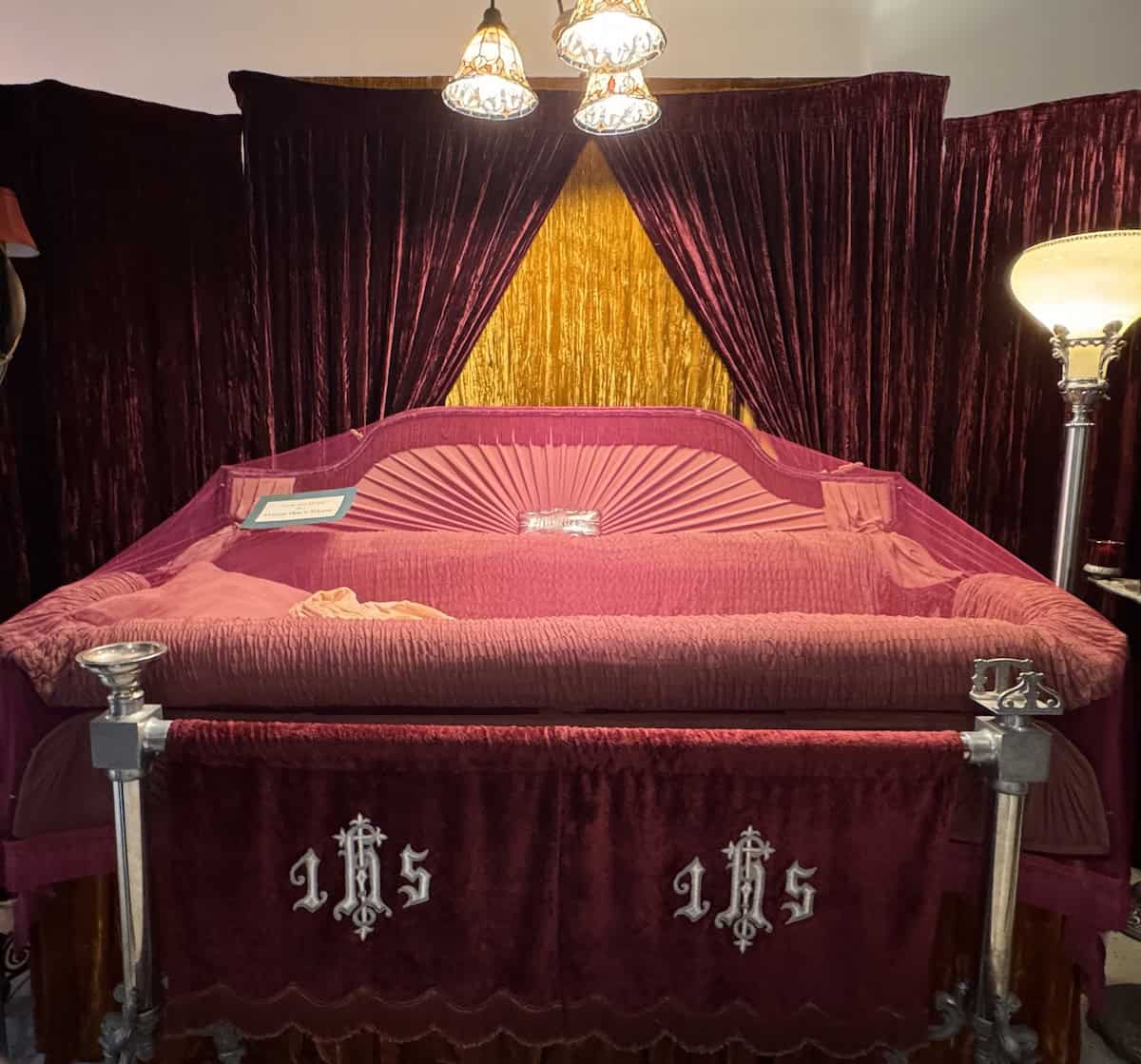
When time marched on, Bill says, funerals began being held at “funeral homes” and the old “parlors” in family homes became “living rooms.” With bodies being embalmed before burial, fears about being buried alive mainly disappeared.
Filled with historic hearses, caskets, mourning jewelry, vintage mortician’s equipment, antique clothing and a vast array of funeral-related ephemera, the museum is certainly not spooky.
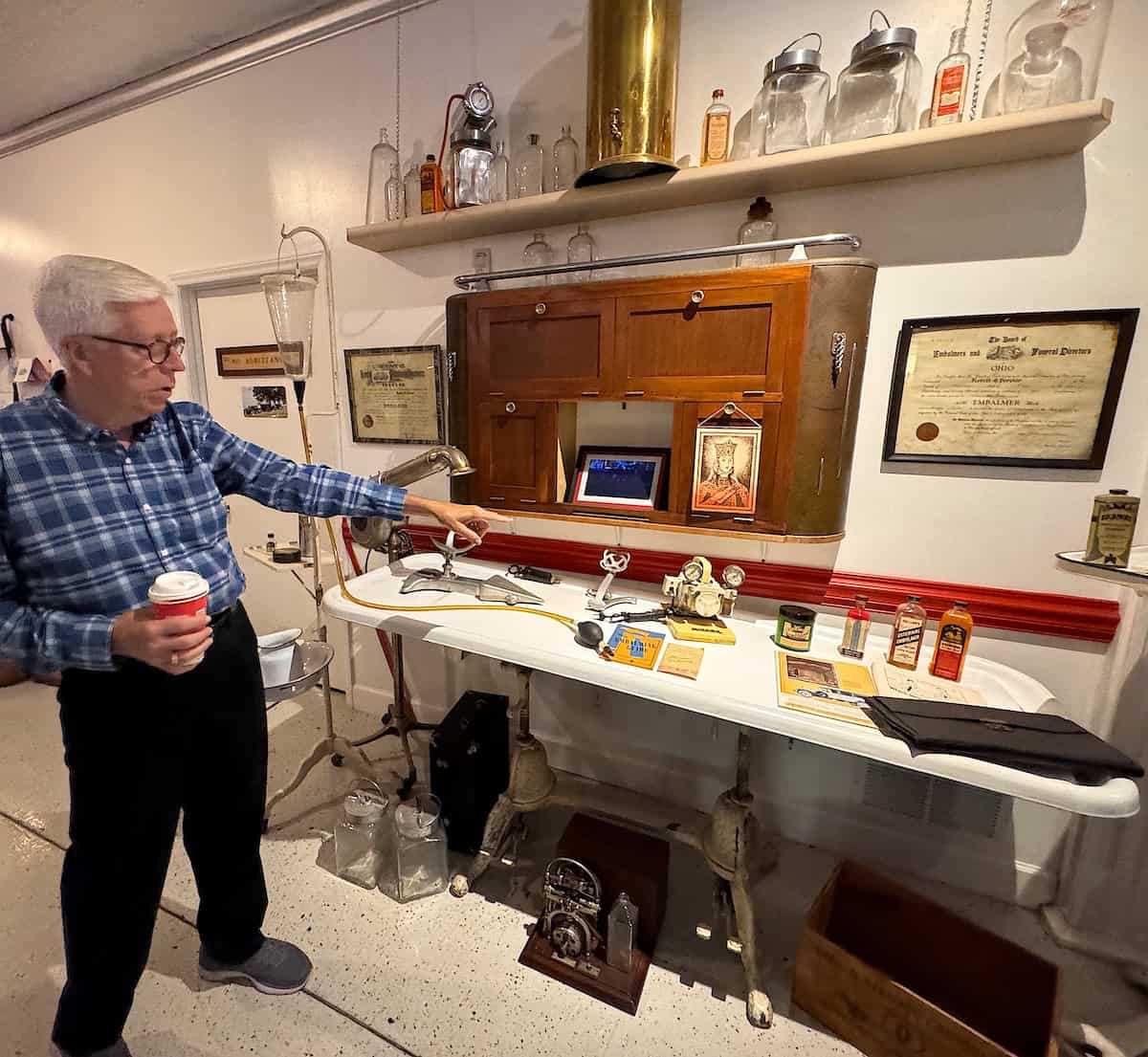
Instead, the museum is more of a learning experience, where 76-year-old Bill shares a wealth of information he’s gained over 55 years as funeral director at Cawley and Peoples Funeral Home in Marietta.
Bill says the museum’s purpose is to learn more about death to understand and appreciate life. “We’re not here to scare anybody,” Bill says. “We just want to share information about America’s relationship with mortality.”
Becoming a Funeral Director
Bill’s childhood ambition was to be an accountant. Why? “It sounded like a good job, working with numbers and money,” he says.
But once Bill went to college, he decided accounting wasn’t for him. As his last name hints, working with people and helping them might be a better way to go.
So Bill became a funeral home director. He was already quite aware of that profession since his father, Robert S. Peoples, had owned a mortuary business.
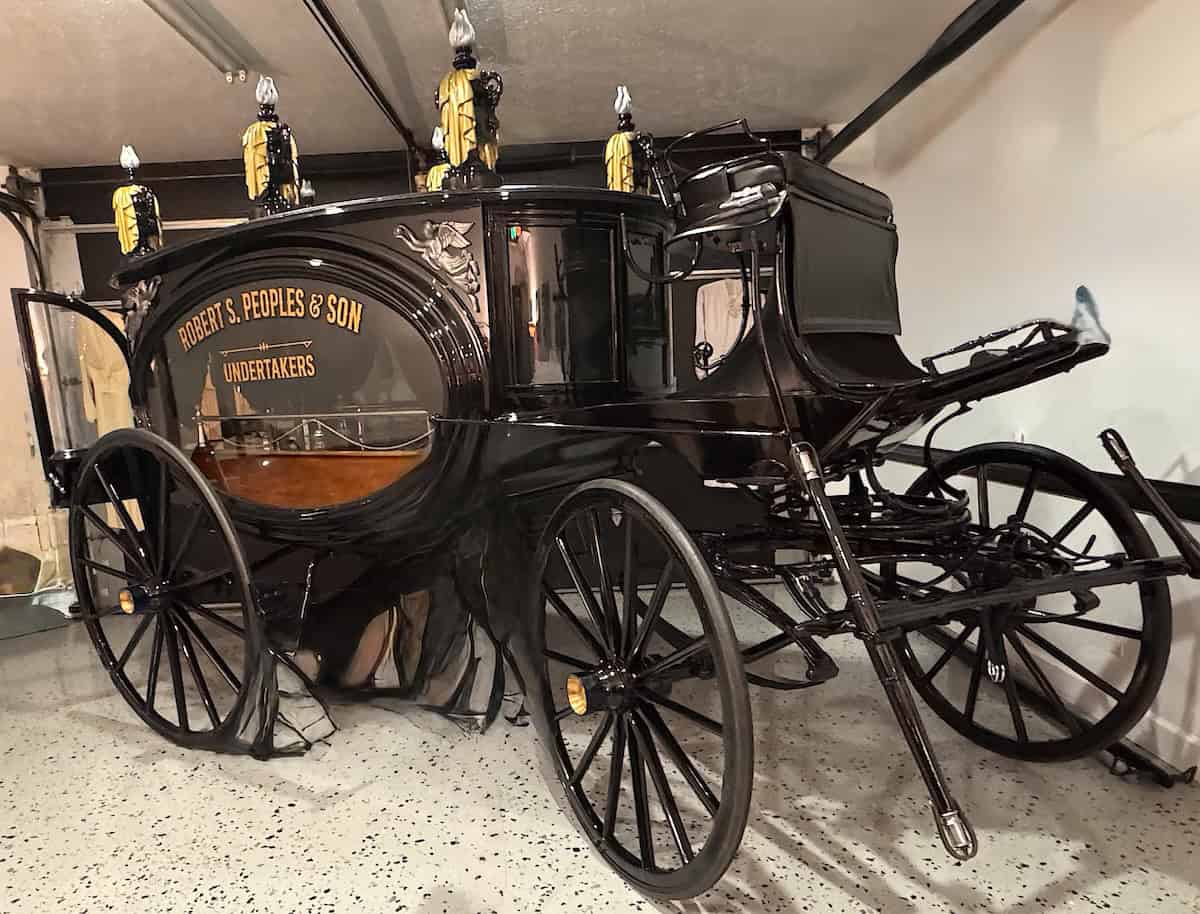
“It’s a way to help people through one of the most difficult times of their lives,” Bill says. “I’ve never regretted my decision.”
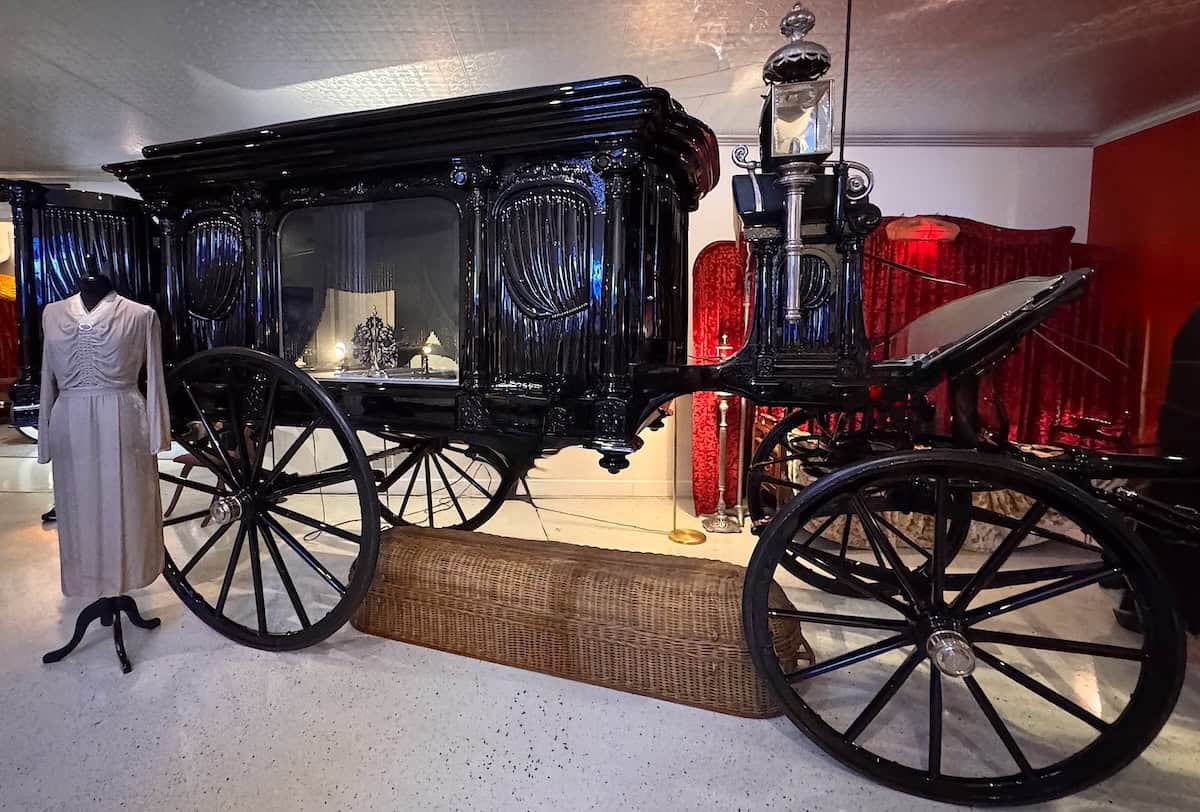
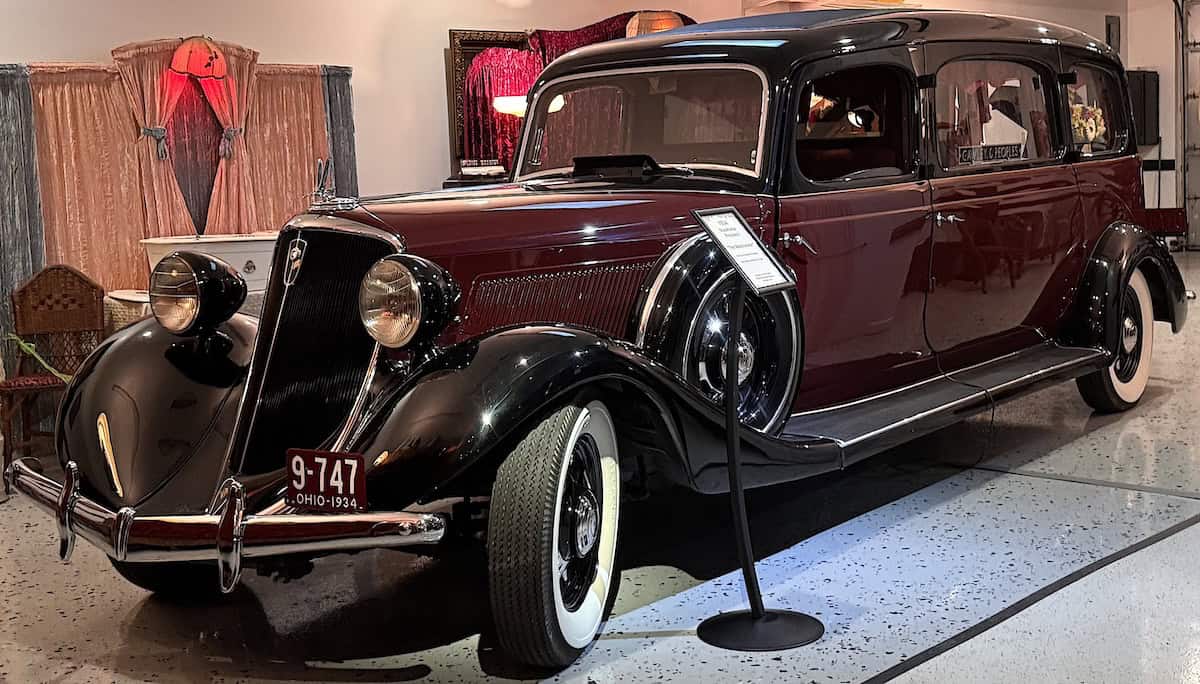
Over the years, Bill also began collecting antique hearses and his collection soon grew to include other mortuary paraphernalia, particularly from the late 1800s and early 1900s.
In 2003, Bill decided to share his artifacts with the public at the Peoples Mortuary Museum. Located in a huge brick garage in an alley behind the funeral home, the museum is open by appointment.
The Museum’s Hollywood Connection
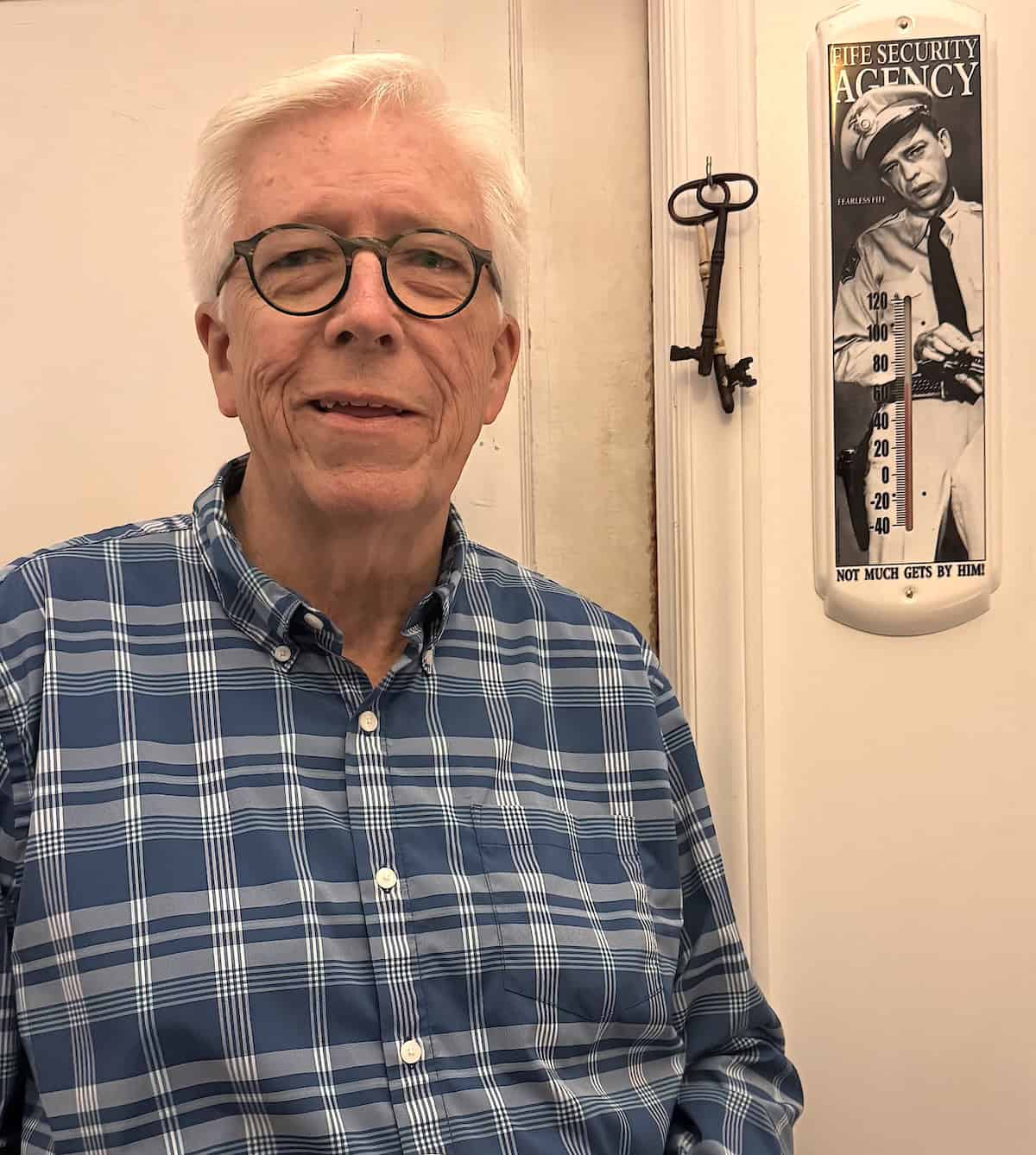
Entering the museum, I was greeted by a photo of Barney Fife and a sign saying the building is protected by the Fife Security Agency. “Not much gets by him,” the sign boasts.
“Don Knotts was my cousin,” Bill explains. “His mother and my grandfather were brother and sister.”
A Morgantown, West Virginia native, the late Don Knotts played Barney Fife on “The Andy Griffith Show.” Scattered throughout the museum are other photos of Don Knotts as well as an autographed picture dedicated to his cousin.
Filming ‘Get Low’ Movie
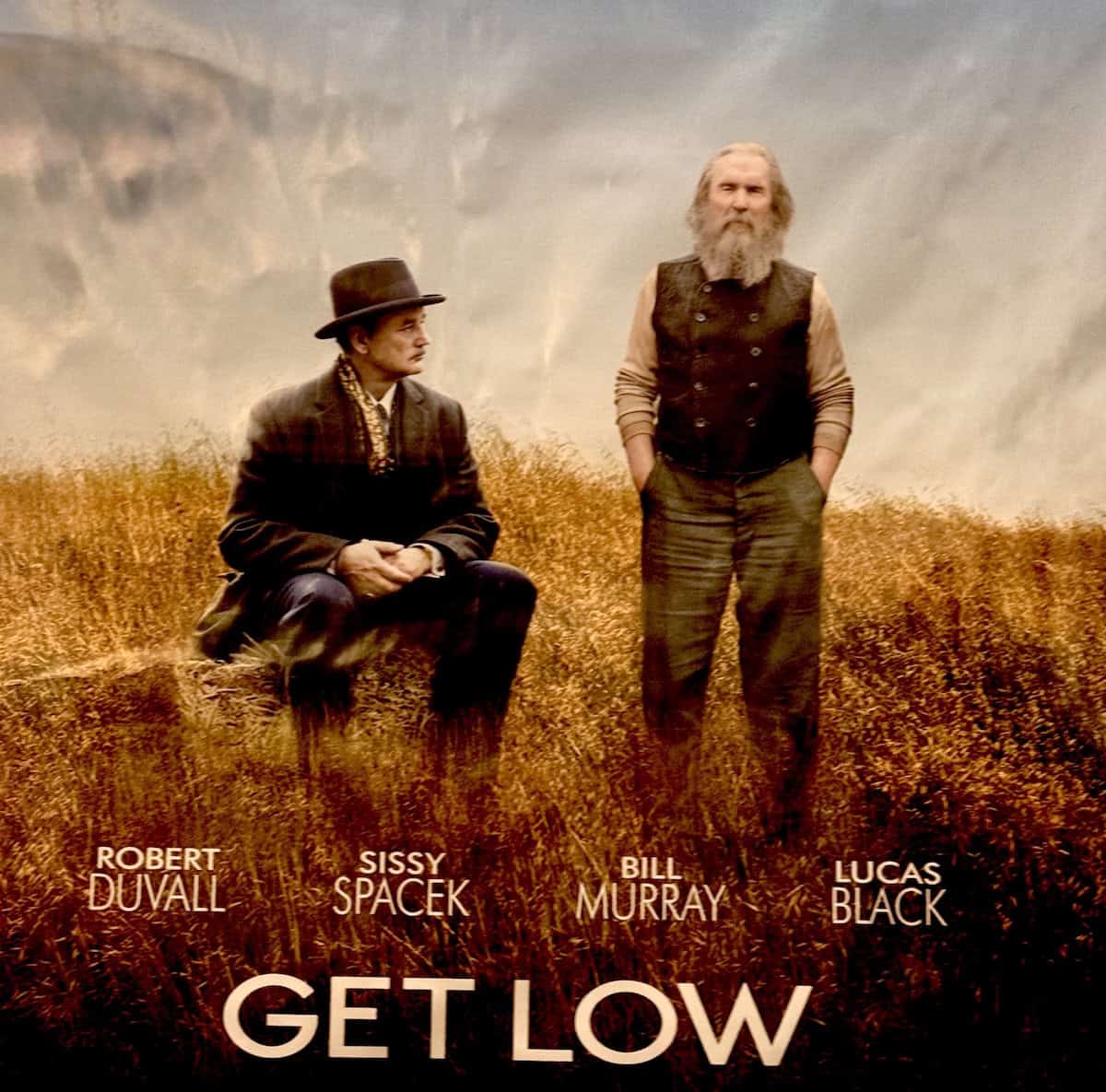
Back in 2009, Bill also spent several weeks in Atlanta during filming of the movie “Get Low” starring Bill Murray, Robert Duvall and Sissy Spacek. Robert Duvall played a mountain hermit who throws his own funeral party while still alive. Bill Murray is the mortician who expects a windfall of money from the stunt.
Bill Peoples was at the filming site to look after his fully restored 1927 Henney hearse, which played an important part in the film.
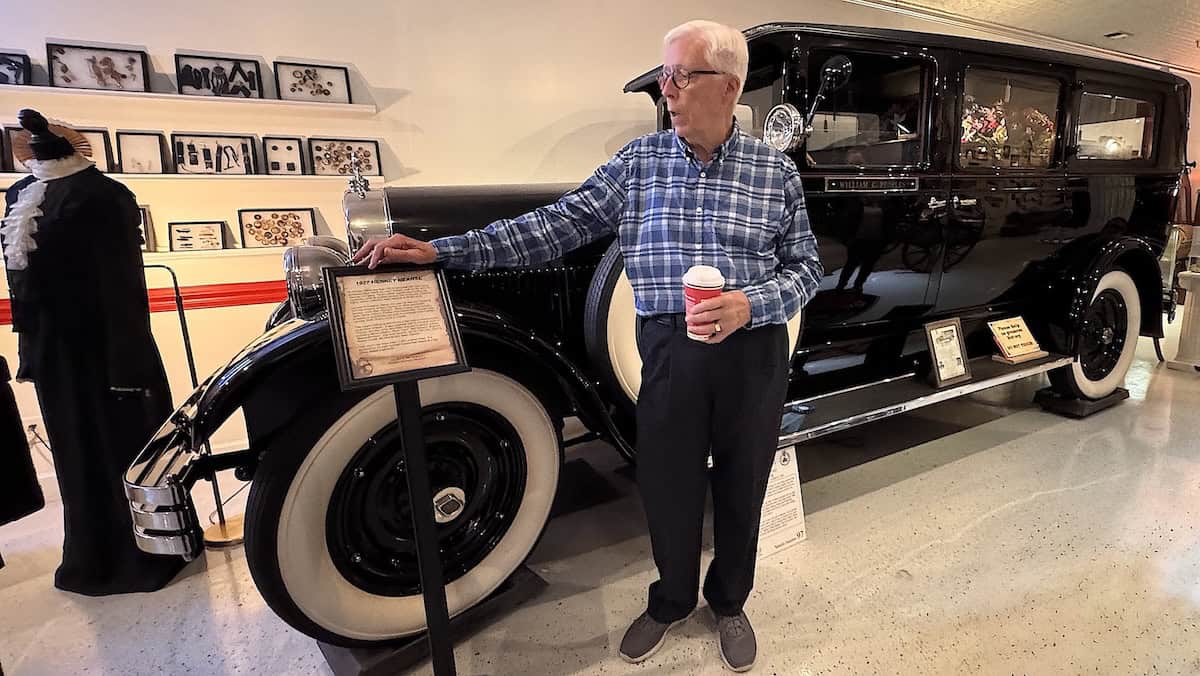
“Bill Murray loved to drive the Henney—although he didn’t know how to change gears—and he always wanted to run the Henney siren even though he wasn’t supposed to,” Bill says.
In olden days, a hearse was often used in its off-time as an ambulance with a siren. “One day, Bill Murray came up to me and apologized, saying he must have broken the siren because it didn’t work anymore,” Bill says.
In fact, filmmakers had asked Bill Peoples to shut off the siren to keep Bill Murray from playing around with it. “He was making too much noise,” Bill explains with a smile.
The museum features an entrance section dedicated to “Miss Henney” and her role in the film. Bill’s personal director’s chair and a script signed by all the actors are on display.
Advent of Embalming
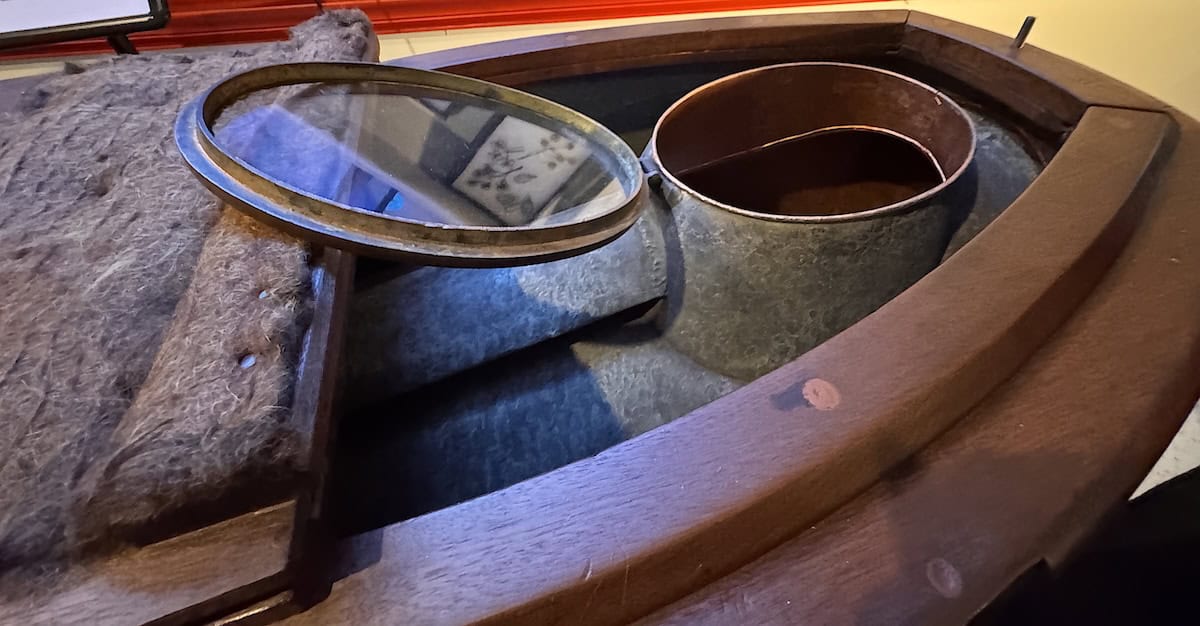
Bill says an ice box coffin from the 1850s was used before embalming became widely accepted. The coffin was also used to house a deceased person who may have died from a communicable disease.
“They had to preserve the body somehow so they would fill the coffin with ice and lay the body on top,” Bill says. “It had a door at the bottom that you could open and reach in to feel if the toes of the body were still cold. A viewing window near the head could be opened so you could view the person’s face.”
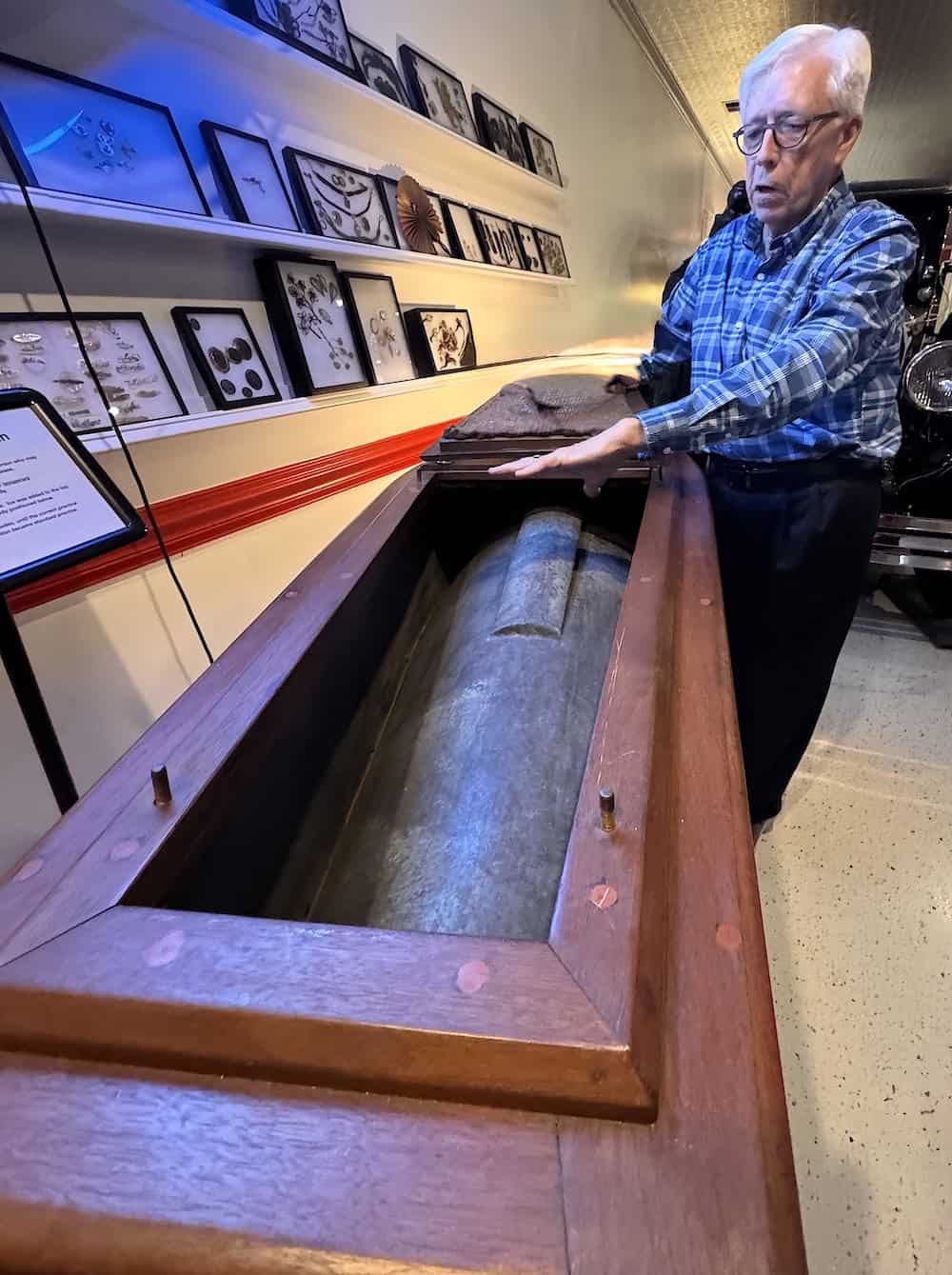
Ice box coffins were used for more than 20 years until embalming became standard practice.
“Embalming became more commonplace around 1865 during the Civil War,” Bill says. “Families wanted their dead soldiers returned home for burial instead of being buried where they died.”
The museum showcases an early embalming station with its hand-operated pumps and tinctures. “Early embalming chemicals contained hazardous substances like arsenic and mercury. They worked as preservatives but were dangerous to the living who handled them,” Bill says.
Mourning Jewelry
In Victorian times, family and friends mourning the death of a loved one often would go into mourning for up to two years and might not even leave the house for a year. Those in mourning also wore black for one to two years as an outward sign of inner sorrow.
“A lot of times, ladies would wear black jewelry during the mourning period,” Bill says. “Some even made jewelry from human hair. They would cut off a lock of hair from the deceased and use it in a locket or a ring or in a piece of art to commemorate the person’s life.”
Picking up a small plush cushion, Bill described it as a mourning pillow. “When the widow would start to cry, she could catch her tears in the pillow.”
The Tragic Death of a Child
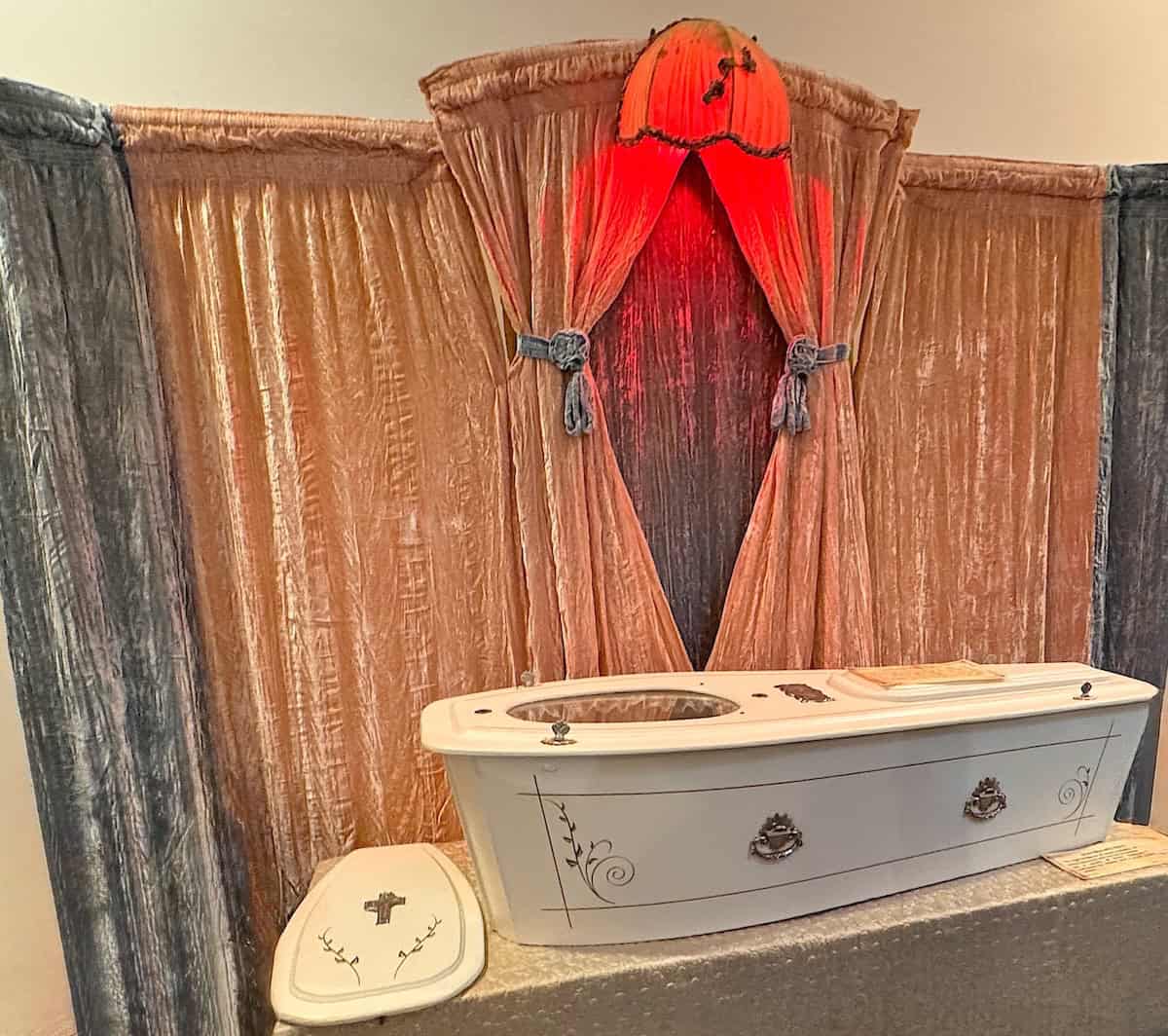
During the Victorian era, the death of a child was a frequent tragedy. Because of rampant infectious diseases and poor medical knowledge, about 50 percent of children died before the age of five.
“Those were very tragic deaths,” Bill says. “It’s difficult to deal with the death of a child who really hasn’t had a chance to live.”
Oftentimes, a photographer would be brought in to photograph a dead child and the deceased might be arranged with favorite toys or family members as though the child were still alive.
“Photography was expensive back then and the family might not have had a photo of their child. This was their last chance,” Bill says.
The photos often were framed and shown in a family home as well as being sent to relatives far away as a reminder of the young death, as proof that the short life had mattered.
Death as Part of Life
In the end, Bill says the museum helps dispel the mystery around death and funerals. “I think a lot of people don’t know what we do as funeral directors or what we did back then and how it has changed over the years,” he says.
“Death and dying is part of life,” Bill says. “I think it helps to understand that and to remember to honor the time we have here in life.”
Disclosure: The author was a guest of Marietta-Washington County Convention & Visitors Bureau but any opinions expressed in this post are her own.
IF YOU GO
- Peoples Mortuary Museum, 408 Front St., Marietta, Ohio; (740) 525-1112.
- Open by appointment only; free admission with donations appreciated.
Save to Pinterest!!