A Trip Through Scotland: Kings and Commoners, Whisky and Friendship
Summary: Contributor Ali Webb tells the story of two couples who journeyed through Scotland, slowing down to savor history, whisky, and shared laughter instead of rushing through checklists. Starting in Edinburgh, they explored the historic Edinburgh Castle, the Palace of Holyroodhouse, and local distilleries before traveling to St. Andrews, Stirling Castle, and Castle Doune. Moving north by train, they stayed in Pitlochry and Inverness, taking in the Highlands scenery, local culture, and cruising Loch Ness. Ultimately, the trip blended deep ancestral ties to Robert the Bruce with the enduring value of lifelong companionship.
Some trips begin with a destination. This one began with a friendship—and a king.
For 50 years, two men have remained friends through careers, marriages, children, and all the ordinary changes that accumulate across half a century. Now, with their wives, they were heading to Scotland—not for a whirlwind tour of everything the country had to offer, but for a journey deliberately designed to leave time for history, conversation, long dinners, old stories, and a few new ones.
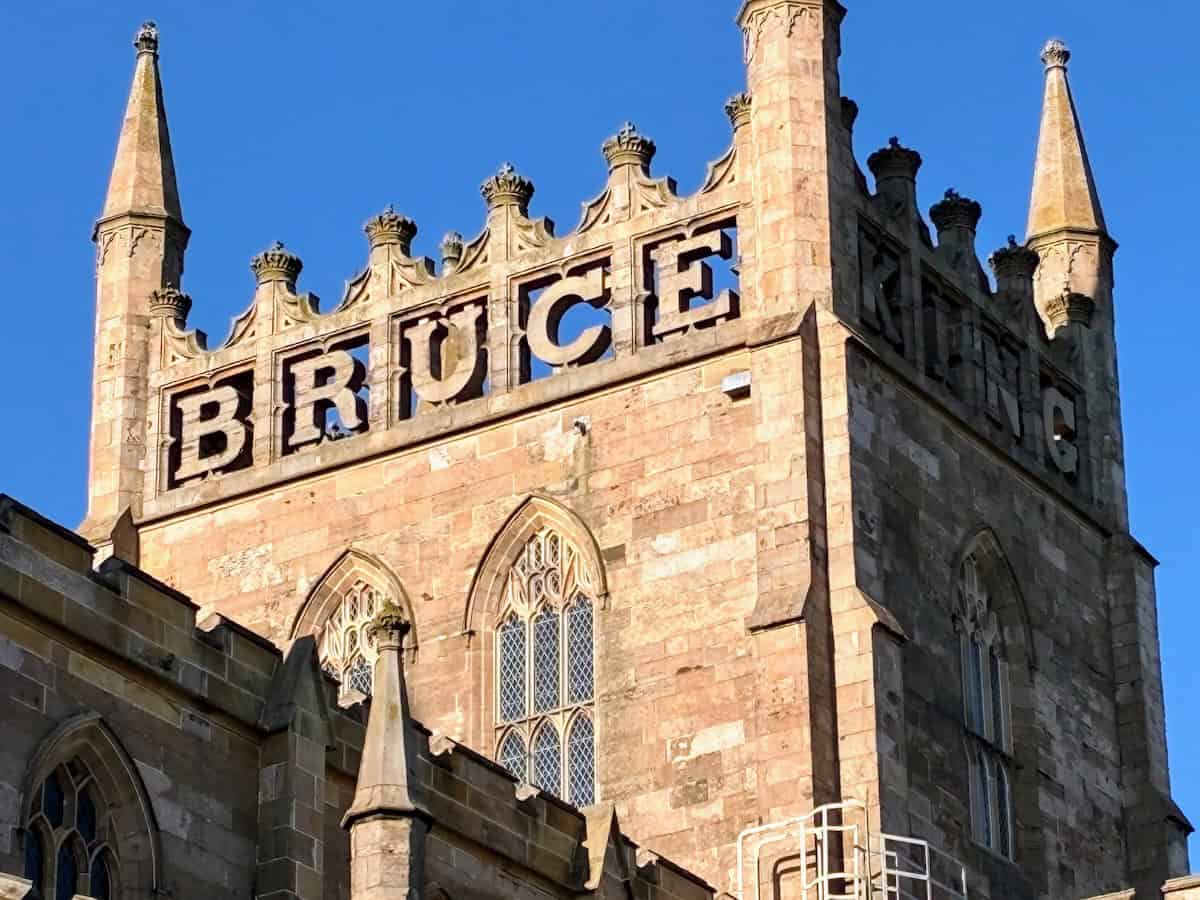
For me, Scotland felt personal for another reason. Our family genealogy traces my Glenn ancestors back through Scotland to the illegitimate daughter of King Robert the Bruce. From that medieval Scottish family, the line eventually moved from Renfrewshire to Ulster and then, around 1770, to America.

Generations later, the family reached Michigan through my great-grandmother Emma Louise Glenn, who married Richard William Webb in 1880.
This wasn’t simply a trip through Scotland. In a small way, we were trekking back through my own history that connected me to King Robert.
My friends and husband took to calling me “Royal Ali.”
Meeting in Edinburgh

Our trip began gradually. My husband and I arrived first and settled into the Kimpton Charlotte Square in Edinburgh’s elegant New Town. Our first full day provided a preview of what was to come: a welcome drink at Holyrood Distillery followed by dinner at the Queen’s Arms, a cozy pub with books lining every nook and cranny.
Our friends were delayed and lost an entire day. We went ahead to the Scotch Whisky Experience and waited for them to catch up. Once our friends arrived, everyone gathered for dinner at The Witchery, the wonderfully atmospheric restaurant tucked beneath Edinburgh Castle. Yes, haggis was on the menu.


Scotland’s national drink may be whisky, and we sampled plenty of it, but the real theme of this trip was time—how it changes places and people, and how some friendships manage to absorb the years.
Castles, Kings, and Ghosts

The next morning belonged to Edinburgh Castle. Perched high above the city on an extinct volcano, the fortress offered both an introduction to Scottish history and one of Edinburgh’s best views.
After a pub lunch, we headed down the Royal Mile to the Palace of Holyroodhouse, the King’s official residence in Scotland and a place inextricably linked with Mary, Queen of Scots.
That evening, history became considerably less respectable. A Mercat ghost tour led us through old Edinburgh, where centuries of executions, disease, crowded tenements, and supernatural tales have produced one of Europe’s richest collections of ghost stories. A whisky afterward in the hotel bar seemed either the perfect conclusion or a useful antidote.
St. Andrews—and a Very Different Castle

Saturday took us away from Edinburgh towards Fife and St. Andrews.
The fishing villages, stone houses, and harbors along the way introduced us to another Scotland, one defined by the cold blue-gray waters of the North Sea.
St. Andrews offered its ruined cathedral, ancient university and, of course, the Old Course, where golf is said to have originated. We had time to wander the course and the town before heading to Fife, then back to Edinburgh.
Following Robert the Bruce
The following day brought the trip’s history much closer to home.
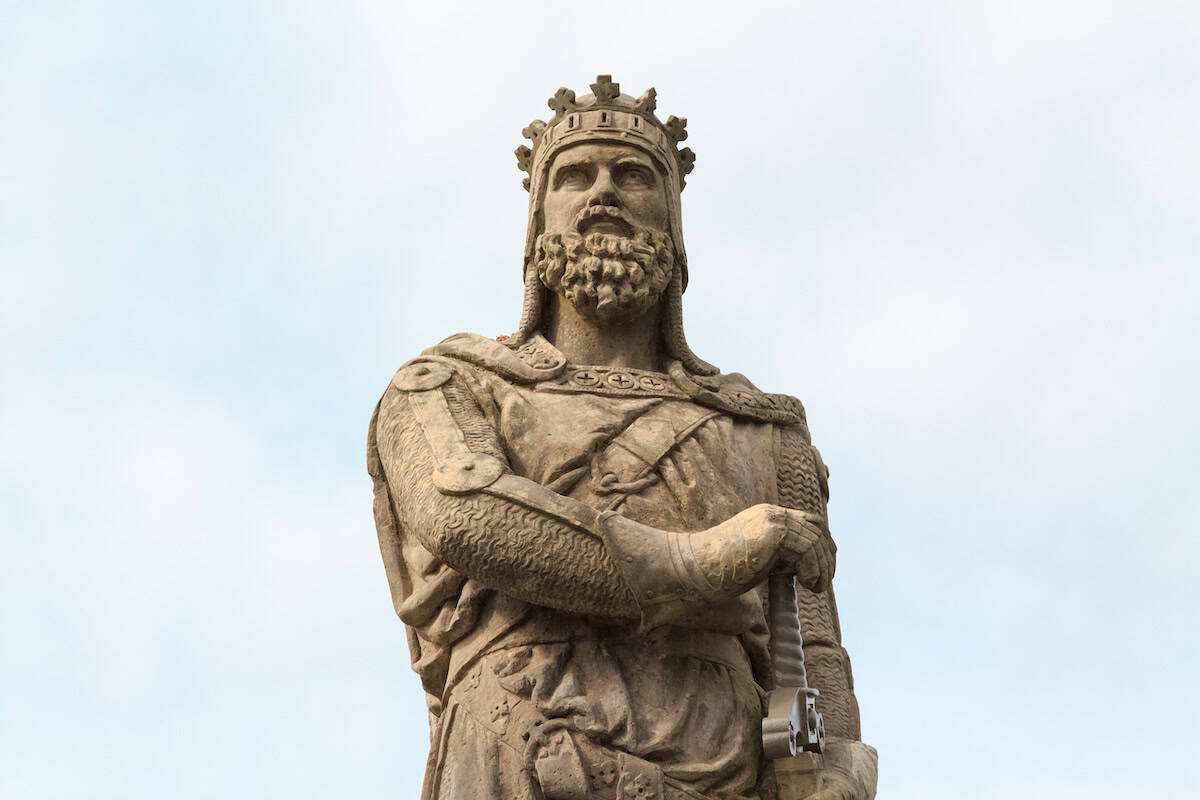
Following the story of Robert the Bruce, we left Edinburgh in the morning for Stirling Castle and Bannockburn with a private guide. Our itinerary took us to Stirling Castle in the morning and to the Bannockburn battlefield that afternoon.

Few places tell the story of Scotland’s struggle for independence as powerfully as Stirling Castle. Stirling controlled the route between the Highlands and Lowlands, making it one of medieval Scotland’s great strategic prizes.

Nearby Bannockburn was the site of Bruce’s defining victory. In June 1314, his smaller Scottish army defeated the forces of England’s Edward II. The victory transformed Bruce’s position and became a foundational episode in Scotland’s national story.
For most visitors, Robert the Bruce is a towering figure from medieval history. For me, a strange additional thought emerged: somewhere behind the battles, crowns, and dates, there was a family connection. The genealogy follows Bruce’s second daughter Margaret’s marriage to Robert de Glen, a Scottish noble associated with lands granted by the Crown.
Their descendants held Balmuto in Fife and continued through generations of the Glen family before part of the family migrated to Ulster in the early 1600s. Eventually that line crossed the Atlantic. Standing in the landscape where Bruce fought for Scotland made genealogy feel less like a chart of names and dates and more like a very long human story.
But one of the trip’s most memorable castle visits had nothing to do with royal history.
On our way back to Edinburgh, we stopped at a castle familiar to generations of Monty Python and the Holy Grail fans—a filming location where King Arthur confronted uncooperative French knights. Suddenly, two men who had been friends for half a century were no longer respectable travelers touring Scotland with their wives. They were Monty Python characters, mounted on their pretend horses while coconuts beat out a tempo at Castle Doune.

The castle walls provided all the encouragement they needed.
Before an amused audience of their wives and the tour guide, they reenacted a scene from the film, delivering lines and gestures remembered from years ago. After days of kings, battles and serious Scottish history, it was an irresistible reminder that the best travel memories aren’t necessarily the ones described in guidebooks. Sometimes they are simply two longtime friends standing beneath a medieval castle, laughing at the same silly jokes they laughed at decades earlier.
North by Train

On Monday, the pace changed.
Instead of another day tour, we boarded the train for Pitlochry, our first stop in the Highlands. Our destination was Fonab Castle, overlooking Loch Faskally.
The train was part of the experience rather than merely transportation. As Edinburgh disappeared behind us, the landscape became increasingly rural before opening into the hills and forests of Perthshire.

Fonab Castle Hotel provided a welcome pause after busy Edinburgh. No one needed to rush anywhere. The loch, wooded paths, and hotel grounds were enough for the first afternoon.
That evening, we walked into town to see a local cultural exhibition of Scottish dancing, bagpipes, and the whole lot. Sitting on bleachers with tourists from all over the world, we watched dancers older than us and much younger people, all of whom twirled, clicked their heels, and focused on expressing their culture and heritage.
The following day’s itinerary was intentionally loose. No one needed to fill every hour. An excellent dinner back at Fonab Castle left time for one of the luxuries easily lost on a heavily scheduled vacation: sitting together and talking. The scenery and nearby Loch seemed to complement our conversation.
Deeper Into the Highlands

On Wednesday morning, we returned to the railway station for the journey further north. The train carried us from Pitlochry to Inverness. Our home for this final part of the trip was Bunchrew House Hotel, a historic country-house turned hotel outside Inverness.
The transition could hardly have been better planned. Rather than set off sightseeing immediately, we sat down for afternoon tea. Later came another distinctly Scottish experience: a Discovery Tour followed by dinner at Uilebheist Distillery & Brewery.
By then, whisky had become a recurring character in the journey. Single malts were readily available at every stop.
Searching for Nessie
We reserved the final full day of our trip for Scotland’s most famous body of water. We set off on a four-hour Jacobite Loch Ness tour and cruise.
Loch Ness proved far more impressive than its legendary monster might suggest. Long, narrow and extraordinarily deep, the loch slices through the Great Glen, surrounded by mountains and forests.
There was inevitably talk of Nessie, but the real pleasure was simply being on the water. The Highlands looked different from a boat: larger, quieter, and more remote. Sadly, no monster was spotted.
That evening, we returned to Bunchrew House for a farewell dinner. There was plenty to toast. The evening included presenting “Royal Ali” with a small ceremonial dagger, a replica of what a lady in Robert the Bruce’s time might have carried on her person.
Fifty Years and a Thousand Years

On Friday, we boarded the train south to Edinburgh and spent our final night near the airport before flying home.
We had covered only a small portion of Scotland. Islands remained unseen, castles unexplored, and roads untaken. And yet, that seemed exactly right.
Travel changes as we grow older. The impulse to collect destinations gives way to something more satisfying: staying somewhere beautiful for two nights instead of one, taking the train rather than racing along a motorway, lingering over afternoon tea, and choosing traveling companions as carefully as destinations.
Fifty years is a long friendship. It encompasses younger versions of ourselves that our spouses didn’t know: early jobs, questionable decisions, old ambitions and stories polished by decades of retelling. Family history stretches the idea of time even further.
In Scotland, our journey moved between the two: from two friends laughing and reenacting Monty Python beneath a castle wall to standing at Bannockburn contemplating a king who lived seven centuries ago and whose daughter appears in my own family’s long journey from Scotland to Ireland and eventually America.
Perhaps that was what made Scotland such a fitting place for this particular trip.
Everywhere we went, the past remained visible. Castles still stood. Battlefields remained open to the sky. Family names persisted across centuries. And two men who had been friends for 50 years could still make each other laugh.
There was whisky. There were trains. Kings and ghosts and castles. There may even have been a monster, lurking just below the Loch’s waves.

But the rarest thing we encountered in Scotland was something we had brought with us: a friendship that had already survived half a century—and that was still producing new stories.
*Contributor Ali Webb, PhD is adjunct faculty at the University of Michigan and Columbia University. Her long career in strategic communications has offered her many opportunities for domestic and foreign travel. She wrote a bi-monthly Sunday travel column, The Indulgent Traveler, for a Gannett daily in Michigan and now contributes to other travel websites.
Also on MoreTimeToTravel.com: An Expedition Cruise to the Outer Islands of Scotland
Save to Pinterest!!