7 Reasons Why Food Tastes Better in Italy

Why does food always taste better in Italy than it does back home?
Is it the ingredients, recipes, techniques, or the setting that makes everything taste so delicious?

We have come to realize that there isn’t just one reason that accounts for this experience. It’s a combination of many things:
1) Freshness of the Food

Whether it’s artichokes, porcini mushrooms, blood oranges, strawberries, or truffles, Italians prefer to use fresh, in-season local produce at its peak quality— even though many imported fruits and vegetables may be available year-round.
The soil and climate of Italy are conducive to growing flavorful fruits and vegetables. A case in point: Are any tomatoes more juicy and flavorful than those from San Marzano? Are any other pistachios as sweet and fruity as the ones from Sicily?
2) Local Sourcing

Food transported long distances in refrigerated trucks or stockpiled in warehouses doesn’t taste as good as food sourced directly from a local farm or one’s garden.
The Slow Food movement, which originated in Italy in 1986 as a protest against the opening of a McDonald’s in Rome, is now embraced throughout Italy. Supporting small-scale producers is a core principle of that movement.
Even today, with Italy becoming much more fast-paced than in the past, food is still produced in a much slower fashion than elsewhere,” explains Ignazio Podda, born and trained in Italy and now Executive Chef of British Colonial Nassau in the Bahamas.
An astonishing 42% of Italians have backyard gardens that help them eat more healthfully, economically, and in rhythm with the seasons. Lettuce, tomatoes, squash, and herbs are commonly grown at home and on small farms.
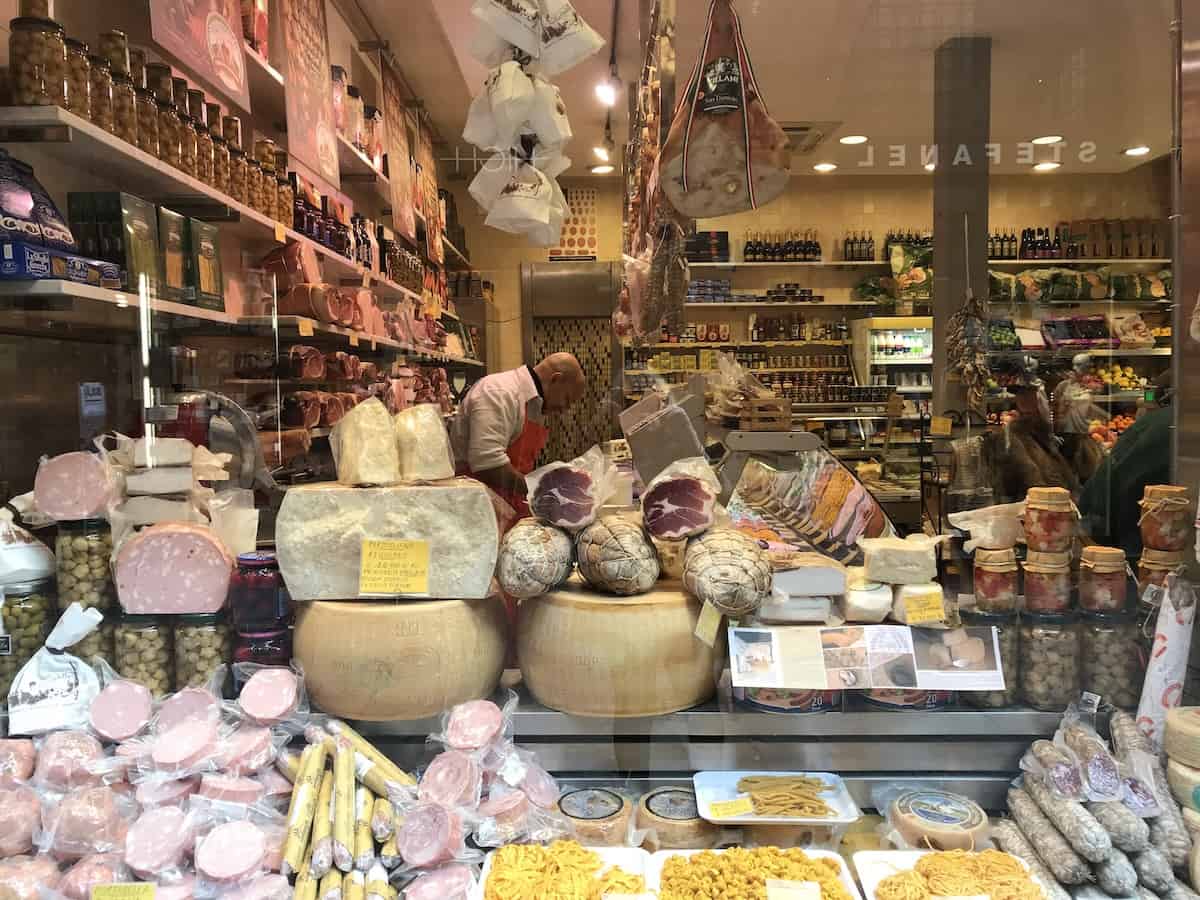
Meats, cheeses, and other ingredients used in many Italian recipes rely on products from their respective regions. For example, Pecorino Romano and Parmigiano Reggiano are two salty Italian cheeses with Protected Designation of Origin (PDO) status. (The former is made from sheep’s milk and the latter from cow’s milk). But Pecorino Romano, primarily produced in Sardinia, is commonly used in Central and Southern Italian recipes. Parmigiano Reggiano, primarily produced in Emilia Romagna, is more commonly used in dishes in the North.
3) “Just-In-Time” Food Buying

While many Americans go to local supermarkets and big box stores to stock up on foods for weeks, months, or more, it is customary for home cooks in Italy to buy smaller quantities and shop more frequently. This custom likely originates from a period when refrigeration wasn’t readily available. Due to the war in Europe, kitchen refrigerators were introduced later in Italy than in the U.S.
But even today, Italian homes tend to have smaller refrigerators and less kitchen space for food storage, necessitating buying food as needed.
4) Deeply Rooted Food Traditions
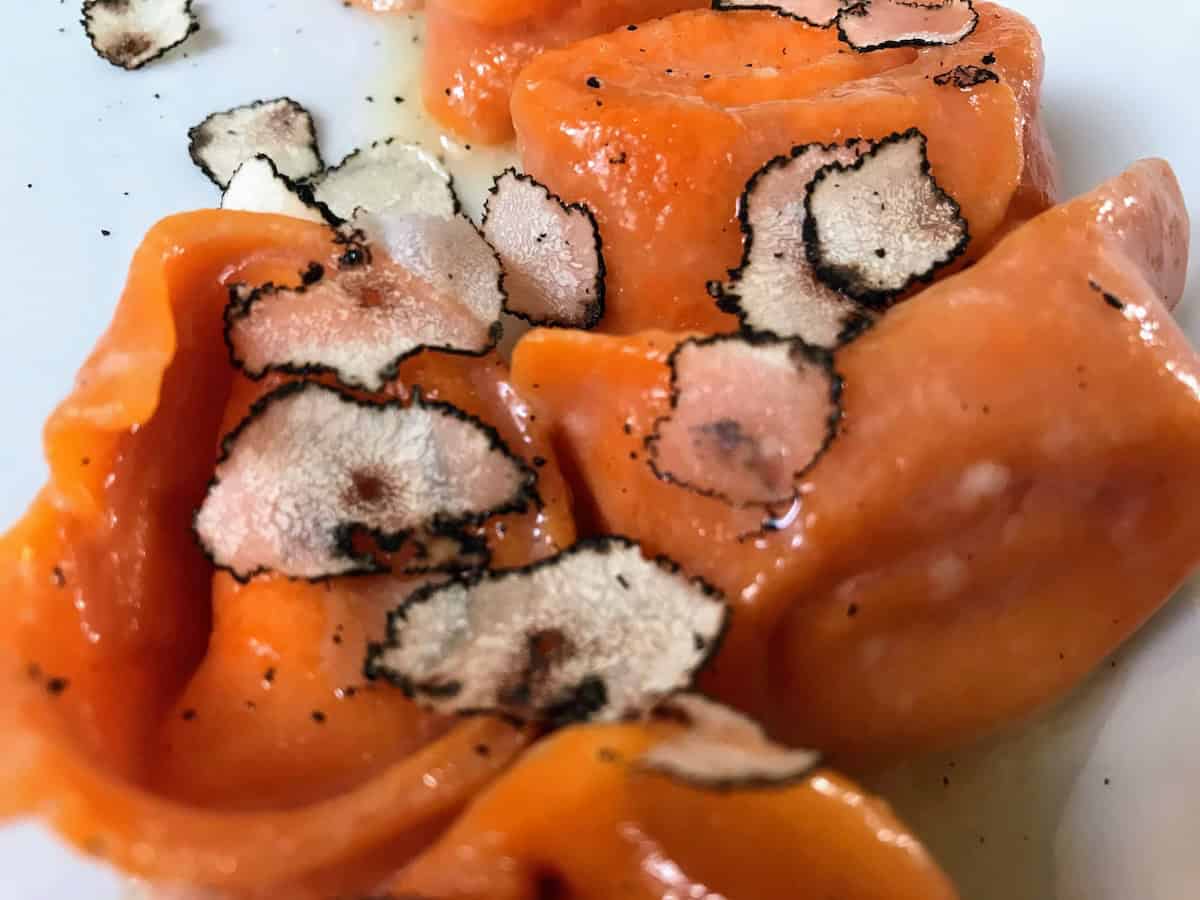
Before its unification in 1861, Italy was a patchwork of city-states, each with its own food products, traditions, and recipes. For visitors, this means they can enjoy a wide variety of unique pasta shapes, sauces, breads, cheeses, and desserts, depending on the town, city, or region they are visiting.
“Anywhere you go in Italy, you will be able to taste, eat, or drink something you would not find in a town a few kilometers away,” says Chef Podda.
Regional products are celebrated in Italy. Many cities and small towns have festivals focused on different foods, such as the food festival for chestnuts in Marrradi (Tuscany), white truffles in Alba (Piedmont), chocolate in Perugia (Umbria), blood oranges in Palagonia (Sicily), and artichokes in Rome (Lazio).
Generations of families have passed down regional recipes and cooking techniques. Some 30 years after Garibaldi unified Italy, Pellegrino Artusi self-published a book considered the “Bible” of Italian home cooking. The gourmand collected 475 recipes from across Italy that capture regional cooking.
“Traditions never go out of style,” says Chef Podda. “Coming from Aosta, it is always a punch in the gut when I see Fontina in other parts of the world that don’t even remotely resemble the real thing.”
Notably, most Italian recipes aren’t overly complicated, thus showcasing the quality of their ingredients.
5) Professionalism & Hospitality

Because Italians are so passionate about food, working in a restaurant in Italy is a more respected position than in the U.S.
Even in small, local restaurants, Italian chefs take pride in their work. Servers are career professionals who are paid decent wages, better trained, have more job stability, and are more attentive than their peers in many other countries.
“In Italy, it is totally acceptable to be obsessed with one’s work,” says Chef Podda. “Only we don’t think of it as work but as passion.”
“The same restaurant will prepare the same dish in the same way for 80 years and not care about trends,” he adds. “A good lasagna or a good pizza will always be loved, and the person preparing the dish understands this.”
6) Wine Elevates the Taste Of Food
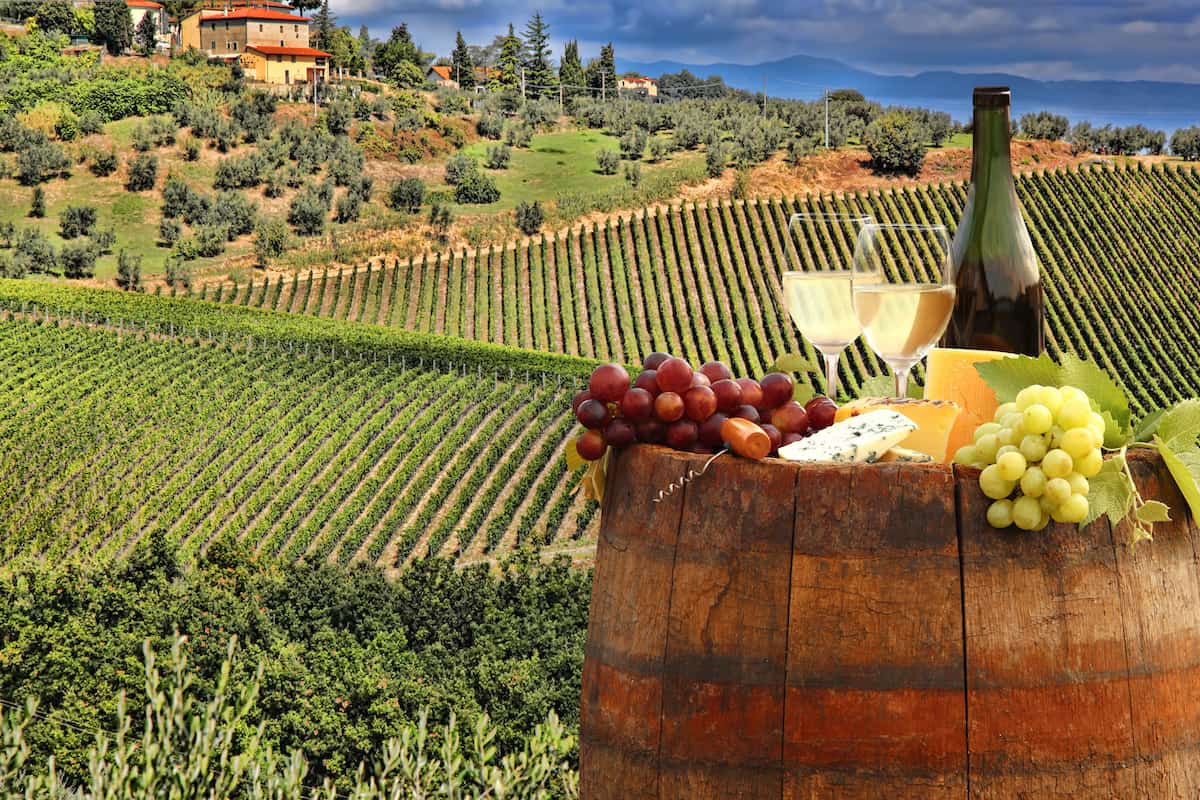
The combination of food and wine at lunch or dinner enhances the flavors of both, which is why most wine in Italy is usually consumed with meals.
Each region has its own specialty wines, whether red, white, rose, or sparkling, and no two wines taste the same because they come from different soils and climates. Pairing them together with food is an art.
The convivial aperitivo tradition stimulates the appetite before dinner by pairing a low-alcohol cocktail (commonly made with Campari or Aperol) with nuts, olives, or savory snacks. paired. More recently, the apericena couples a more hearty helping of foods with drinks that obviates the need for dinner.
7) Food-Centric Culture
Italy is a magnet for food lovers because the country celebrates the pleasures of the table. For example, Sunday suppers or holidays in Italy are times that bring families together to indulge in sumptuous meals.
Days of the week may feature certain foods, like fish on Fridays and gnocchi on Thursdays. Holidays are also marked by special meals and traditional foods (like Panettone for Christmas and Colomba for Easter).
People linger over meals and enjoy the foods and sharing them with family and friends. A weekend lunch invitation to a friend or relative’s house can include multi-course meals that extend for hours of socializing over food.
Italians are obsessed with food. “They fight over whether there should or shouldn’t be cream or milk in Bagna Cauda, but the answer depends on what town you are from,” says Chef Podda. “Everything is a conversation in Italy when it comes to food. The arguments about what is right or wrong are part of what makes the experience so unique.”
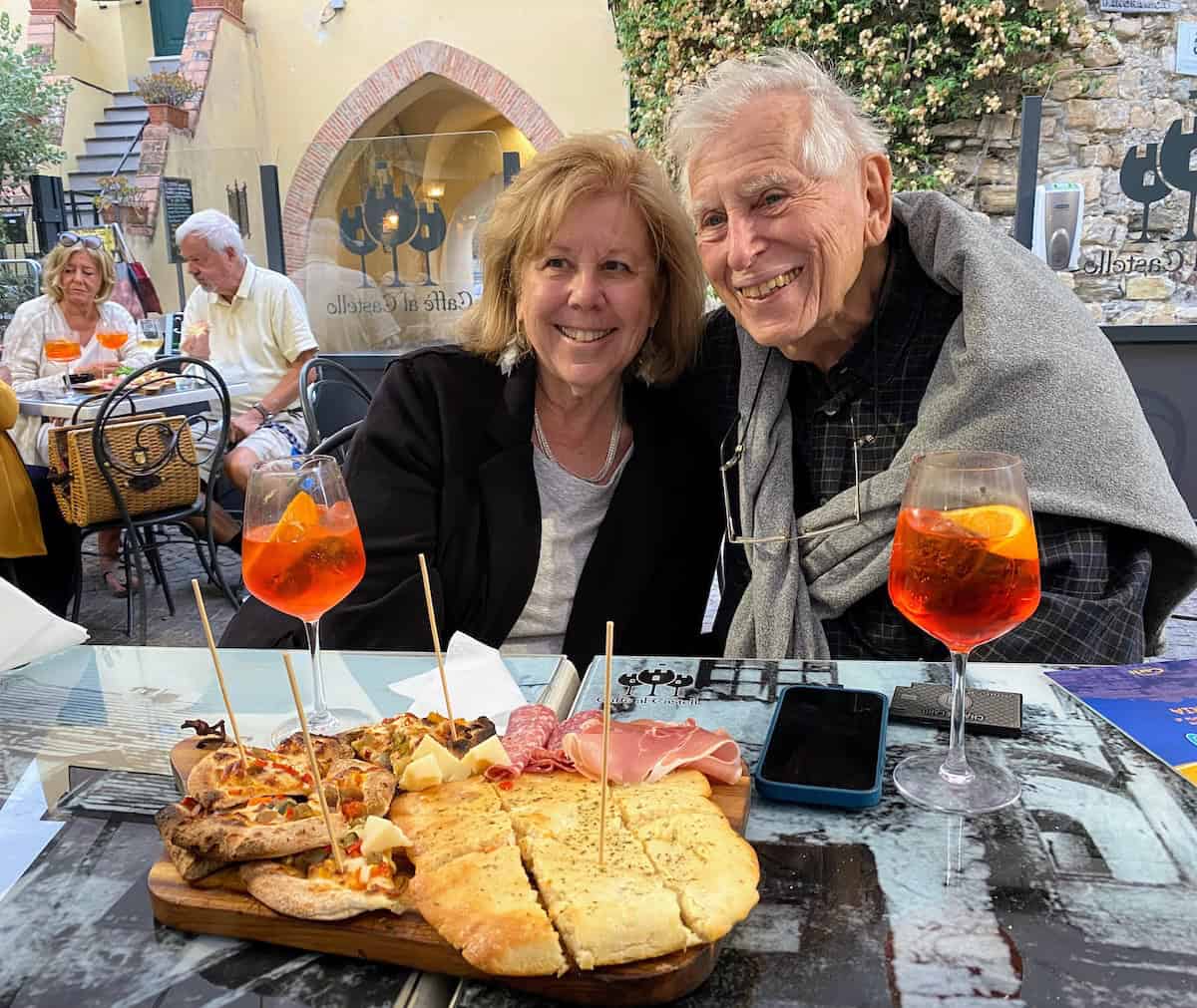
“Maybe it’s the magic of sun-ripened ingredients or the art of pairing flavors that have danced together for centuries,” explains Italy native and hospitality insider Giulia Perovich, founder of Arnald NYC. “It could also be the unspoken rule that food is always better when shared. There’s an elegance in its simplicity, a romance in its traditions, and an undeniable joy in every bite.”
Chef Podda thinks there also is the element of expectations. The food in Italy is so enjoyable that people seem to talk about what they have eaten instead of the magnificent museums and churches. “It is always mind-boggling, and it doesn’t happen nearly as much with other countries,” he says. Italy has a reputation for food excellence.
It’s easy for travelers like you and me to live like Italians, slowing down, relaxing, and genuinely appreciating the terrific food and beautiful terroirs ubiquitous across the country. Maybe that, too, is why the food tastes better in Italy.
Also on More Time To Travel:
28 Italian Food Rules To Follow To Eat Like A Local
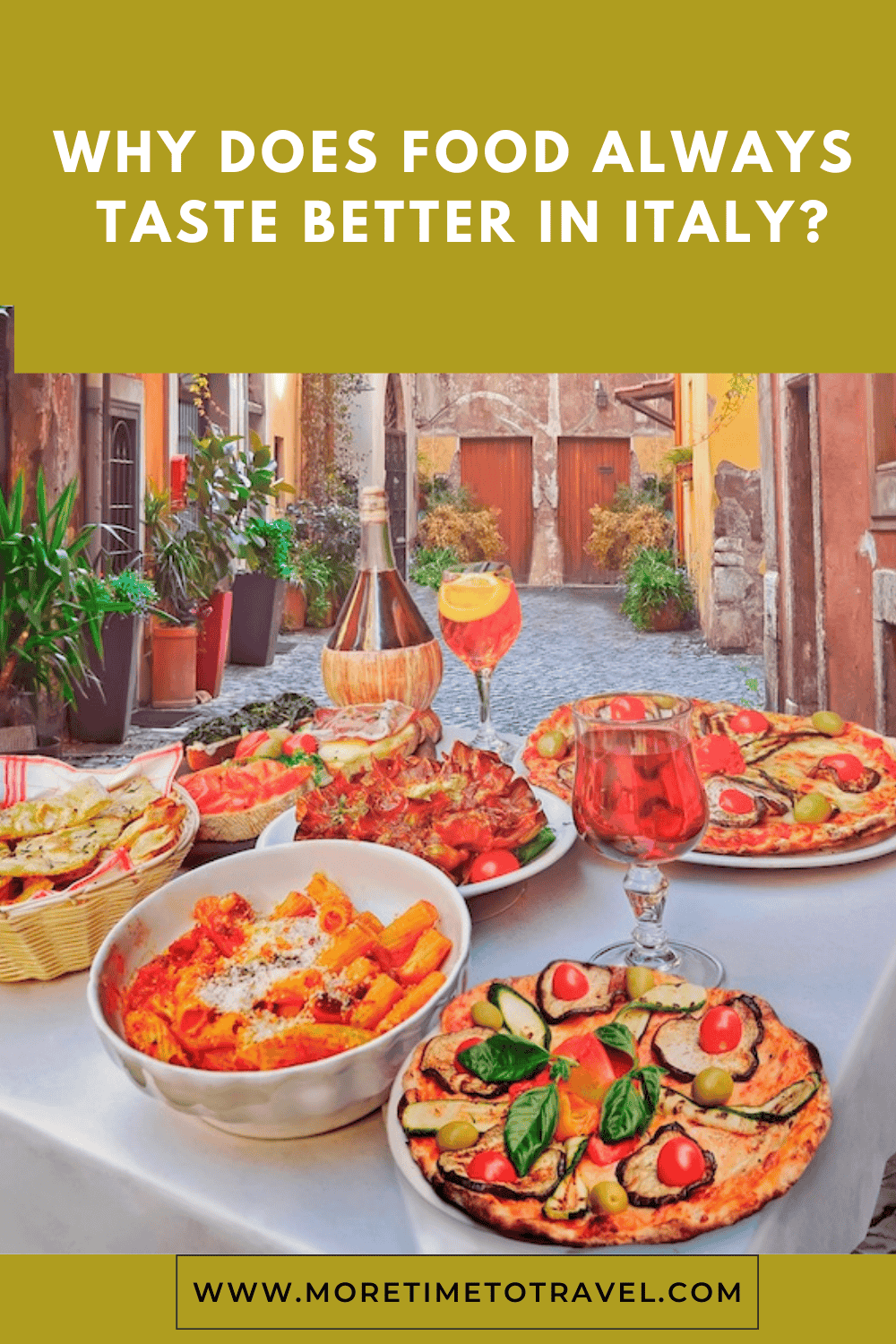
Save to Pinterest!!

Excellent post! In addition to factors like local sourcing (which more and more American chefs claim to be doing) and just-in-time buying, I think a lot of the secret lies in the general lack of an industrialized farming system. I think you’ve nailed it.
Thanks, Mark!
Simply mouthwatering. I’m planning a trip back to Italy this spring and can’t wait. Will have to check all your recommendations for Milan and northern Italy.
Happy to help! Best wishes for the coming year.