Colomba Easter Bread 2026: A Sweet Indulgence
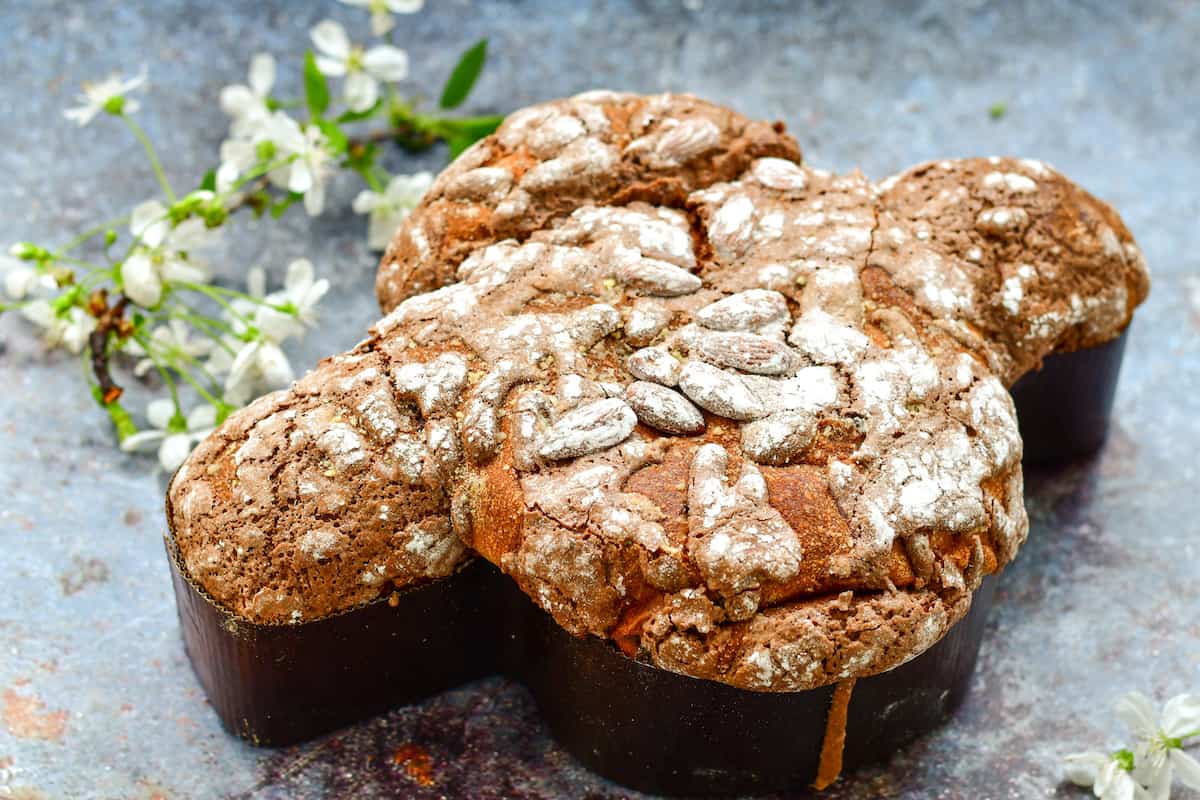
With Easter coming early this year, April 5th, it’s time to think about ordering a yeasty Colomba Easter Bread.
An Italian Tradition
On Easter Day, you’ll likely find Colomba Easter Bread (Pane di Pasqua) at dinner tables all over Italy, from north to south.
The bread is one of the first signs that spring has arrived. And despite most offices and retail shops closing up for the public holiday, bakeries remain open on Easter morning in Italy so customers can purchase this Italian Easter tradition to take home for dinner. Along with large, elegantly-wrapped chocolate eggs, the bread is also a favorite gift for good friends and relatives.
Although less well known than its Christmas cousins (Panettone and Pandoro), both holiday treats are made with a similar dough of flour, eggs, sugar, butter, and natural yeast. Because this dough is sweet, soft, fluffy, and cake-like, Colomba is sometimes called Easter cake. The dough is often laced with candied fruit.
Differences between Colomba and Panettone

However, there are differences between Colomba and Panettone besides the seasonal one. The most apparent difference is shape: While Panettone is round, Colomba is baked in the shape of a dove, symbolizing the Easter message of hope.
Also, the raisins used in the classic Panettone are replaced with candied orange peel in the classic Colomba. In addition, Colomba is usually covered with a glaze made of almonds and sugar pearls.
While Panettone has become a Christmas favorite worldwide, Colomba is a bit less popular in the U.S. but seems to be making inroads on the Easter holiday dessert circuit.
READ MORE
If you want to learn more about Panettone, read my Guide for Buying and Serving Panettone.
What is the history of Colomba Easter bread?
No one is quite certain; there are multiple explanations of how Colomba came to be.
Delicious Magazine suggests the tradition may date back to 1176 AD when two doves were spotted at the end of a battle in Lombardy. Another legend suggests the bread may have been a peace offering after a Lombardian king captured the city of Pavia. But not all Italians even agree on its region of origin.
Milanese baker and businessman Angelo Motta commercialized the bread as an Easter specialty.
Variations on a theme
In Italy, foods and breads tend to differ from region to region and even from town to town. The same holds for Colomba. Different bakers put an innovative spin on the traditional bread, often by adding or substituting regional ingredients and cream fillings.
The varieties of Colomba are endless, also varying from baker to baker. You can find Colomba made with hazelnuts from Piedmont, Amarena cherries from Emilia Romagna, pistachio cream from Sicily, lemons from Sorrento, or balsamic vinegar from Modena. Some bakers use Protected Designation of Origin (PDO) products in their recipes, foods that are tied to a specific geographic area.
Many bakers add chocolate chips or Nutella to the batter to appease sweet tooths. Easter breads come in different sizes with creative packaging, ranging from fancy fabric wraps to hat boxes.
A versatile bread
Typically, the bread is served as a dessert at the end of Easter lunch, often accompanied by a glass of sweet wine or Prosecco. It also pairs well with berries, honey, fruit jams and preserves, hazelnut spreads, or whipped cream.

SEE COLOMBA & SWEET SPREADS ON EATALY
On the Easter table, the bread is often served flanked by eggs representing the Resurrection of Christ.
If left in a plastic bag, the bread is likely to last a few days in most homes. Bakers caution against refrigerating Colomba.
After Easter, the bread is often enjoyed with a cup of cappuccino at breakfast or as an afternoon snack with tea. Like Panettone, Colomba, past its prime, makes an excellent base for French toast.
Since most of us aren’t used to cutting dove-shaped breads, check out this helpful video on how to cut and serve Colomba from Loison Pasticceria, fourth-generation pastry makers from Vicenza.
The video also suggests that Colomba is best served warm or at room temperature.
How to cut and serve Colomba Easter Bread
This post may contain affiliate links. This means that I may receive compensation if you click a link, at no additional cost to you. For more information, please read my privacy and disclosure policies at the end of this page.
Where to find Colomba Easter Bread online in the U.S.
Even most Italians typically purchase Colomba from bakeries because baking the bread is time-consuming (estimated to take 30 hours) and requires skill and patience.
Olivieri 1882 Colomba

Olivieri 1882 has been recognized for its quality by Gambero Rosso, one of Italy’s most important food and wine magazines. Based in Arzignano, in the Veneto region, this fifth generation of artisanal Italian bakers has been making breads and cakes for more than 130 years.
Their 100% handmade Colomba includes the classic version (topped with a sugar glaze and sliced almonds) and variations such as Triple Chocolate, Apricot Salted Caramel, and more. All are crafted with high-quality ingredients such as Tahitian Bourbon vanilla bean, raw cane sugar, centrifuged Belgian butter, and Italian acacia honey. Orders can be placed directly or through Goldbelly.
Olivieri 1882 Colomba comes in a variety of flavors, including Triple Chocolate, Apricot Salted Caramel, and White Chocolate and Berries. New this year is the Easter Egg-Shaped Dark Chocolate Colomba with a Caramel and Hazelnut Glaze.

SEE IT ON THE OLIVIERI 1882 SITE
Eataly Signature Colomba Cakes

Eataly is the rapidly expanding Italian superstore where guests can find specialty foods from every region of Italy. Naturally, it offers a wide range of Easter foods, including Colomba.
The store’s Signature collection comes in two flavors: Classic and Three Chocolate. Both artisanal products are made with the highest-quality ingredients, including lievito madre (mother yeast), and are free of preservatives and artificial flavors. The Classic Colomba is topped with an almond-studded glaze. The Three Chocolate Colomba is filled with a delicious mix of white, milk, and dark chocolate chunks.
You’ll salivate when you see all the brands and varieties of Colomba available from Eataly.
Fiasconaro Pandorata Colomba

For seventy years, the pastry chefs of Fiasconaro have been baking goods “with a Sicilian soul” in the medieval village of Castelbuono.
Fiasconaro’s cakes undergo a slow, 36-hour, progressive dough-rising process using ancient methods passed down through generations. Their Sicilian-authentic ingredients are carefully selected. Soft wheat flour, butter, sugar, and fresh barn eggs.
This Pandorata is similar to a Pandoro.
Settepani Colomba

Closer to home, Settepani has been a famous, family-run bakery in Williamsburg, Brooklyn, for over thirty years. It’s so popular that it now has another location in Harlem.

Not surprising that this family and its founder, Chef Nino Settepani, became bakers. In Italian, “settepani” translates directly to “seven breads.” Chef Nino immigrated to the Italian-American neighborhood as a young boy.
The chef’s daughter, Bilena, an accomplished pastry chef, was honored with the “Miglior Pasticceri del Mondo” award by the esteemed Maestro Iginio Massari for her exceptional dedication to the art of Italian pastries.
In addition to the classic and pistachio versions, Settepani has introduced a decadent Triple Chocolate Colomba this year. The rich, chocolate-filled Easter cake has layers of dark, milk and white chocolate throughout, dipped in a smooth dark chocolate coating. It weighs in at 3.30 to 4.40 pounds, enough for a large group with some leftovers for an Italian breakfast.
You can order and pick up at the bakery in Williamsburg or Harlem or order online from Goldbelly.
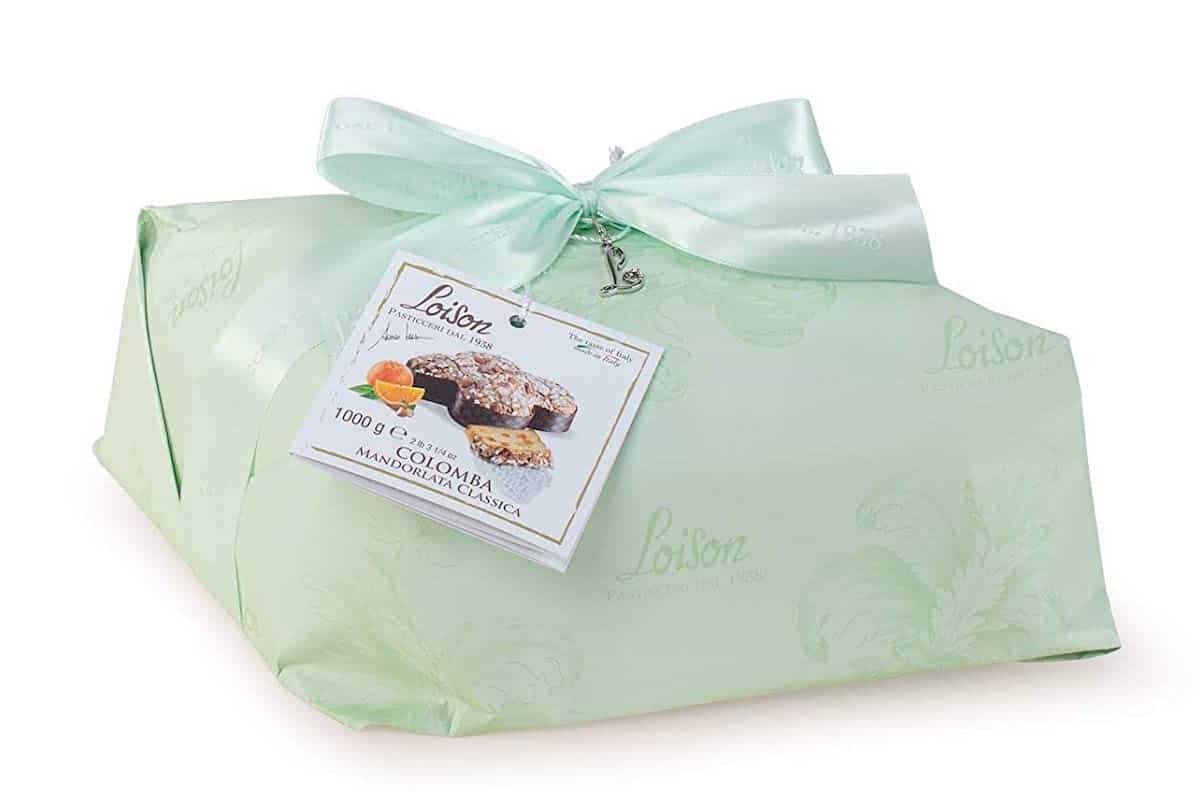
Loison Colomba Cakes

Based in Costabissara, Veneto, this three-generation family business produces a full line of Colombe. The varieties include cakes using such aromatics as mandarin from Ciaculli, figs from Calabria, and single-origin chocolate from South America.
Giuseppe Giusti Colomba

One of the most unique and thoroughly modern versions of this classic delicacy, Giusti Colomba, comes from a partnership between two innovative Italian food producers, both with long family legacies: Giusti, the oldest olive oil maker in Italy and legendary baker, Thomas Muzzi.
Raisins soaked in balsamic vinegar from Modena are added to the dough as a cream filling. Then, the entire bread is drizzled with a dark chocolate glaze, making it a delectable Easter dessert.
Bonifanti Chocolate Chip Colomba

Vincenz Bonifanti has been creating Colombe since 1932. The bakery is in a shop in the center of Villafranca, a small town in Piedmont.
This Easter cake has delicious local chocolate chips that add even more sweetness to the treat.
Pagnotta Pasquale

Sarasina is a tiny village in the Apennine Mountains near Cesena in Emilia Romagna. On the two Sundays preceding Easter, the town celebrates a Sagra della Pagnotta Pasquale (Easter Loaf Festival).
For centuries, Pagnotta Pasquale (Easter loaf) has been the traditional dessert, served after a meal of salsiccia matta (crazy sausage) and rustic guscioni (stuffed piadina bread). The ancient Easter loaf recipe handed down over generations still remains a popular tradition today.
Read my article on Forbes to learn more about the creation of Giusti Colomba, the Easter bread laced with balsamic vinegar from Modena.
[REVISED AND UPDATED 03/2026]
Save to Pinterest!!



Looks delicious — every bite! Lovely post.